

Now Reading: U.S. Green-Lights $825M Missile Sale to Ukraine… Just As Kyiv Was Bombed
-
01
U.S. Green-Lights $825M Missile Sale to Ukraine… Just As Kyiv Was Bombed


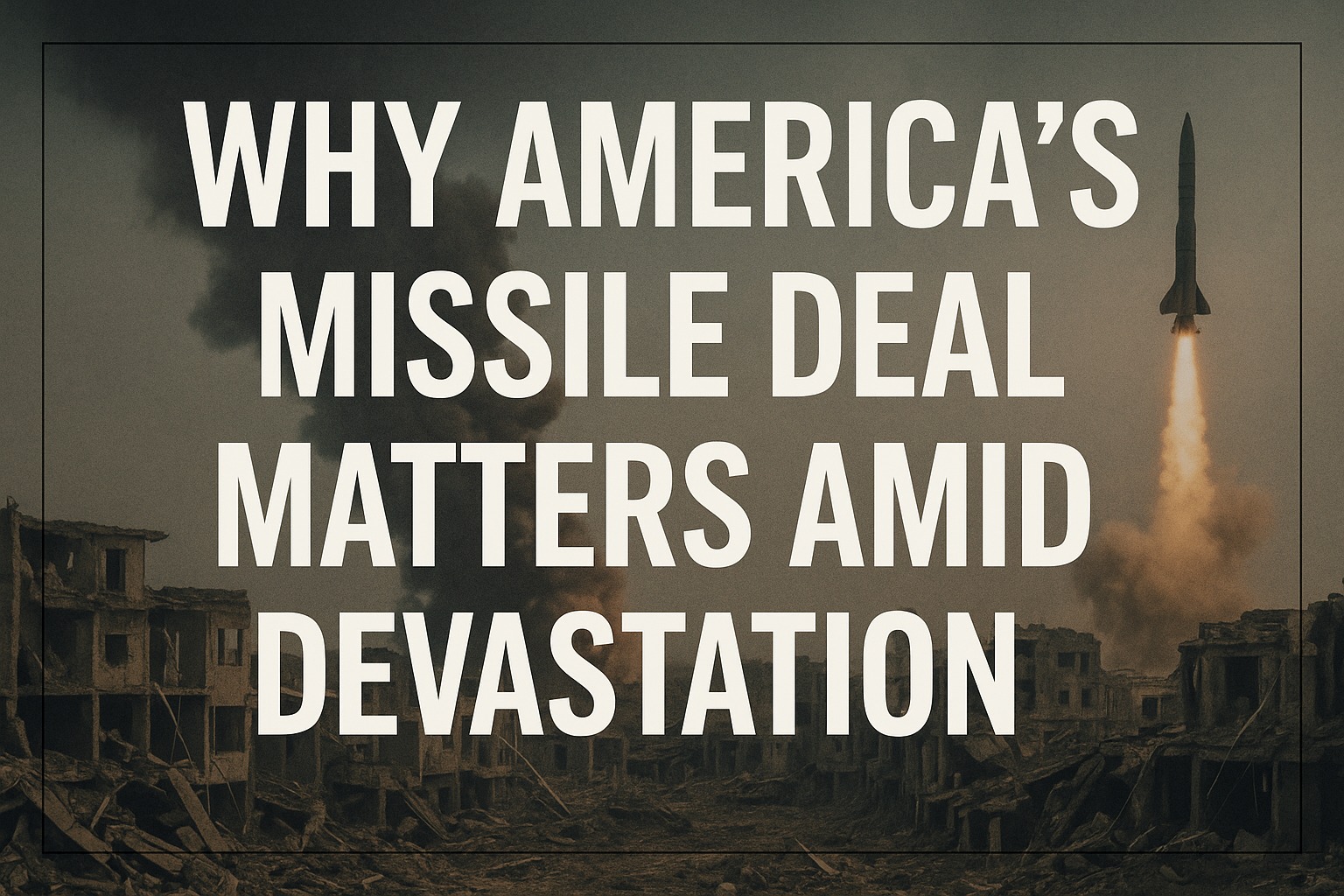
On August 28, the U.S. State Department authorized a potential sale of advanced air-launched cruise missiles to Ukraine. The package includes approximately 3,350 Extended Range Attack Munitions (ERAM), complete with GPS guidance systems, electronic warfare defenses, spare parts, training, and software support. Estimated at $825 million, this aid—funded under the Jump Start program by Denmark, Norway, the Netherlands, and U.S. Foreign Military Financing—aims to enhance Ukraine’s long-range strike capabilities.
Nearly concurrently, a massive Russian drone and missile assault on Kyiv killed at least 21 civilians, including four children. The attack, one of the deadliest in recent months, razed homes and damaged diplomatic and cultural institutions, including the British Council and EU offices.
These developments—one a diplomatic boost, the other a human tragedy—reflect the deepening stakes of a conflict that remains far from resolution.
Breaking Down the Arms Package: What It Means
Advanced Strike Capability
The ERAM missiles, designed to fly hundreds of miles, would allow Ukraine’s aircraft to strike high-value targets deep within occupied regions, mitigating risks to pilots and increasing deterrence.
Digital Precision and Resilience
With GPS integration and electronic warfare countermeasures, ERAMs are built to bypass jamming and anti-air systems, enabling precise strikes on command-and-control centers or logistic hubs critical to Russian operations.
Donor-backed Momentum
The Jump Start sponsorship ensures that European allies America’s shoulders—sharing the burden of military aid and signaling European commitment to Ukraine’s defense.
Legal vs. Final Deal
While the State Department’s approval marks formal acknowledgment, it does not guarantee immediate delivery. Congressional scrutiny and final contract permitting will be the next steps.
Kyiv’s Bloodshed: A City Under Siege
Scale of Destruction
Russia launched hundreds of drones and dozens of missiles at night, overwhelming Kyiv’s defenses. The resultant carnage was tragic and symbolic: at least 21 dead, 48 wounded, and multiple buildings destroyed—some housing European diplomatic offices.
Targeting Soft Power
Strikes on EU and British Council buildings—a stark reminder that soft power infrastructure is now part of the battlefield—prompted urgent diplomatic backlash and calls for accountability.
Compounded Trauma
For civilians caught unaware, the trauma is deepened when diplomacy and peace talks teeter on the edge, yet bombs fall unhindered.
Context: Why Now?
A Failed Peace Window
The attacks arrived just as diplomatic efforts, including engagements between U.S., Russian, and Ukrainian leaders, were gaining traction. The timing suggests clear intent to derail any budding ceasefire.
Political Strategy Clashes
The U.S. missile package sends a defiant signal: Ukraine is not alone—even when the diplomatic window seems open. For Russia, the strike is a brutal message.
Civilian Targeting as Territory Control
By striking populated centers, Russia continues terror tactics designed to weaken morale and force political concessions—even at the cost of international outcry.
Reactions: Global Diplomatic Wake-Up
- European Leaders: Condemned the assault as a violation of diplomacy and international law. Russia’s actions were labeled acts of terror and sabotage on peace. Envoys were summoned and new sanctions, along with repurposing of frozen Russian assets for Ukraine’s reconstruction, are being debated.
- U.S. Response: While President Trump called the assault “not happy, but not surprised,” the missile sale approval reveals a dual strategy: cautious diplomacy, backed by military certainty.
- Ukraine’s Position: President Zelenskyy urged harsher sanctions on Russia and critiqued global inertia. His message was clear: peace without accountability is no peace.
Immediate and Strategic Implications
Defence Dynamics
The ERAM missile delivery—even as a potential—shifts defensive calculus on Kyiv’s outskirts. Ukraine can deter future assaults by demonstrating retaliatory capability.
Morale and Symbolism
The strikes underscore the price paid by Ukrainian civilians. Yet the U.S. arms approval may restore morale both internationally and within Kyiv—showing that global support translates into defense action.
Peace Paradox
The duality—diplomatic overtures followed by lethal escalation—is Russia’s tried-and-tested tactic. For the West, it means that military support and sanctions must move together to counterbalance aggression.
Accountability and Justice
Targeting civilian areas and EU facilities signals a need for international legal responses. The U.N. Security Council has called urgent meetings. The EU considers leveraging frozen assets to aid Ukraine—setting a precedent in accountability measures.
Related Posts



Stay Informed With the Latest & Most Important News
Previous Post
Next Post

Advertisement









Advertisement