

Now Reading: New GST Rates on All Cars in India: From Maruti Suzuki Alto to Mahindra Thar and Tata Nexon
-
01
New GST Rates on All Cars in India: From Maruti Suzuki Alto to Mahindra Thar and Tata Nexon

New GST Rates on All Cars in India: From Maruti Suzuki Alto to Mahindra Thar and Tata Nexon

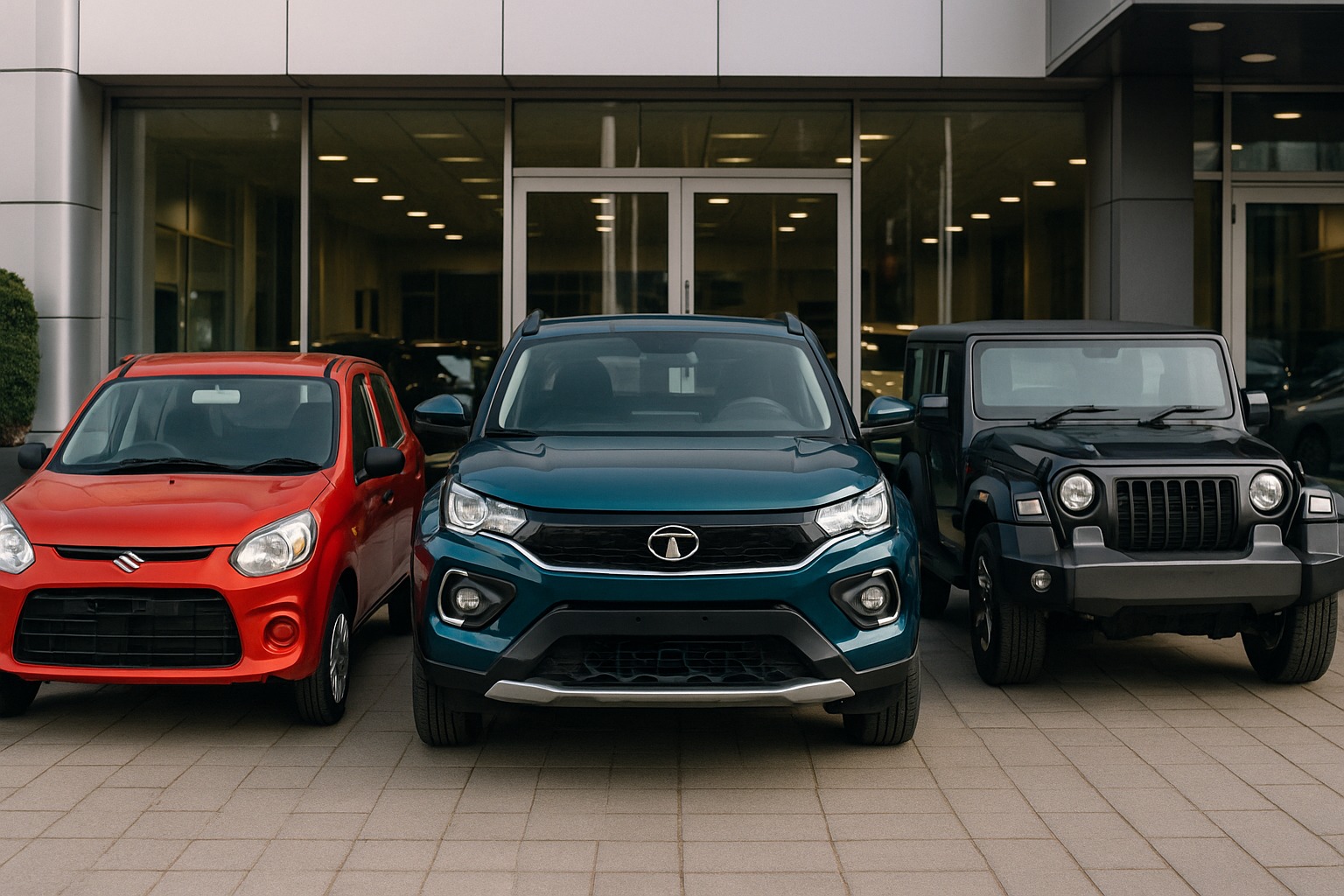
The automobile sector in India has once again found itself at the center of a nationwide debate as the Goods and Services Tax (GST) Council announced revised tax slabs for cars across categories. From small hatchbacks like the Maruti Suzuki Alto to premium SUVs like the Mahindra Thar and compact crossovers like the Tata Nexon, nearly every passenger vehicle segment is now covered under the new GST framework.
The Editorial Team of Behind The Headlines examines the revised GST rates, their impact on car buyers, automobile manufacturers, and the overall industry, as well as what these changes mean for the future of India’s automotive market.
GST and the Automobile Industry: A Background
Introduced in 2017, GST unified India’s tax system, replacing excise duty, VAT, octroi, and other levies. For the automobile sector, it meant one nationwide tax slab instead of different state-level variations. Cars were placed in high tax categories because they are considered luxury or discretionary items, unlike essential goods.
However, over the years, the industry has faced multiple disruptions — from slowing demand and rising fuel prices to pandemic-related production halts. Automakers and dealers have consistently lobbied for rationalisation of GST rates to make cars more affordable, especially in the entry-level segment.
The New GST Rates Explained
The revised GST structure categorises cars based on engine size, body type, and length. These new rates are applicable across manufacturers and models:
- Small Cars (under 4 meters, engine capacity up to 1200cc for petrol and 1500cc for diesel)
- Examples: Maruti Suzuki Alto, WagonR, Hyundai Grand i10, Tata Tiago
- GST + Cess: 28% GST + 1% cess for petrol, 3% for diesel
- Impact: Remains the most affordable segment but still heavily taxed.
- Mid-Size Cars (under 4 meters but with larger engines)
- Examples: Honda Amaze (diesel), Maruti Dzire (larger trims)
- GST + Cess: 28% GST + 15% cess
- Impact: Considerably raises the price gap between base and mid-size cars.
- SUVs (length over 4 meters, engine above 1500cc, ground clearance over 170 mm)
- Examples: Mahindra Thar, Toyota Fortuner, Tata Safari
- GST + Cess: 28% GST + 22% cess
- Impact: Among the highest taxed vehicles in the Indian market.
- Compact SUVs and Crossovers (under 4 meters, smaller engines)
- Examples: Tata Nexon, Hyundai Venue, Kia Sonet
- GST + Cess: 28% GST + 1–3% cess
- Impact: Relatively less burden compared to full-sized SUVs, keeping them competitive.
- Luxury Cars and Premium SUVs
- Examples: BMW X5, Mercedes-Benz GLC, Audi Q7
- GST + Cess: 28% GST + 20–22% cess
- Impact: Keeps premium cars firmly in the luxury category with high on-road costs.
Impact on Car Buyers
For Indian consumers, the new GST rates mean little respite in affordability. Even small cars continue to face significant taxation, though still cheaper relative to SUVs.
- Entry-level buyers: Families eyeing cars like Alto, Tiago, or WagonR still find themselves paying nearly 30% in taxes on the ex-showroom price.
- Urban professionals: Compact SUVs like Tata Nexon or Hyundai Venue remain popular choices, but even these are taxed heavily compared to global benchmarks.
- Aspirational buyers: Premium SUVs or sedans carry prohibitively high tax loads, making ownership aspirational rather than accessible.
Industry Reactions
The automobile industry has expressed mixed reactions to the GST rejig.
- Manufacturers argue that reducing GST on small cars could have spurred sales volumes, especially as demand in rural and semi-urban areas remains fragile.
- Luxury carmakers maintain that high cess discourages foreign investment and prevents India from becoming a global automobile hub.
- Dealers caution that price-sensitive customers may delay purchases if costs remain high, affecting inventories and retail margins.
Broader Economic Context
The new GST rates also have macroeconomic implications:
- Government revenue: Automobiles remain one of the highest sources of indirect tax revenue, making rate cuts politically difficult.
- Consumer demand: Despite high taxes, rising incomes and aspirational buying continue to support growth in compact SUVs.
- Electric vehicle shift: EVs are currently taxed at only 5% GST, making them attractive alternatives, though infrastructure remains a bottleneck.
Spotlight on Popular Models
- Maruti Suzuki Alto
- Continues as India’s entry-level choice but still carries nearly 29% tax load.
- Remains attractive for first-time buyers despite rising costs.
- Tata Nexon
- Among the best-selling compact SUVs, balancing affordability with features.
- With only 1–3% cess on top of 28% GST, it remains more accessible than larger SUVs.
- Mahindra Thar
- Symbol of rugged SUVs in India, but high GST + 22% cess makes it expensive.
- Enthusiasts pay a premium for its iconic off-road appeal.
Global Comparisons
In developed markets, taxation on entry-level cars is far lower than in India, where cars are still viewed as luxury goods rather than essential mobility tools. This contrast explains why India’s car penetration per household remains among the lowest in major economies.
What Consumers Should Watch For
While the GST slabs are fixed, buyers can still strategise:
- Look for festive season discounts offered by dealers to offset tax burdens.
- Explore EV options which benefit from the lowest GST rate at 5%.
- Compare on-road costs carefully, as insurance, registration, and cess significantly increase the price beyond ex-showroom.
Conclusion
The revised GST rates on cars in India reinforce the heavy tax burden that buyers face, regardless of whether they purchase an entry-level hatchback like the Alto or a rugged SUV like the Mahindra Thar. Compact SUVs such as the Tata Nexon remain the most value-driven choice under the new framework.
While the automobile industry continues to demand tax rationalisation to stimulate sales, the government prioritises revenue collection from a sector still seen as aspirational. For consumers, the message is clear: owning a car in India continues to come with one of the highest tax tags in the world.
The Editorial Team of Behind The Headlines will continue tracking the automobile sector, analysing how GST reforms, fuel prices, and electric mobility shape the future of driving in India.
Related Posts

Stay Informed With the Latest & Most Important News
Previous Post
Next Post

Advertisement








Advertisement
