Now Reading: Pakistan's education crisis result of decades of systemic neglect: Report
-
01
Pakistan's education crisis result of decades of systemic neglect: Report


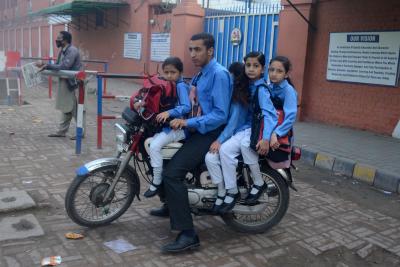
Islamabad, July 6 (IANS) Two years after Pakistan declared a National Education Emergency, the country is still struggling with one of the world’s largest out-of-school crisis as more than 25 million children remain out of school. Pakistan’s education crisis is not only about making policy but about implementation, with weak governance structures, fragmented administrative systems, insufficient funding, poor data integration and provincial disparities continuing to hinder progress, local media reported on Monday highlighting a comprehensive comparative policy review prepared by the Civil Services Academy (CSA).
According to the report, all the provinces of Pakistan have made plans under the National Education Action Plan (NEAP) 2026. However, the gap between planning and implementation has increased to the point where policy ambition has not been able to translate into measurable educational access for millions of children. It stated that without introducing reforms in governance, accountability and financing, National Education Emergency risks remaining a symbolic declaration instead of a functional response to a national crisis, leading Pakistani daily The News International reported.
Citing Pakistan Institute of Education (PIE) data, the report said that the education crisis is due to decades of systemic neglect. It stated that rapid population growth, poverty, weak institutional capacity and continuous low public investment in education have expanded over time, resulting in increase in the number of children not studying in schools.
From the 1990s through the 2010s, the Academy of Educational Planning and Management (AEPAM) had the responsibility of tracking out-of-school children. However, millions of children remained excluded from the system as state infrastructure did not keep pace with demographic pressures, enabling low-cost private schooling to increase without addressing underlying access inequalities.
The CSA review, compiled by five Policy Analysis Groups at the Pakistan Administrative Service Campus, analyses education system in Punjab, Sindh, Khyber-Pakhtunkhwa, Balochistan, Islamabad Capital Territory, Pakistan-occupied Gilgit-Baltistan and Pakistan-occupied Kashmir against indicators of effectiveness, equity, efficiency, ethical governance and feasibility. According to the report, 25.1 million to 26 million children of school-going age remain out of school in Pakistan.
Punjab is bearing the largest educational burden in absolute numbers as between 9.6 million and 10.4 million children out of school. The report concluded that Punjab needs around 35,000 additional classrooms at middle and secondary levels, while poverty, child labour and household economic pressures continue to push children out of education.
Education crisis is structurally different in Sindh marked by a collapse in continuity of studies beyond primary education. Sindh has around 7.4 million out-of-school children, including 4.1 million girls, representing 44 per cent of its school-age population. Sindh has more than 36,000 primary schools, while the province has only 2,634 middle schools and 1,674 secondary schools, leading to nearly 54 per cent of children not purusing education after completing primary school.
As many as 4.9 million children remain out of school in Khyber Pakhtunkhwa. The report has cited students remaining out of school in Khyber Pakhtunkhwa to difficult terrain, security challenges, administrative fragmentation and acute shortages of female teachers, especially in merged districts. The lack of girls schools and women teachers remain a major hindrance in areas like Upper Kohistan, Torghar and Bajaur, with conservative social norms further limiting female enrolment as schools have predominantly male teachers.
In the report, Balochistan has been identified as the most structurally disadvantaged province, where deep infrastructural gaps persist despite a reported drop in out-of-school rates from 69 per cent in 2023 to 45 per cent in 2025. Balochistan’s vast geography implies that children often need to travel around 30 kilometres to go to primary schools and up to 360 kilometres for secondary education, making regular attendance largely unfeasible in many parts of the province, The News International reported.
Diamer district in PoGB has 42 per cent out-of-school children, while nearly half of children drop out of school before completing primary education in PoK. The report said that a common structural constraint for education among the provinces of Pakistan is extremely low public investment in education, as per the report.
Pakistan’s overall funds spent on education remains significantly below international benchmarks, sparking concerns that financial commitment has not kept pace with demographic realities or constitutional obligations. According to the report, Pakistan risks entrenching instead of reversing education crisis if it does not introduce reforms in governance, financing, data integration and institutional accountability.
–IANS
akl/as
Related Posts



Stay Informed With the Latest & Most Important News
Previous Post
Next Post


Advertisement