

Now Reading: Rahul Gandhi Calls Out ‘Vote Chori’, Plays Down PM Modi’s Manipur Visit
-
01
Rahul Gandhi Calls Out ‘Vote Chori’, Plays Down PM Modi’s Manipur Visit


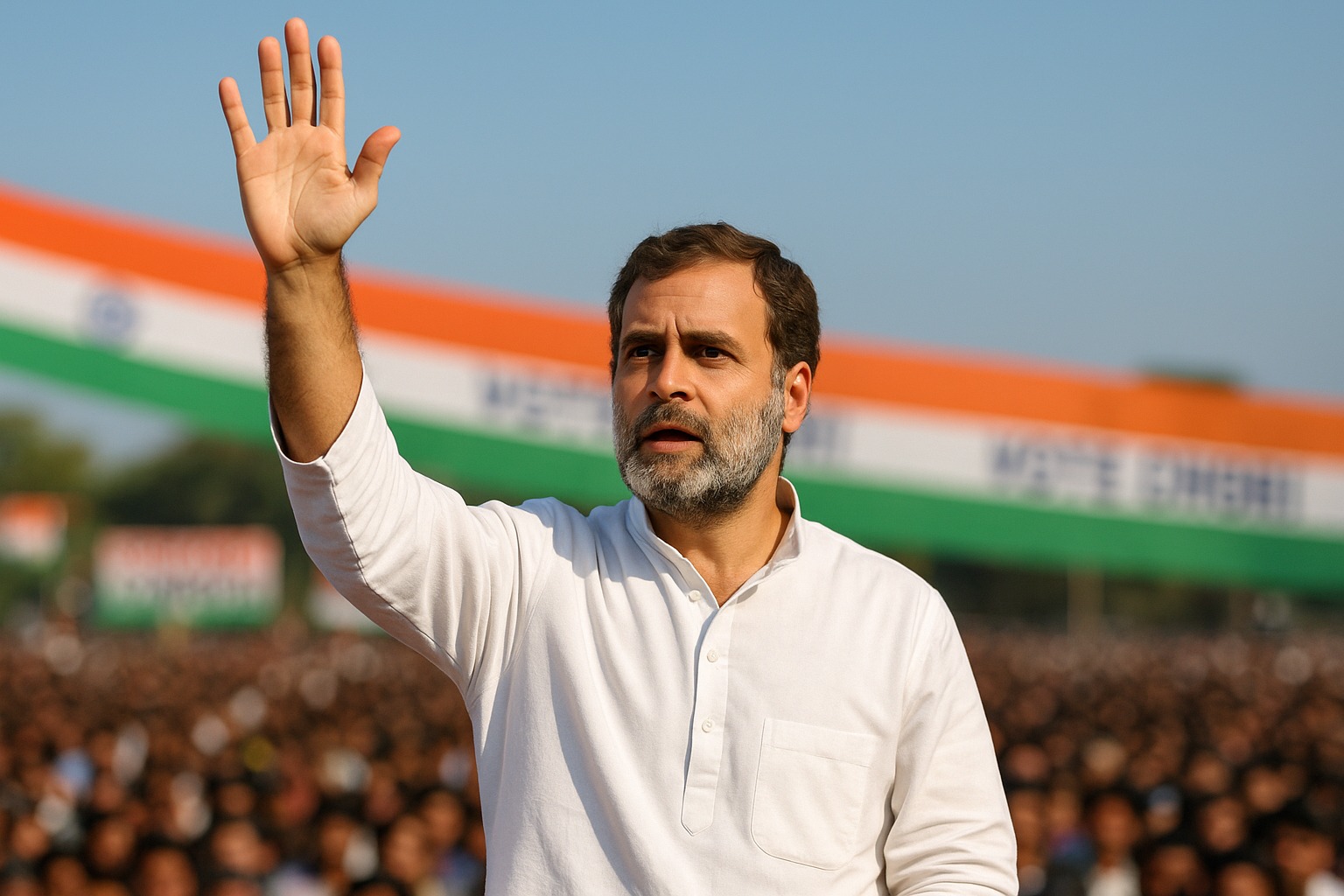
Congress leader Rahul Gandhi, during his latest public remarks, downplayed Prime Minister Narendra Modi’s visit to Manipur. While acknowledging it as “good”, he insisted it was not a matter of great significance. Instead, Gandhi sharpened his attack on what he described as the larger crisis of vote theft in Indian elections, calling it the central issue threatening democracy.
With the 2025 electoral season intensifying, Gandhi’s comments are being viewed as part of a broader Congress strategy to target both governance failures and the credibility of India’s electoral process.
PM Modi’s Visit to Manipur: Symbolism vs. Substance
Prime Minister Narendra Modi’s visit to Manipur came against the backdrop of prolonged unrest and demands for reconciliation. His presence in the conflict-hit state was meant to underline the Centre’s commitment to peace and reconstruction.
However, Rahul Gandhi dismissed it as symbolic. According to him, the larger concern of citizens lies not in one visit but in restoring trust in elections and governance systems.
Earlier, we reported how regional stability issues in the Northeast have frequently been used as touchpoints in national politics.
Rahul Gandhi’s Core Argument: The ‘Vote Chori’ Claim
At the heart of Gandhi’s critique lies the allegation of vote theft, or “vote chori”. He claimed that ordinary citizens across multiple states have expressed frustration over irregularities in the electoral process.
By raising this issue repeatedly, Gandhi aims to position Congress as a defender of democracy and voter rights. His remarks suggest the party will keep the spotlight on electoral integrity as the 2025 Bihar Assembly elections and the 2026 general elections draw closer.
We had earlier explained the Election Commission’s stance on Bihar voter rolls, where similar controversies had surfaced recently.
Why the Manipur Visit Matters Politically
Though Rahul Gandhi played it down, Modi’s Manipur visit has political undertones:
- Reassurance to locals: Showing that the central government is paying attention.
- Electoral messaging: Strengthening BJP’s narrative of stability in the Northeast.
- Contrast with opposition: Projecting proactive leadership in areas of unrest.
But by terming it “not a big deal”, Gandhi undercut the intended narrative, redirecting attention to governance failures and democratic accountability.
The Opposition’s Emerging Strategy
Congress and its allies appear to be aligning their messaging on a few central themes:
- Vote theft and democracy under threat
- Economic distress among youth and farmers
- Institutional capture by the ruling establishment
This framing allows the opposition to portray the government’s symbolic gestures, like state visits, as distractions from deeper systemic failures.
In our coverage of Rahul Gandhi’s earlier Bihar speeches, we noted a similar narrative—democracy at stake, institutions compromised.
Reactions Across the Political Spectrum
- Congress supporters: Applauded Gandhi’s focus on vote theft, seeing it as central to India’s democratic debate.
- BJP leaders: Criticized Gandhi for ignoring the significance of the PM’s visit and accused him of spreading baseless allegations.
- Civil society voices: Acknowledged that electoral transparency is a valid concern but urged all leaders to focus equally on peace-building in Manipur.
Bigger Picture: Democracy and Trust in Institutions
Rahul Gandhi’s framing of “vote chori” is not just a campaign line—it highlights a deeper trust deficit between citizens and electoral institutions. For a democracy as vast as India, even perceptions of irregularities can undermine voter confidence.
If Gandhi’s messaging continues to resonate, it could force institutions like the Election Commission to revisit their processes more transparently. At the same time, it sets up the Congress leader as a consistent critic of governance that prioritizes optics over accountability.
We previously explored how India’s democratic fabric is tested by recurring election controversies.
Conclusion
Rahul Gandhi’s remarks on Prime Minister Modi’s Manipur visit reflect a deliberate attempt to shift public discourse. By branding the visit as “good but not big” and pivoting to the issue of vote theft, he has elevated the opposition’s campaign narrative.
For voters, the debate is no longer just about visits or speeches—it is about whether India’s electoral process can command unquestionable trust. As 2025 approaches, this clash of narratives will define the country’s political landscape.
Related Posts


Stay Informed With the Latest & Most Important News
Previous Post
Next Post


Advertisement




Advertisement
