

Now Reading: Trump Doubles Tariffs on India to 50% — What It Means for the Country
-
01
Trump Doubles Tariffs on India to 50% — What It Means for the Country


Why Did Trump Take This Step?
Targeting India’s Oil Deals with Russia
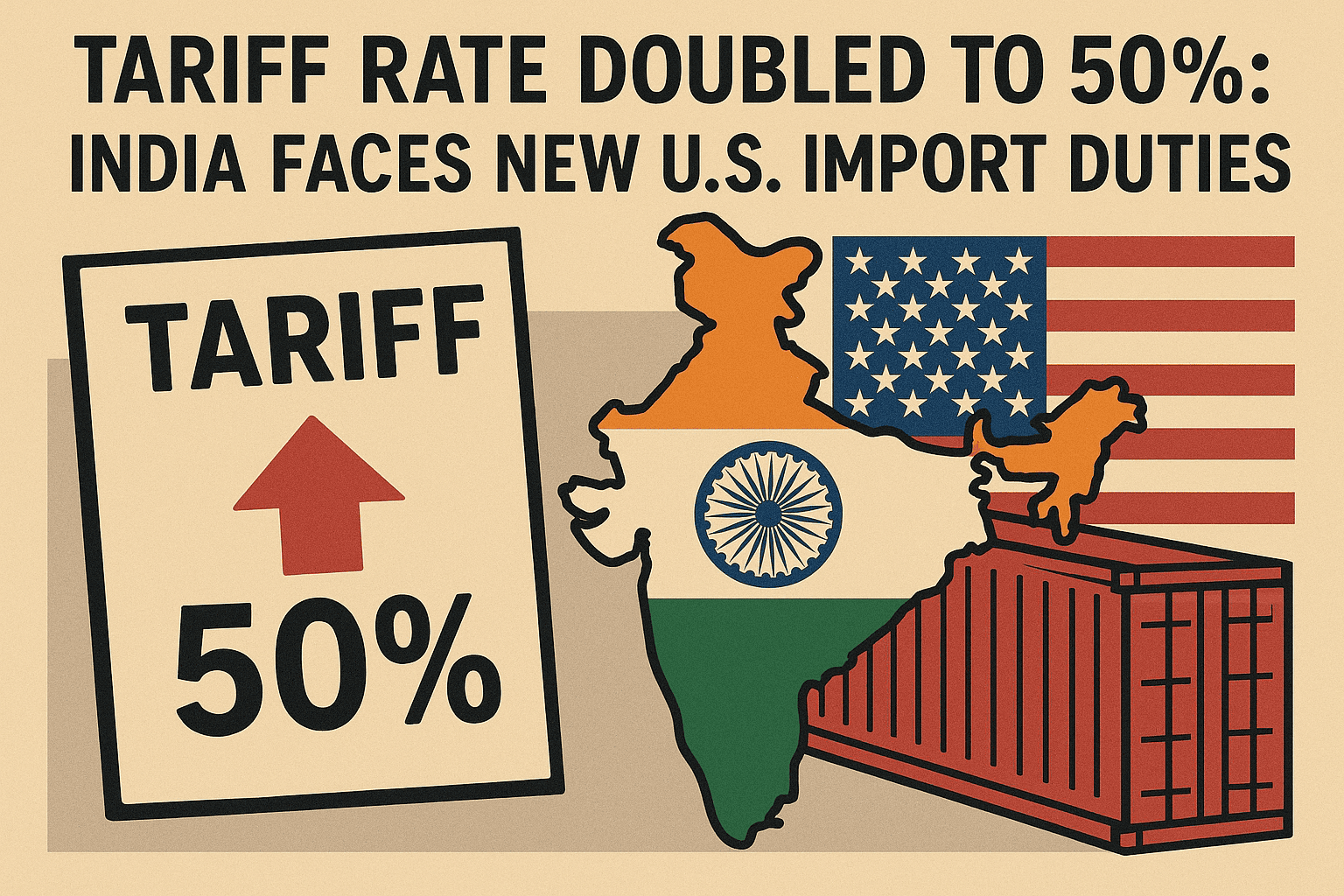
Former U.S. President Donald Trump has raised import tariffs on Indian goods from 25% to 50%. This sharp increase is believed to be a warning against India’s ongoing purchase of cheap oil from Russia. The U.S. believes this trade is indirectly supporting Russia during the Ukraine war.
Trade Talks Failed
Negotiations between India and the U.S. had recently broken down. America had been pushing India to open its markets further, especially in areas like agriculture and technology. When India refused, the U.S. decided to act by increasing tariffs.
Political Pressure Ahead of U.S. Elections
With elections nearing in the U.S., Trump is taking a tough stand on trade. He wants to look strong on foreign policy and is using tariffs as a tool to show American voters he’s defending local businesses.
How Will This Affect India?
Heavy Losses for Exporters
Indian businesses that sell products like textiles, jewelry, leather, seafood, and electronics to the U.S. will now find it harder to compete. The cost of their goods in America will go up due to the new 50% tariff. This may result in fewer sales and major financial losses.
- It is estimated that India may lose thousands of crores in export income.
- Sectors like seafood and garments are expected to be hit the hardest.
Rise in Prices and Unemployment
Due to fewer export orders, Indian factories may cut jobs. Reduced income in the manufacturing sector could lead to layoffs. On the other hand, Indian customers might also see prices go up if imported goods become costlier due to reduced trade.
What Are India’s Options?
Strengthening BRICS and Asian Ties
In response to U.S. pressure, India may turn more towards countries like Russia, China, and Brazil. These nations are part of the BRICS group, which is trying to create a powerful economic alliance separate from Western influence.
India might also strengthen trade with African and Southeast Asian countries.
Balancing Act by PM Modi
Prime Minister Narendra Modi is expected to issue a firm yet diplomatic response. While India does not want to break ties with the U.S., it also cannot give up its energy security or independence in global policy.
The Indian government is reviewing all trade agreements and may consider reducing reliance on the U.S. market by focusing more on “Make in India” and domestic consumption.
The Bigger Picture: Impact on India and U.S.
🇮🇳 For India:
- Export slowdown may hurt GDP growth.
- Job losses in labor-heavy industries.
- Push to increase self-reliance.
- Urgency to find new markets.
🇺🇸 For the U.S.:
- American buyers may face higher prices on Indian goods.
- U.S. tech and defense companies might face delays in deals with India.
- Possible backlash from U.S. companies that depend on Indian imports.
Editorial Conclusion
Trump’s sudden decision to double tariffs is not just an economic action — it’s a strategic pressure point aimed at shifting India’s foreign policy. But India is unlikely to bow down easily. The country has grown into a major power and is now rethinking how to protect its economy and stand strong globally.
The coming days will be crucial in seeing whether this dispute calms down through dialogue — or turns into a full-blown trade war.
Related Posts

Stay Informed With the Latest & Most Important News
Previous Post
Next Post
Advertisement









Advertisement