Now Reading: Modi’s Masterstroke? India Defies Trump’s Oil Tariff with Bold Move
-
01
Modi’s Masterstroke? India Defies Trump’s Oil Tariff with Bold Move

Modi’s Masterstroke? India Defies Trump’s Oil Tariff with Bold Move

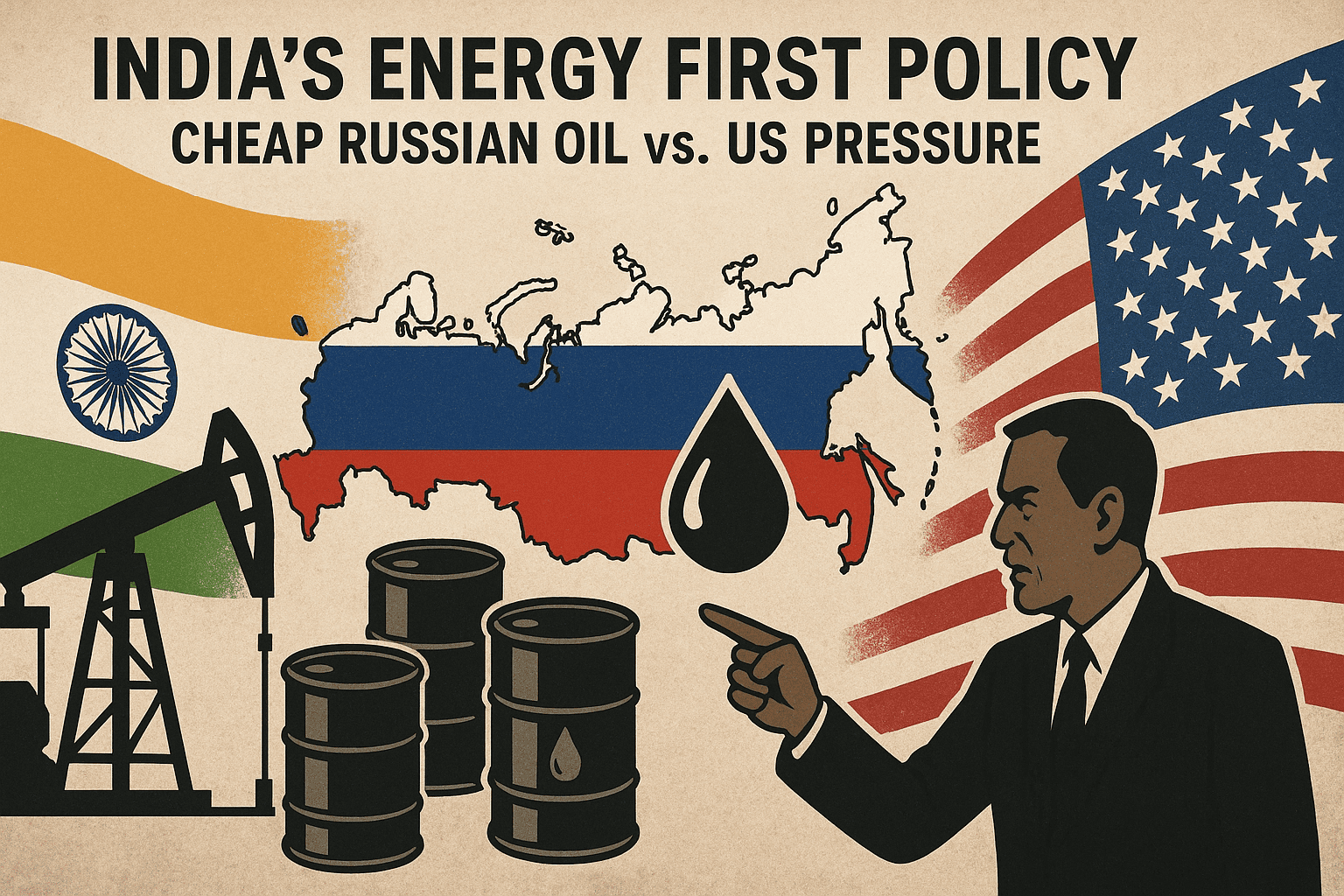
Even as global trade dynamics shift sharply under renewed protectionist policies from the United States, India has made it clear—it will continue buying crude oil from Russia, despite the announcement of an additional 25% import tariff imposed by former US President Donald Trump, now a leading Republican figure preparing for a potential second term. This decision by India is not just economic; it is strategic, signaling India’s evolving energy security doctrine and its growing resistance to Western pressure.
What’s the News?
According to senior officials closely monitoring India’s global trade position, New Delhi will not stop oil imports from Russia, even after the US raised tariffs on several Russian-related commodities and threatened secondary sanctions on buyers engaging with Moscow.
The US decision to impose a 25% penalty was part of Trump’s newly proposed “America First Energy Act”, aimed at pressuring allies and partners to align with US sanctions and reduce economic dependencies on adversarial nations like Russia, Iran, and China.
However, India has made its position clear—its energy decisions will be guided by national interest, price stability, and long-term contracts, not geopolitical coercion.
Why is India Still Buying Russian Oil?
Here are the primary reasons explained in verified detail:
1. Energy Security Comes First
India imports more than 85% of its crude oil needs. Post the Russia-Ukraine conflict, Moscow began offering oil to India at a significantly discounted price, helping Indian refiners manage inflation and maintain fuel price stability domestically.
2. Affordable Oil for Domestic Needs
India’s monthly import of Russian crude reached record highs in early 2025, with some months seeing over 1.5 million barrels per day (bpd). Even with the 25% added cost, Russian oil remains cheaper than Brent crude or supplies from OPEC nations, making it economically viable for Indian refineries.
3. Payment in Rupees or Yuan
To bypass Western sanctions, India and Russia have set up a rupee-ruble and rupee-yuan mechanism, reducing dependence on the US dollar for transactions. This currency shielding also buffers India from the direct impact of US financial penalties.
4. Diversified Energy Portfolio
India is diversifying oil imports not only from Russia but also from Iraq, UAE, and the US itself, balancing the risk. Indian refiners are confident that continued engagement with Russia will not impact the long-term supply chain.
What is Trump’s Strategy Behind the 25% Tariff?
According to multiple geopolitical analysts, Donald Trump is using tariff warfare to reshape alliances ahead of the 2026 presidential race. His administration—should he return—plans to punish countries engaging with sanctioned nations, especially if they challenge US-led energy dominance.
The 25% penalty, as announced, would apply to:
- Russian-origin oil processed in third-party countries
- Companies doing direct business with Russian state-owned oil firms
- Indian refiners using Russian crude and exporting processed fuel to the US or EU
It’s a bold move, but India is standing firm.
What Has the Indian Government Said?
India’s External Affairs Ministry and Oil Ministry have not released a formal response to Trump’s statement but top-level sources confirm the following:
- India has no legal obligation to follow unilateral US sanctions
- New Delhi will continue oil deals based on bilateral terms
- Any pressure tactic will be countered diplomatically, as was done during past CAATSA threats over S-400 missile deals with Russia
What Could Be the Impact on India?
Short-term:
- Refiners like Reliance, IndianOil, and Nayara may face compliance scrutiny from Western regulators.
- Export of refined diesel and aviation fuel to Western nations could be monitored for origin of crude.
Mid-term:
- Russia may offer more price cuts or freight subsidies to maintain India’s buying appetite.
- India could strengthen energy alliances with UAE, Venezuela, and Iran as backup suppliers.
Long-term:
- India might lead Global South diplomacy challenging Western sanctions regimes, demanding a multipolar trade order.
- Increased investments in Indian strategic reserves, local refinery expansions, and green energy will reduce future dependency.
US-India Relations: Strain or Strategy?
Despite Trump’s aggressive tone, many US officials—especially from the Biden camp—continue to see India as a critical partner in countering China. While trade friction may arise, strategic cooperation in defense, technology, and semiconductors is unlikely to be derailed.
According to Indian analysts, this is not the first time India and the US have disagreed on global issues, and both nations have historically worked through backdoor diplomacy to manage tensions.
Final Thoughts by Jan Jagran Darpan
India’s stand on continuing oil trade with Russia is not just about economics—it’s a statement of sovereignty, strategic autonomy, and pragmatism in a multipolar world.
While Trump’s tariff threats may create short-term ripples, India’s calculated and diversified energy approach ensures that national interests are protected.
This situation could serve as a test case for emerging economies balancing between global powers and domestic priorities in a rapidly changing geopolitical landscape.
Stay tuned to Jan Jagran Darpan for continuous updates as this story unfolds.
Related Posts


Stay Informed With the Latest & Most Important News
Previous Post
Next Post
Advertisement