Now Reading: Trump to Putin: Block Ukraine Peace, Face Severe Fallout
-
01
Trump to Putin: Block Ukraine Peace, Face Severe Fallout


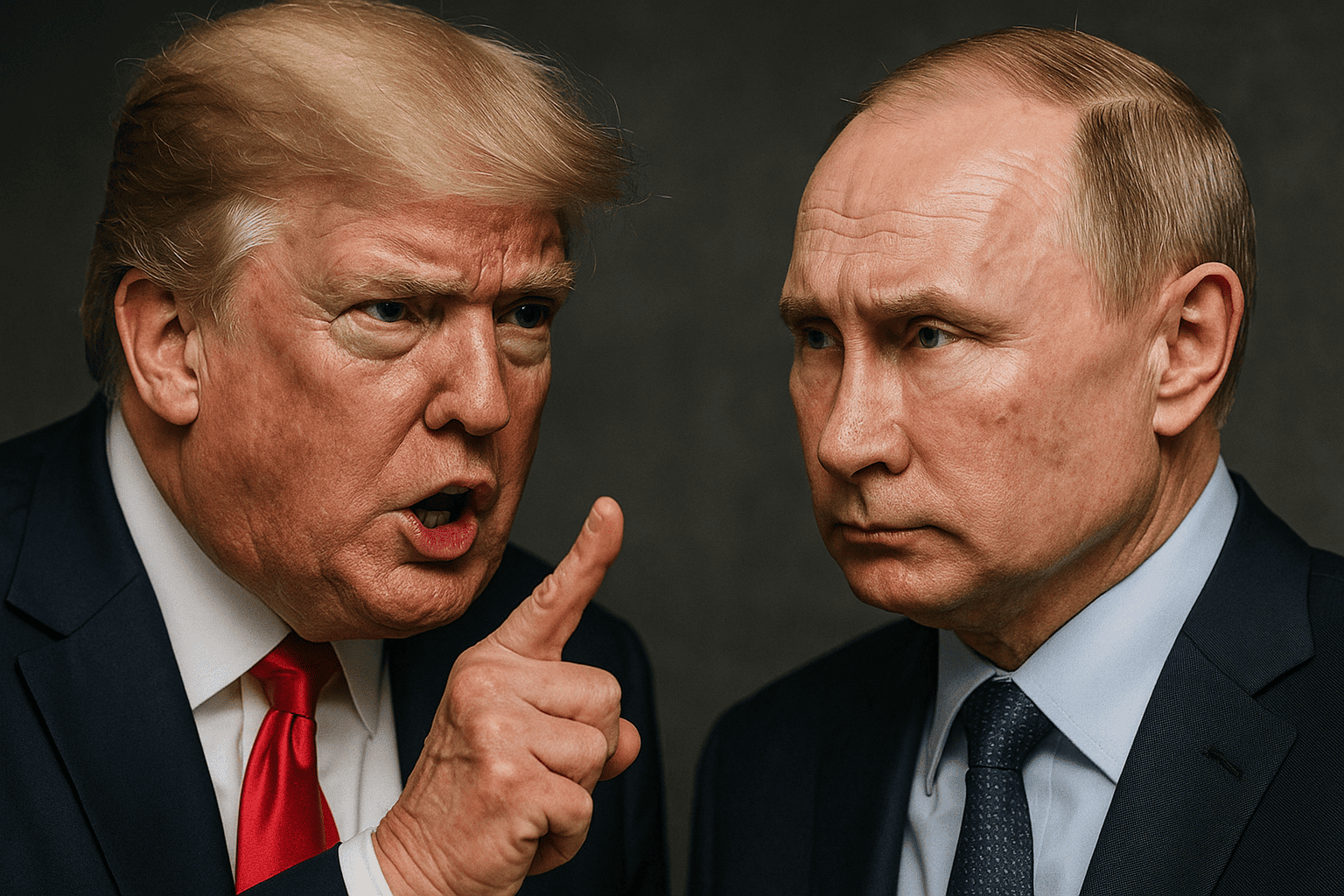
Ahead of the summit planned at Joint Base Elmendorf–Richardson in Anchorage on Friday, President Trump said that if the talks do not produce movement toward stopping the war, Russia would face extremely tough consequences. He did not spell out specific measures, but made clear that the message has been delivered before the face-to-face.
The build-up: calls with Europe and Kyiv
In the hours before the warning, the U.S. President held a virtual discussion with key European leaders and Ukrainian President Volodymyr Zelenskyy. According to participants, the call focused on clear “red lines”: any ceasefire must come first, Ukraine must be directly involved in any territorial or security discussions, and international borders cannot be changed by force. European leaders described the conversation as constructive and said they expect robust pressure on Moscow if there is no progress in Alaska.
A possible second, three-way meeting
If Friday’s meeting shows signs of movement, the U.S. side has floated the idea of a quick follow-up that would include President Zelenskyy alongside Presidents Trump and Putin. This would be designed to bring Ukraine formally into the room for any next steps.
Kyiv’s stance
President Zelenskyy told partners that Mr. Putin is “bluffing” about seeking peace and is using military pressure to shape talks. Ukraine’s position remains that no decision about its land, security guarantees, or future alignments can be made without Kyiv’s direct consent.
The battlefield context
Even as diplomacy intensifies, Russian forces have pressed attacks in eastern Ukraine in recent days. Western officials assess this as an effort to gain leverage before the summit. The situation on the ground adds urgency to any plan that can lock in a verifiable stand-down of hostilities.
What “very severe consequences” could mean
While the White House has not listed measures, officials and allies have repeatedly pointed to tools that include tighter financial sanctions, potential secondary sanctions or tariffs, and broader restrictions that could target revenue streams and logistics that support Russia’s war effort. European leaders have also signaled readiness to increase pressure if Moscow refuses a ceasefire.
Why this summit matters
This is the most consequential U.S.–Russia engagement since the full-scale invasion began. A credible ceasefire pathway would reduce civilian suffering, stabilize supply lines, and calm energy markets. Failure, on the other hand, could trigger tougher Western measures and prolong the conflict.
What to watch next
• Friday, August 15 (IST): Outcome of the Trump–Putin talks in Anchorage.
• Whether a rapid trilateral meeting with Ukraine is announced.
• Any concrete steps toward a time-bound ceasefire, monitoring arrangements, and follow-on talks that include Kyiv.
• Signals from Washington and European capitals about new pressure if Moscow refuses to shift.
Editorial verification notes:
Key details were cross-checked against contemporaneous reporting on the warning of “very severe consequences,” the location and timing of the Alaska summit, the leaders’ pre-summit call and agreed “red lines,” Kyiv’s characterization of Putin’s stance, and recent battlefield movements. (Reuters, The Guardian, AP News, The Washington Post, The Wall Street Journal)
Related Posts



Stay Informed With the Latest & Most Important News
Previous Post
Next Post


Advertisement