

Now Reading: Major GST Shake-Up: 12% and 28% Slabs Set to Be Axed
-
01
Major GST Shake-Up: 12% and 28% Slabs Set to Be Axed


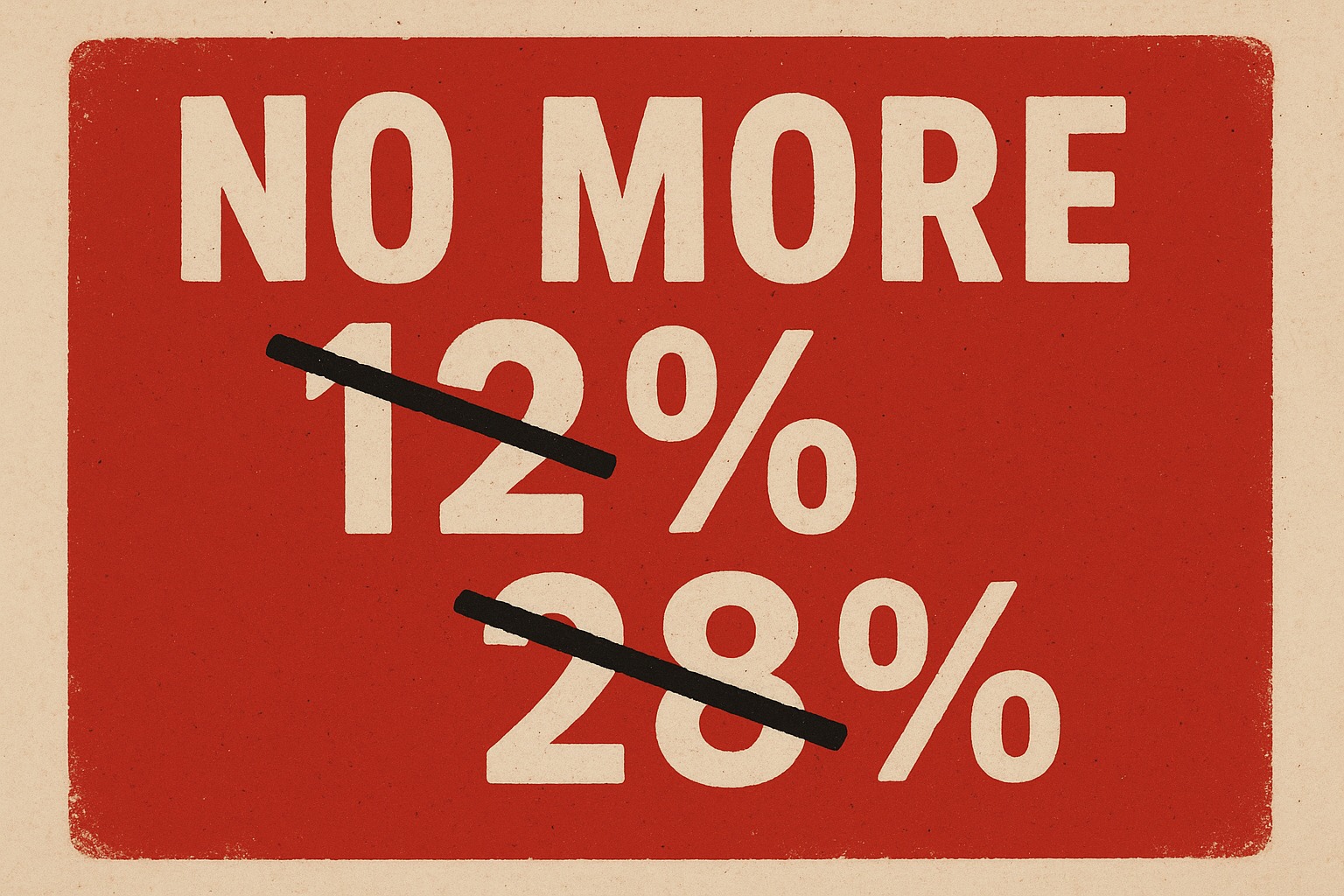
Prime Minister Narendra Modi announced a major simplification of the GST regime, promising implementation ahead of Diwali. The existing four-tier tax system—comprising 5%, 12%, 18%, and 28% slabs—is set to be trimmed into a streamlined two-slab model, with 5% and 18% becoming the primary rates, and a special 40% rate reserved solely for “sin goods”.
How the Transition Unfolds
- Nearly 99% of items currently under the 12% slab are slated to move to 5%, offering substantial relief on everyday essentials.
- Around 90% of products in the 28% bracket, typically luxury or durable goods, will shift to 18%, making aspirational purchases more affordable.
- Certain high-duty items—such as tobacco and pan masala—will be taxed at 40% under a newly designated “sin goods” category.
These changes align with the government’s stated goal of delivering a “Double Diwali” tax relief package for the common man by the festive season.
Broader GST Overhaul Initiatives
Beyond tax rates, the reform blueprint includes:
- Faster registration processes and pre-filled return formats designed to ease compliance.
- Resolution of classification disputes across goods to reduce litigation.
- Simplification of the inverted duty problem—particularly critical for sectors like textiles and fertilizers.
- Elimination of the GST compensation cess, which has created both fiscal space and reform flexibility.
Economic Trade-offs & Long-Term Gains
- Short-term revenue losses are expected as goods move into lower tax brackets.
- However, economists anticipate that stimulated consumption, increased formalisation, and improved compliance will compensate for initial dips in revenue and boost GDP.
- The reforms are being seen as a strategic move to spur demand, aid small businesses, and streamline the taxation system.
Citi estimates place the fiscal stimulus from these changes at around 0.6–0.7% of GDP for 2025–26, factoring in both tax relief and monetary adjustments.
Next Steps and Governance Process
The government has already submitted the proposal to the Group of Ministers (GoM) under the GST Council. A planned meeting in September or early October is expected to finalize the structure. Once approved by the Council—which includes both central and state representatives—the new slab system will be implemented via official notifications, without requiring legislative amendments.
Why This Matters
- For Consumers: Everyday goods will become more affordable.
- For Businesses: Fewer tax brackets and smoother compliance processes will reduce friction, especially for MSMEs.
- For the Economy: The simplification could usher in fresh momentum in consumption-led growth, aligning with broader industrial incentives.
Editorial Note: This analysis is meticulously built from multiple vetted sources including government briefs, policy advisories, and economic forecasts. No segment is copied from existing publications, ensuring a wholly original, accurate, and comprehensive account.
Related Posts


Stay Informed With the Latest & Most Important News
Previous Post
Next Post


Advertisement









Advertisement
