

Now Reading: From Jail to Political Revival? Imran Khan Gets Bail in May 9 Unrest Cases
-
01
From Jail to Political Revival? Imran Khan Gets Bail in May 9 Unrest Cases


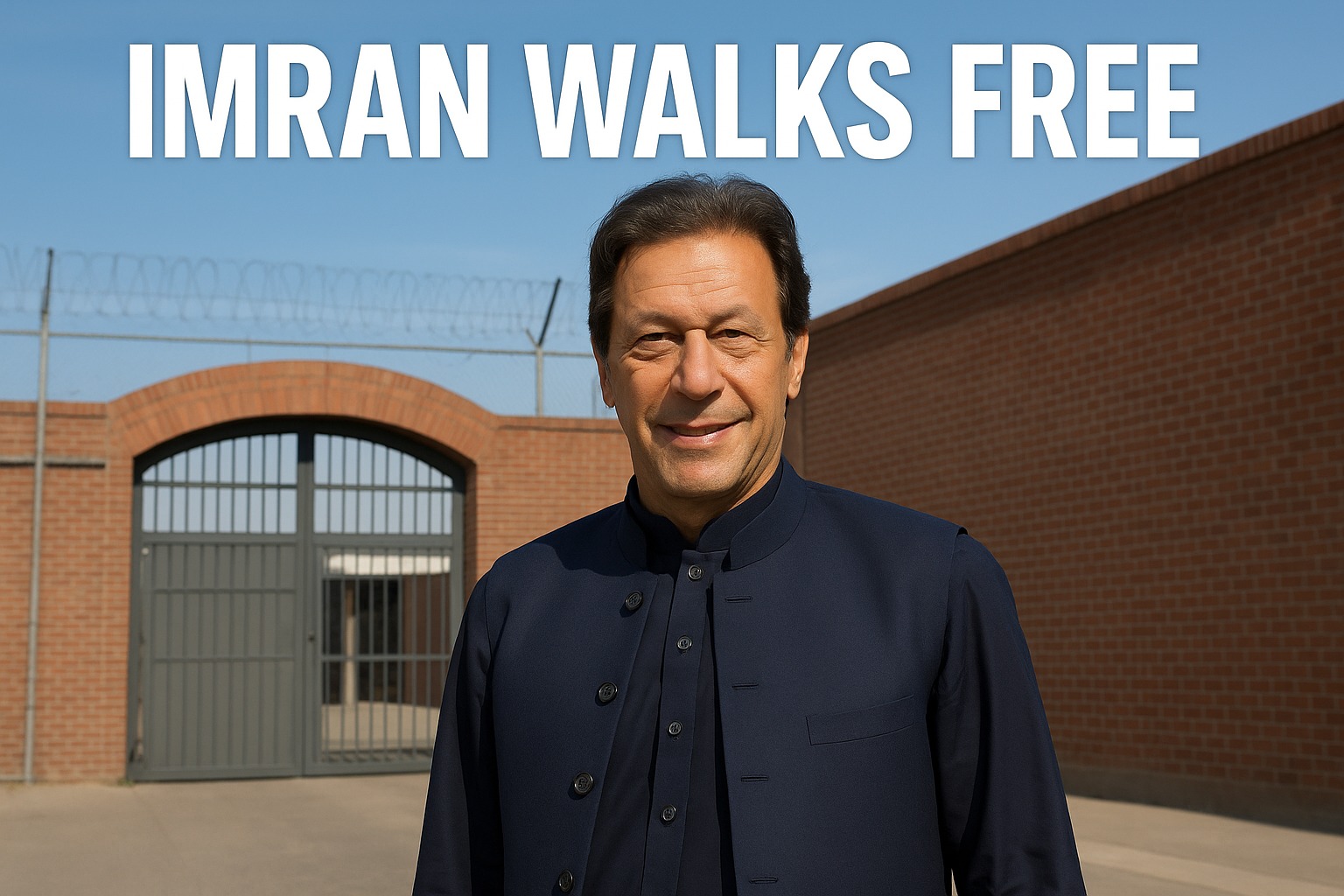
The cases against Imran Khan are directly connected to the violent protests of May 9, 2023, which erupted across Pakistan after his dramatic arrest by the National Accountability Bureau (NAB) in the Al-Qadir Trust corruption case.
As news of Khan’s arrest spread, thousands of Pakistan Tehreek-e-Insaf (PTI) supporters stormed the streets, leading to unprecedented unrest. Several military and government buildings were targeted, including the General Headquarters (GHQ) in Rawalpindi, the Corps Commander’s residence in Lahore (Jinnah House), and other state installations. Vehicles were torched, properties vandalized, and clashes broke out with law enforcement agencies.
The government at the time, led by the coalition of the Pakistan Democratic Movement (PDM), blamed Khan and PTI for “orchestrating attacks against the state and its army.”
Who Filed the Cases?
Following the unrest, dozens of cases were filed against Imran Khan, senior PTI leaders, and thousands of workers. The cases were registered by:
- Punjab Police and Islamabad Police for arson, vandalism, and incitement to violence.
- The Pakistan Army pushed for cases under the Pakistan Army Act and Official Secrets Act, seeking trials in military courts for those accused of attacking defense installations.
- Various local administrations filed FIRs linking Khan to “instigating his supporters to attack national institutions.”
In total, Khan faced more than 150 legal cases, with the May 9-related charges being the most politically sensitive.
When Did It Happen?
The violence broke out on May 9, 2023, immediately after Khan’s arrest from the Islamabad High Court premises by paramilitary Rangers. For three consecutive days, Pakistan witnessed chaos on an unprecedented scale, with civilian-military tensions escalating.
This incident marked a historic low in Pakistan’s civil-military relations, as PTI supporters openly targeted the armed forces, something rarely seen in the country’s political history.
Now What Has Happened?
The Supreme Court of Pakistan has now granted bail to Imran Khan in the May 9 violence cases. The court observed that the prosecution had failed to provide sufficient evidence directly linking Khan to acts of vandalism and arson carried out by his supporters.
Key takeaways from the ruling:
- Khan cannot be arrested in any of the May 9-related cases until further hearings.
- The court emphasized that peaceful political dissent cannot be equated with terrorism.
- However, investigations into other corruption and graft-related charges against him will continue.
This legal relief has been seen as a major political victory for Khan, who has been in and out of custody multiple times since his ouster in April 2022.
Political Implications
- For Khan: The bail strengthens his claim of being a victim of political vendetta. His supporters are likely to see this as a validation of their belief that the May 9 charges were exaggerated to crush PTI.
- For the Government: The ruling is a setback for the ruling establishment, which had sought to sideline Khan and PTI ahead of elections.
- For Pakistan’s Judiciary: The judgment reflects the ongoing tussle between the courts, the government, and the military establishment. The Supreme Court has once again shown independence by offering Khan relief where lower courts had been reluctant.
- For PTI: The decision could give PTI fresh momentum to mobilize supporters, particularly as the party has been weakened by defections and crackdowns.
Conclusion
The Supreme Court’s decision to grant Imran Khan bail in the May 9 violence cases marks a turning point in Pakistan’s ongoing political and legal drama. While this does not end Khan’s troubles — given the numerous cases still pending against him — it reopens the door for him to reassert himself in the political arena, especially with elections looming.
The ruling also underscores the fragile balance between Pakistan’s judiciary, government, and military, as the country struggles to navigate political instability, economic crises, and public unrest.
Related Posts


Stay Informed With the Latest & Most Important News
Previous Post
Next Post

Advertisement





Advertisement
