

Now Reading: Reliance’s Russian Crude Import Surge: What Happened and Why It Matters
1
-
01
Reliance’s Russian Crude Import Surge: What Happened and Why It Matters


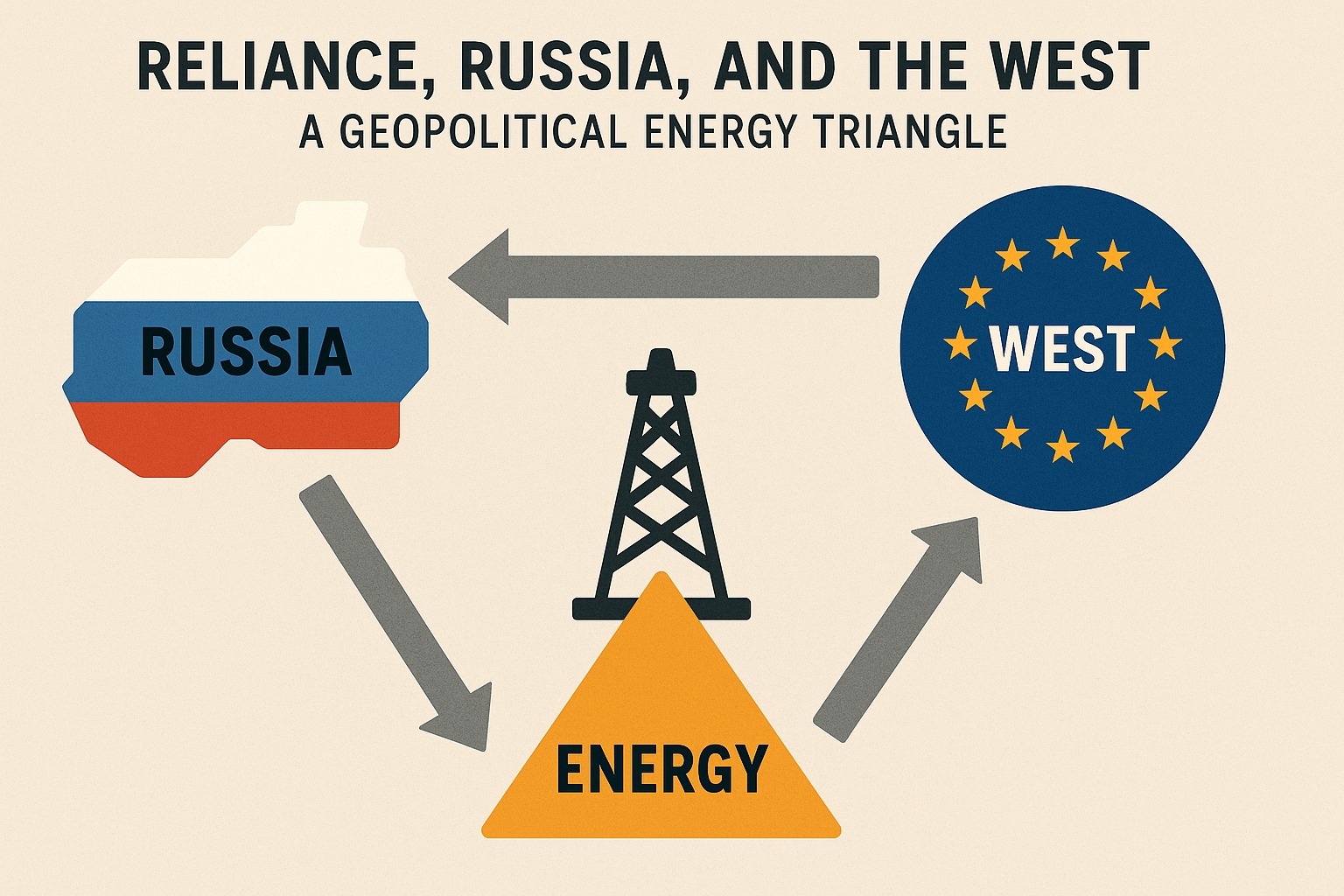
What Happened?
- Before the Ukraine War (till early 2022):
Reliance Industries imported only about 3% of its crude oil from Russia. Its main suppliers were the Middle East—especially Iraq, Saudi Arabia, and the UAE. - Russia Invades Ukraine (Feb 2022):
Western nations (US & EU) imposed heavy sanctions on Russia, banning or restricting its crude imports. Suddenly, Russia needed new buyers and started offering its crude—mainly Urals blend—at deep discounts. - India Steps In:
For India, a country that imports more than 80% of its oil, cheap Russian crude was a golden opportunity. Reliance Industries, with the world’s largest refinery complex at Jamnagar (Gujarat), seized this chance.- Reliance ramped up Russian imports month by month.
- From just 3% in early 2022, it rose to nearly 50% of total imports in 2025.
- How Reliance Used It:
Reliance bought discounted Russian crude, refined it in Jamnagar, and then:- Sold fuels in the Indian market at stable rates, keeping consumer prices under control.
- Exported fuels (diesel, petrol, jet fuel) to Europe—ironically, countries that banned Russian oil were buying refined Russian-origin fuels indirectly from India.
Why Reliance Could Do This (Technical Edge)
- Reliance’s refineries are highly complex, able to process multiple grades of crude, including heavy and sour oils like Russia’s Urals.
- This gave Reliance an edge over simpler refineries that couldn’t handle such crude.
- In simple terms: Reliance could buy cheap Russian oil that others avoided, refine it efficiently, and make high profits.
Impact on Reliance and India
1. Business Impact on Reliance
- Reliance earned record refining margins—profits rose sharply as the cost of crude was lower while product prices globally were high.
- This strengthened Reliance’s energy division and gave it a competitive advantage worldwide.
2. Impact on India’s Energy Security
- India, through Reliance and other refiners, secured cheaper crude.
- This helped keep petrol and diesel prices stable in India despite global volatility.
- Reduced the import bill, saving billions in foreign exchange.
3. Geopolitical Impact
- India became one of the biggest buyers of Russian oil.
- This created friction with the US and Europe, who argued that India was indirectly supporting Russia’s war economy.
- But India defended its stance, saying:
- Energy is a basic need for its 1.4 billion people.
- The West itself used Russian energy for decades, so India cannot be blamed for prioritizing affordability.
4. Global Energy Market Impact
- Reliance’s move created a new oil trade route:
Russia → India → Europe (as refined fuels). - It highlighted how global sanctions often shift, not stop, trade flows.
- It also made Russia more dependent on India and China for its oil exports.
The Risks Ahead
- Over-dependence on Russian crude (50% is very high). If Russia changes terms or discounts shrink, Reliance and India could face challenges.
- Western pressure: If the US/EU tighten rules on refined products made from Russian crude, it could hit Reliance’s exports.
- Geopolitical balancing: India has to carefully manage relations with both the West (key strategic partner) and Russia (energy lifeline).
In Summary
Reliance’s crude import shift from 3% to 50% Russian oil is one of the most dramatic changes in India’s energy sector.
- It boosted Reliance’s profits,
- helped India keep fuel prices stable,
- but also deepened India’s ties with Russia while complicating relations with the West.
It’s a win for now, but also a tightrope walk in the long term.
Highlight it and press Ctrl + Enter.
Related Posts


Stay Informed With the Latest & Most Important News
Previous Post
Next Post

Advertisement








Advertisement

Loading Next Post...