

Now Reading: Delhi Lawyers’ Strike: Not Just About Lawyers, But About the Fight for Fair Trials
-
01
Delhi Lawyers’ Strike: Not Just About Lawyers, But About the Fight for Fair Trials

Delhi Lawyers’ Strike: Not Just About Lawyers, But About the Fight for Fair Trials

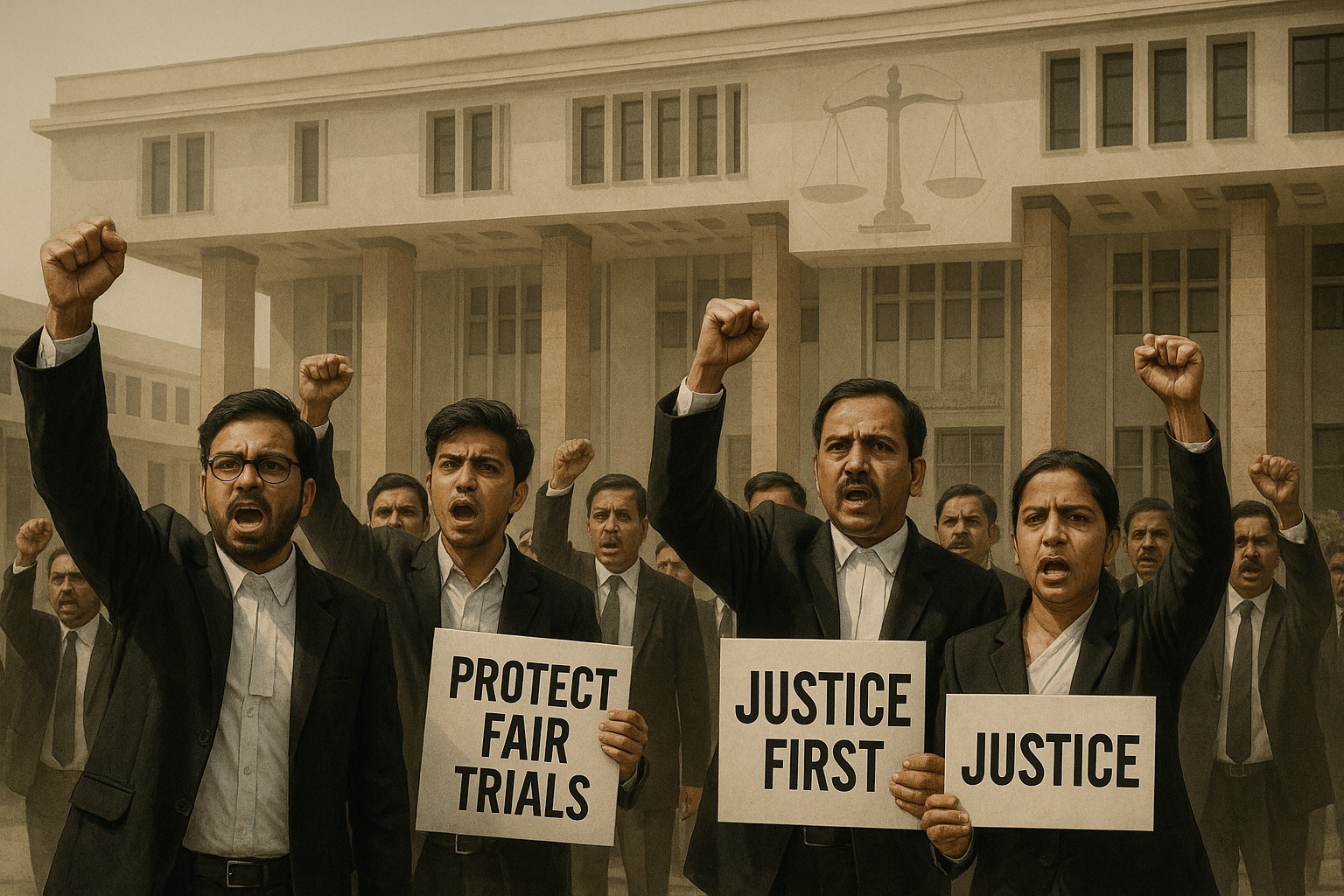
Delhi recently witnessed an unprecedented strike by its lawyers, a protest that momentarily disrupted the functioning of courts across the capital. At first glance, the agitation seemed to be about lawyers themselves—triggered by a controversial notification and a widely circulated video. But as the strike unfolded, it became clear that this was not merely about the legal fraternity’s pride. Instead, it touched the very core of justice in India: the right to a fair trial.
At Behind The Headlines, after careful verification of facts and perspectives, we break down the strike’s origins, implications, and why it matters to every citizen, not just those in black coats.
The Trigger: A Notification and a Viral Video
The immediate flashpoint for the strike was a notification issued by the Lieutenant Governor (LG) of Delhi, authorizing police officers to record statements of witnesses under Section 164 of the Code of Criminal Procedure (CrPC). Traditionally, such statements are recorded before a magistrate to ensure impartiality and independence from police influence.
Alongside this notification, a police training video surfaced online, depicting officers being instructed in ways that raised questions about neutrality in evidence collection. Lawyers argued that together, the notification and the video posed a serious threat to the principles of free and fair trials.
Why Lawyers Took to the Streets
Delhi’s bar associations declared that their protest was not motivated by professional interests but by the larger responsibility of protecting justice. Their central concerns included:
- Erosion of Judicial Oversight: Allowing police to record statements, rather than magistrates, dilutes judicial control over the trial process.
- Risk of Coercion: Witnesses, particularly vulnerable ones, could face undue pressure from police, undermining the authenticity of their testimony.
- Public Confidence: The justice system relies on perception as much as practice. Any step that appears to weaken impartiality damages citizens’ trust.
Thus, lawyers emphasized that their strike was a defense of constitutional principles, not a demand for personal privileges.
The Right to a Fair Trial: Cornerstone of Democracy
The right to a fair trial is embedded in Article 21 of the Indian Constitution, which guarantees protection of life and personal liberty. Globally recognized as a fundamental human right, it ensures that no individual is punished without due process, unbiased adjudication, and equal opportunity to defend themselves.
When lawyers argued that the LG’s notification endangered this principle, they were echoing a sentiment long upheld by courts: justice must not only be done but must also be seen to be done.
Historical Context: Lawyers as Defenders of Justice
This was not the first time that India’s lawyers protested for broader constitutional issues. From the Emergency years of the 1970s to more recent agitations over judicial reforms, the legal community has historically positioned itself as a guardian of democracy.
In Delhi, lawyers recalled past struggles where collective action helped safeguard judicial independence. Their strike, though disruptive in the short term, was framed as part of this ongoing tradition of standing up for the rule of law.
Public Impact of the Strike
For litigants, the strike meant adjourned hearings, delayed bail pleas, and postponed trials. Daily-wage workers, undertrials, and small petitioners bore the brunt. Critics argued that striking lawyers compromised public interest by halting court work.
However, bar leaders defended their action by stating that a temporary disruption is preferable to long-term erosion of fair trial rights. They compared it to preventive medicine—painful now, but necessary to protect future justice.
Police vs. Judiciary: The Larger Institutional Battle
The controversy highlighted an ongoing tussle between executive authorities and the judiciary. By empowering the police to step into traditionally judicial functions, the LG’s notification blurred lines of separation. Lawyers warned this could lead to an imbalance of power where investigation, prosecution, and quasi-judicial recording all rest with the police—raising fears of abuse.
This struggle is not just bureaucratic; it directly affects ordinary citizens who depend on courts for protection against arbitrary state power.
Voices from Within the Fraternity
Senior advocates argued that the notification needed urgent review to ensure it aligns with constitutional guarantees. Young lawyers, meanwhile, stressed that the strike was also about defending their role as officers of the court, not mere litigators. Women lawyers expressed concern that victims of sensitive crimes, such as sexual assault, could be especially vulnerable if police were granted unchecked authority in recording their statements.
Political Dimensions
While the strike was presented as apolitical, the issue inevitably entered the political arena. Opposition leaders criticized the LG’s decision as an overreach undermining judicial independence. Ruling party leaders defended the move as an administrative reform aimed at efficiency.
This political crossfire further underscored the importance of public debate on who should control processes that determine liberty and justice.
Editorial Perspective
The Editorial Team of Behind The Headlines believes that the Delhi lawyers’ strike was fundamentally about citizens’ rights, not lawyers’ interests. It spotlighted the fragile balance between state power and judicial oversight, reminding us that democratic freedoms are easily eroded if not defended at every step.
The strike may have inconvenienced thousands in the short term, but its message—that fair trials must remain sacrosanct—is one that resonates beyond the walls of courtrooms. It is a call for vigilance, ensuring that no administrative shortcut undermines the principle of impartial justice.
Conclusion
Delhi’s lawyers have sent a clear message: justice cannot be reduced to efficiency metrics or bureaucratic convenience. The right to a fair trial is not negotiable, and any attempt to dilute it must face resistance. While courts will eventually decide the legality of the LG’s notification, the strike has already succeeded in raising public awareness about what is truly at stake.
In the end, this was never just about lawyers. It was about every citizen’s right to a system where the rule of law prevails over the rule of convenience.
Related Posts



Stay Informed With the Latest & Most Important News
Advertisement







Advertisement
