

Now Reading: President Trump Urges Americans to Take ‘Not Controversial’ Vaccines Amid Ongoing Debate
-
01
President Trump Urges Americans to Take ‘Not Controversial’ Vaccines Amid Ongoing Debate

President Trump Urges Americans to Take ‘Not Controversial’ Vaccines Amid Ongoing Debate

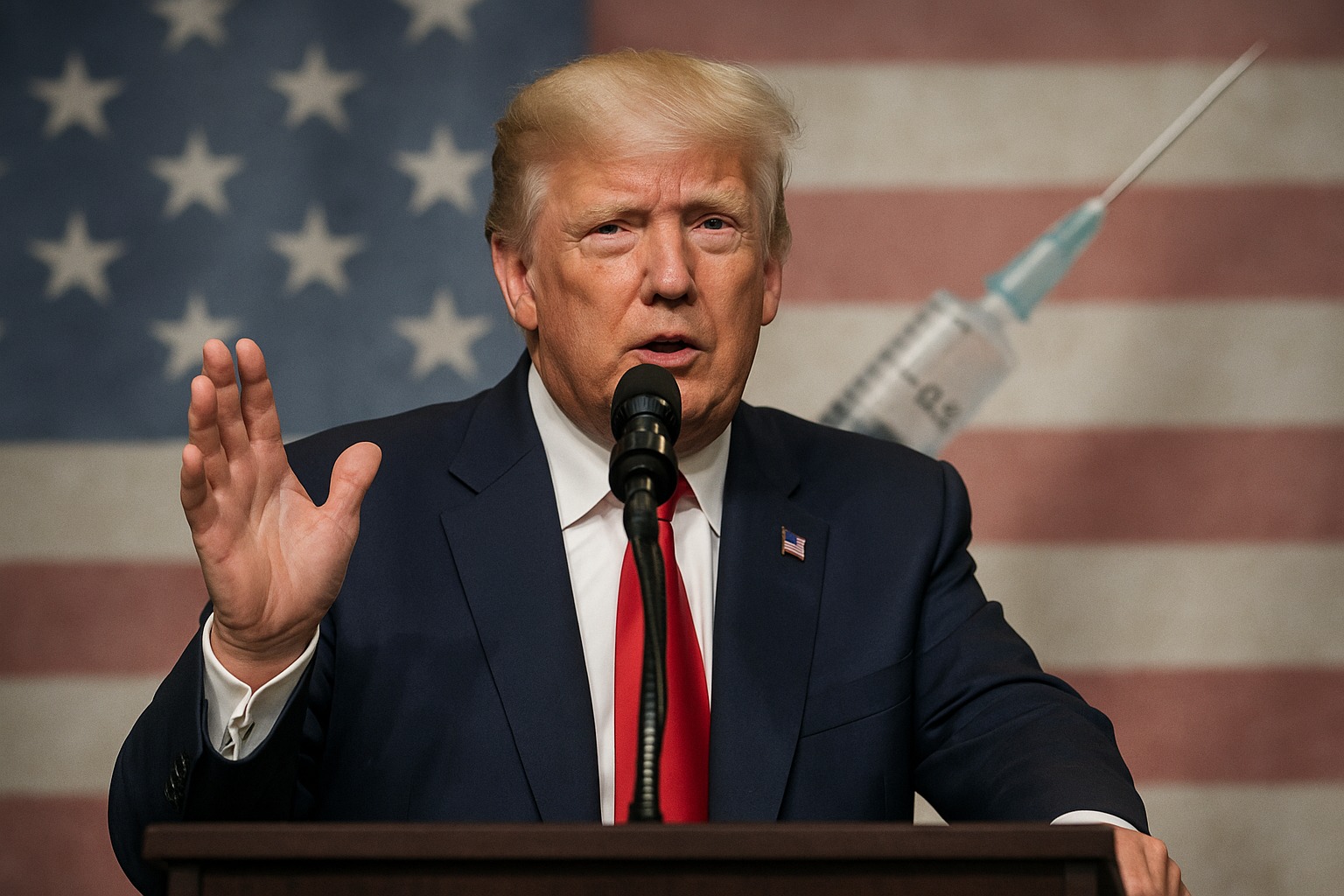
President Donald Trump has once again waded into the vaccine debate, this time urging Americans to take vaccines that he described as “not controversial.” His remarks, made during a public appearance in Florida, come at a time when discussions about vaccine mandates, public trust in science, and the role of government in health policy continue to stir strong emotions across the country.
The Editorial Team of Behind The Headlines examines what Trump’s statement means, why it matters, and how it reflects the broader divide in America’s health and political landscape.
Trump’s Statement and Context
Speaking at a rally-style event in Florida, President Trump addressed questions around vaccination. While avoiding direct references to COVID-19 vaccines, he emphasized that Americans should continue to take vaccines that are widely trusted, long-established, and effective against diseases such as measles, polio, and influenza.
In his words, “Americans should take vaccines that are not controversial.” He further suggested that public debate around certain vaccines had created confusion and mistrust, but stressed that long-standing vaccines remained vital to public health.
Why the Word “Controversial” Matters
Trump’s choice of words—“not controversial”—is significant. While he did not explicitly name COVID-19 vaccines, the implication was clear. Since 2020, vaccine debates in the United States have largely centered on COVID-19 shots, their mandates, and the government’s role in enforcing them.
By framing vaccines into “controversial” and “non-controversial” categories, Trump placed himself between two polarized camps:
- Those who advocate strongly for vaccine mandates and universal immunization.
- Those who oppose mandates on grounds of personal freedom and skepticism toward pharmaceutical companies.
This balancing act reflects Trump’s political instincts to appeal to both public health advocates and voters skeptical of government intervention.
Vaccines He Likely Referred To
While Trump did not list specific vaccines, his remarks suggest support for long-trusted immunizations such as:
- Polio vaccine: Instrumental in eradicating polio in the United States.
- Measles, Mumps, Rubella (MMR) vaccine: A cornerstone of child health globally.
- Tetanus and Diphtheria vaccines: Long-standing, non-controversial immunizations.
- Flu shots: Commonly recommended for seasonal protection.
By referencing these without naming COVID-19 vaccines, Trump reinforced his intent to keep the conversation tied to less politically divisive ground.
Florida as the Backdrop
Florida continues to serve as a symbolic battleground in America’s vaccine and mandate debates.
- The state government, led by allies of Trump, has consistently pushed back against federal vaccine mandates.
- Public health policy in Florida has leaned toward personal choice over enforcement.
- Holding the event there underscores Trump’s alignment with a constituency skeptical of overreach in health mandates.
The venue thus served both as a political stage and a subtle statement about federal-state tensions on health policies.
Political Undertones in Trump’s Remarks
Trump’s call for Americans to take “not controversial” vaccines carried several political undertones:
- Reassuring Moderates: By supporting established vaccines, he avoids appearing anti-science.
- Appealing to Skeptics: By implying some vaccines remain controversial, he gives room to those critical of COVID-19 vaccine policies.
- Election Year Messaging: With health policy remaining a hot-button issue, Trump’s words aim to balance competing narratives ahead of the 2026 elections.
This balancing approach allows Trump to present himself as pragmatic, reinforcing his brand as someone who listens to “the people.”
Public Health Concerns
Health experts responded cautiously to Trump’s remarks. While many welcomed his reaffirmation of trusted vaccines, they expressed concern that his choice of words could deepen divisions.
- Risk of Confusion: By not clarifying which vaccines are “controversial,” public uncertainty could grow.
- Need for Clarity: Experts stress that vaccines undergo rigorous testing before approval, and categorizing them politically can undermine scientific trust.
- Impact on Uptake: Messaging from political leaders significantly influences vaccine compliance, making clarity essential.
Despite concerns, public health officials acknowledged that Trump’s statement at least reinforced the importance of long-standing immunization programs.
The Vaccine Debate in American Politics
Vaccines have always been part of public health policy, but only in the last few years have they become such deeply politicized symbols.
- COVID-19 Pandemic: The introduction of COVID-19 vaccines in record time, coupled with mandates, sparked widespread debate.
- Personal Freedom vs. Public Good: The central conflict has become whether individuals should be compelled to vaccinate for broader societal benefit.
- Misinformation: Social media amplified conflicting claims, intensifying mistrust.
- Political Alignments: Democrats largely pushed mandates, while many Republicans opposed them, aligning health debates with party identity.
Trump’s statement reflects this new reality, where vaccines are no longer just medical but also political markers.
International Perspective
Globally, Trump’s remarks were followed with interest. Other countries have also faced similar debates over mandates, particularly in Europe and parts of Asia. However, the United States remains unique in how sharply the vaccine debate has split along political lines.
For international observers, Trump’s balancing message was seen as an attempt to bridge this divide without alienating his voter base.
What This Means for the Future
As vaccine debates evolve, Trump’s statement may shape public discourse in several ways:
- Encouraging uptake of traditional vaccines, ensuring critical immunization programs remain intact.
- Keeping COVID-19 vaccine debates alive without directly taking sides.
- Influencing how future health crises are managed, particularly regarding mandates.
In the long run, his remarks may add pressure on policymakers to find middle ground between public health needs and personal freedoms.
Conclusion
President Donald Trump’s call for Americans to take “not controversial” vaccines underscores the continuing politicization of health in America. While reinforcing the importance of trusted immunizations, his statement also highlights how deeply vaccine debates have become tied to political identity.
For public health advocates, the challenge will be to ensure clarity and confidence in all vaccines, while for political leaders, the task will be to balance scientific realities with the electorate’s sentiments.
The Editorial Team of Behind The Headlines will continue tracking this evolving story, providing fact-verified updates on the intersection of health policy and politics in the United States.
Related Posts



Stay Informed With the Latest & Most Important News


Advertisement







Advertisement
