

Now Reading: India-US trade talks resume after Trump’s 50% tariff move
-
01
India-US trade talks resume after Trump’s 50% tariff move


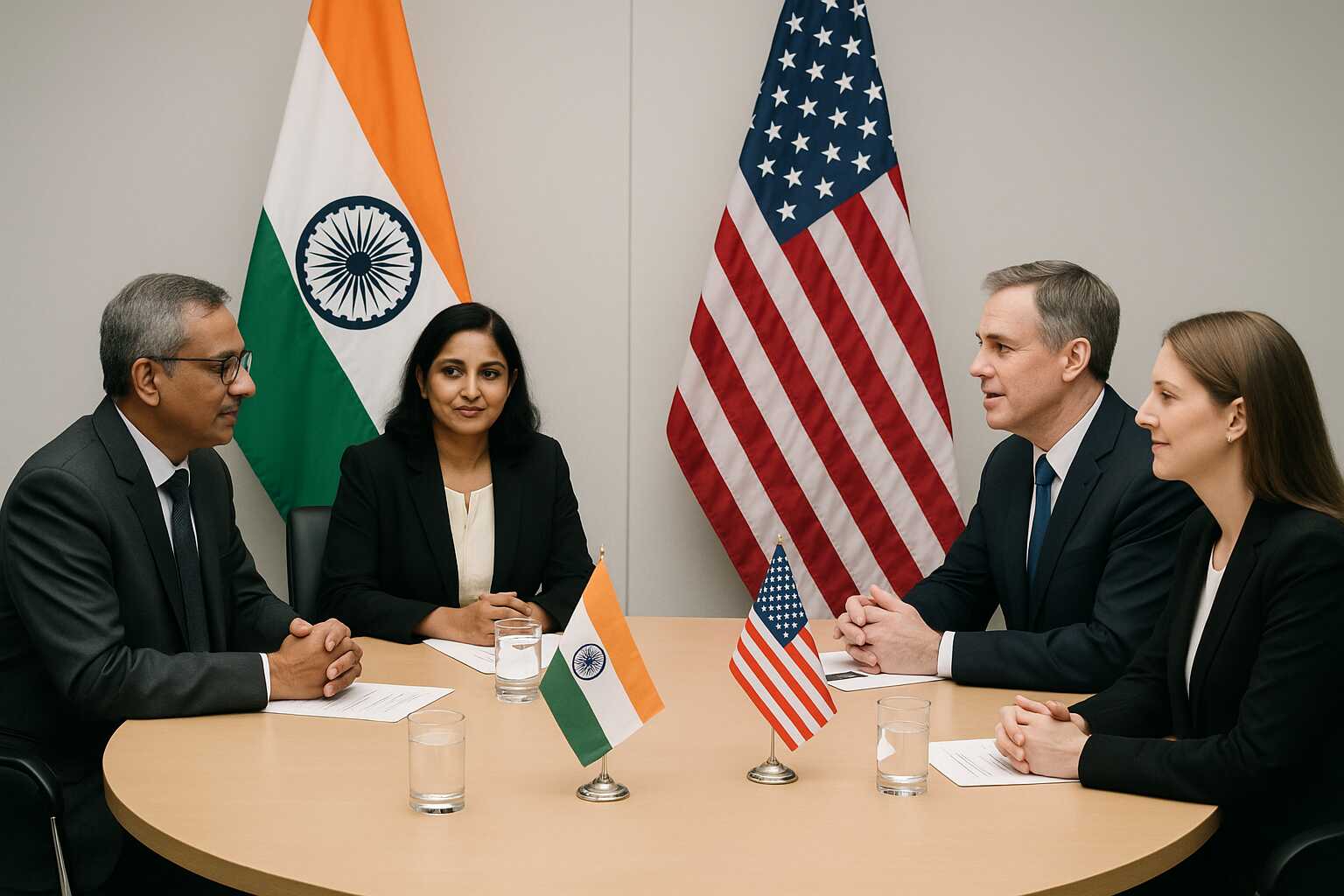
India and the United States have resumed in-person trade negotiations for the first time since former US President Donald Trump imposed steep 50% tariffs on several Indian exports. The renewed dialogue, seen as a critical reset in bilateral trade relations, comes at a time when both nations face mounting global economic pressures and shifting geopolitical priorities.
The meeting, led by senior officials from both sides, aims to address long-pending disagreements, explore fresh trade opportunities, and set the foundation for a broader economic partnership. With tariffs, market access, and investment rules on the agenda, the talks are expected to shape the future course of India-US trade ties.
Background: Trump’s tariff decision and its impact
The roots of the current standoff trace back to 2019, when Donald Trump accused India of maintaining “unfair trade practices.” His administration imposed tariffs of up to 50% on Indian exports such as steel, aluminum, and select agricultural goods.
Impact on India:
- India’s steel and aluminum exports to the US saw a sharp decline.
- Small exporters in sectors like textiles, engineering, and leather reported losses.
- Consumer goods faced reduced competitiveness due to higher duties.
Impact on the US:
- American manufacturers dependent on Indian raw materials had to absorb higher input costs.
- Certain industries, including engineering and chemicals, faced supply chain disruptions.
These measures created friction between the world’s two largest democracies and stalled the progress of a proposed trade deal.
The significance of the first in-person meeting
While virtual interactions have taken place since 2020, this is the first face-to-face trade negotiation in years. Diplomats say the physical meeting signals a strong willingness to iron out differences.
Key areas of focus include:
- Tariff rollbacks – India wants the US to reconsider or reduce steep duties.
- Market access – Washington is pushing India to open up sectors like agriculture, e-commerce, and digital services.
- Investment climate – Discussions on making regulatory frameworks more predictable.
- Technology and supply chains – Cooperation in semiconductors, clean energy, and defense production.
India’s priorities in the talks
India is expected to push for:
- Restoration of Generalized System of Preferences (GSP) benefits, which were withdrawn by the US.
- Easier visa norms for skilled professionals in IT and services.
- Wider access for Indian pharmaceutical products in the American market.
- Removal of agricultural trade barriers.
US priorities in the talks
From Washington’s perspective, the emphasis is on:
- Greater access for US agricultural exports.
- Data localization and digital trade regulations in India.
- Intellectual property protections.
- Stronger labor and environmental compliance mechanisms.
Trade numbers: Why both nations need each other
India-US bilateral trade reached nearly $200 billion in 2023, making the US India’s largest trading partner. Despite tariff disputes, trade flows remained strong.
- India exports textiles, pharmaceuticals, IT services, and engineering goods.
- The US exports aircraft, defense equipment, oil, and agricultural produce.
Analysts believe resolving tariff-related disputes could unlock even greater potential, especially in technology-driven sectors.
Expert opinions on the talks
Trade experts suggest that while no breakthrough deal may emerge immediately, this round of talks could set the tone for future agreements.
- Short-term goal: Reduce or remove tariffs on select goods.
- Medium-term goal: Expand cooperation in renewable energy and digital trade.
- Long-term goal: Negotiate a broader free trade agreement (FTA).
Reactions from industry bodies
Indian exporters’ associations have welcomed the resumption of dialogue. Sectors like textiles, IT services, and pharmaceuticals are hopeful that new agreements will open larger opportunities in the US market.
Meanwhile, US industry groups are urging the Biden administration to use this chance to press for more favorable trade terms.
Geopolitical angle
The talks are not just about tariffs. With growing tensions in global supply chains due to the Russia-Ukraine conflict and US-China trade rivalry, India is being viewed as a strategic partner in diversifying supply lines.
- Defense cooperation: US companies are keen to expand joint production in India.
- Energy partnerships: India is looking for clean energy technology collaborations.
- China factor: Both nations are positioning themselves to counter China’s dominance in manufacturing and trade.
The road ahead
Experts caution that the negotiations will be complex. While India seeks tariff relief, the US will press for greater structural reforms. Achieving a balance between protecting domestic interests and expanding global partnerships will be key.
If successful, the talks could:
- Revive investor confidence.
- Boost bilateral trade volumes.
- Strengthen India’s role in global supply chains.
Conclusion
The India-US trade negotiations mark a crucial step in redefining economic ties after years of tariff disputes. Although immediate results may be limited, the dialogue signals a mutual intent to move past trade tensions and build a more resilient partnership. For both nations, the outcome of these talks could influence not only their economic future but also the broader geopolitical order.
Internal Backlinks
Related Posts



Stay Informed With the Latest & Most Important News
Previous Post
Next Post


Advertisement







Advertisement
