

Now Reading: H-1B Visa Fee Hike Sparks Panic: India Raises Humanitarian Concerns, US Issues Clarifications
-
01
H-1B Visa Fee Hike Sparks Panic: India Raises Humanitarian Concerns, US Issues Clarifications

H-1B Visa Fee Hike Sparks Panic: India Raises Humanitarian Concerns, US Issues Clarifications

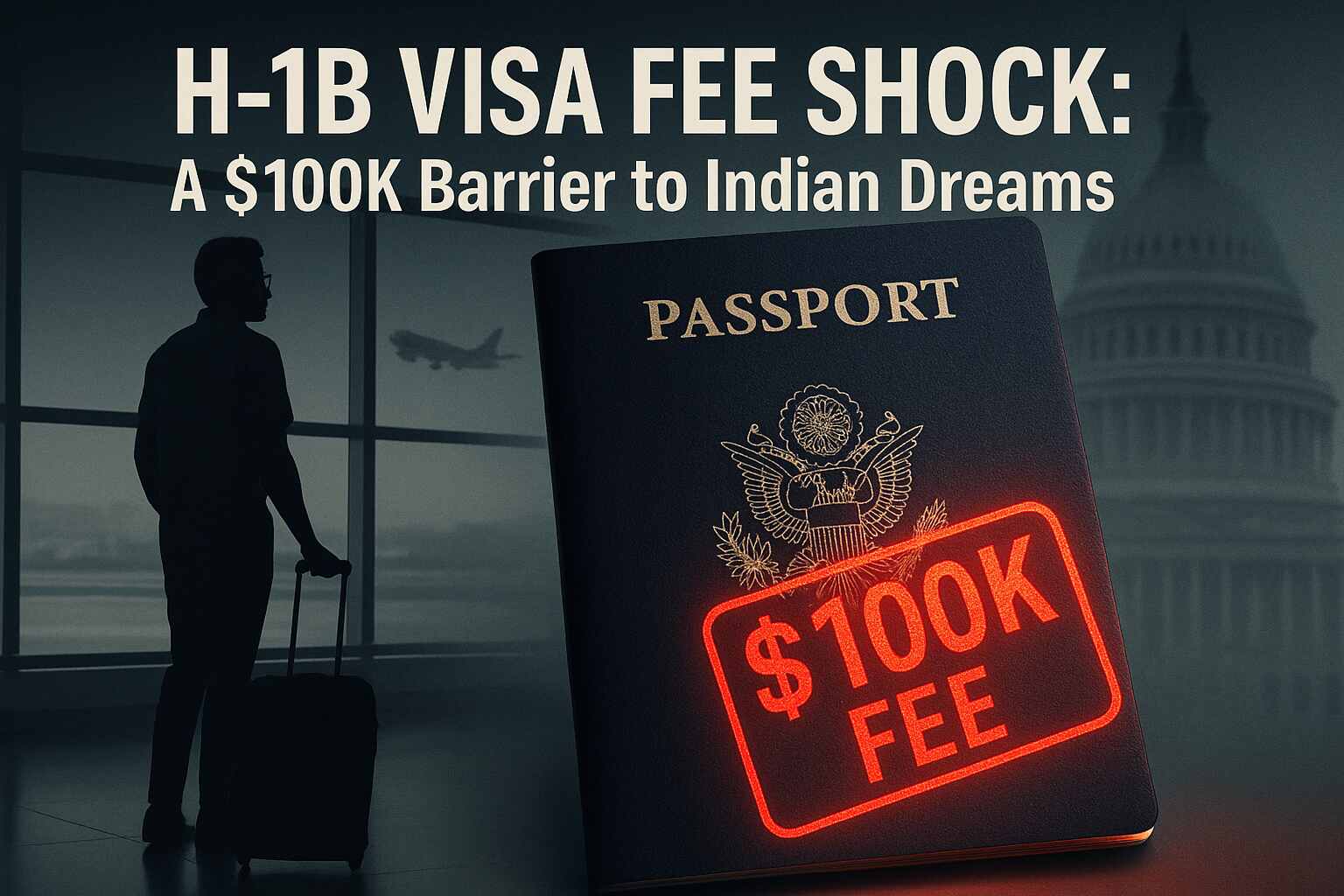
The announcement of a steep hike in H-1B visa fees by the US has triggered widespread concern in India, with officials calling it a humanitarian issue and technology companies warning of long-term implications. With the new policy directly affecting lakhs of Indian IT professionals and their families, reactions have poured in throughout the day. Here’s a timeline of how events unfolded and what each side has said so far.
Morning Shock: Trump Administration’s Announcement
Early in the day, the US administration confirmed that under a new proclamation signed by President Donald Trump, H-1B visa applicants would now face a hefty annual fee of $100,000. The announcement was framed as part of a broader move to “protect American tech jobs” and reduce dependency on foreign workers.
The news immediately sent shockwaves through the Indian IT industry, which contributes the largest pool of H-1B holders through companies like Infosys, TCS, Wipro, Microsoft, and Amazon.
India’s First Response: A Diplomatic Concern
Within hours of the announcement, India’s Ministry of External Affairs (MEA) issued a statement calling the sudden hike “a humanitarian concern.” Officials highlighted that many H-1B holders are families who have lived in the US for years, paying taxes and contributing to local economies.
India urged Washington to reconsider the policy, stating that such a drastic financial burden could cause “serious disruption” for professionals and companies alike.
Read our detailed report on India-US visa ties here.
Midday Panic: Tech Industry Reacts
By noon, leading IT giants and industry associations raised red flags.
- Infosys warned that project costs would increase sharply.
- NASSCOM called the move “unrealistic” and said it would hurt both US companies and Indian talent pipelines.
- Microsoft and Amazon expressed concern for their Indian employees, many of whom are mid-level professionals supporting critical projects.
Market analysts also noted the immediate dip in confidence, with shares of top IT exporters showing signs of volatility.
Afternoon Clarification: US Issues Statement
Facing rising panic, the US State Department issued a clarification around 3 PM, stating that the rule was aimed at new applications and not intended to force existing H-1B holders out of the system. Officials added that humanitarian concerns raised by India would be “taken into account” in policy execution.
However, uncertainty remains over how renewals will be handled and whether dependent visas (H-4) will also see fee revisions.
Explore our analysis on past US visa reforms.
Evening Debate: Politics Enters the Spotlight
By evening, Indian political leaders also joined the debate. Opposition voices criticized the Indian government for being “ill-prepared” to handle the crisis. Meanwhile, US political circles defended the move as a “necessary protectionist policy” in line with Trump’s larger economic strategy.
Analysts say the issue could escalate further during upcoming diplomatic talks, with India expected to press for concessions.
Bigger Picture: What It Means for India and the US
This fee hike could:
- Increase operational costs for Indian IT exporters.
- Push talent migration to Canada, Europe, and Australia.
- Strain India-US diplomatic ties at a sensitive moment.
At the same time, the US risks losing skilled talent that sustains its tech ecosystem, potentially driving innovation and jobs elsewhere.
Read our editorial on the future of Indian tech talent.
Conclusion
Here’s the key time-wise sequence:
- 3:59 PM, Sep 20 – US official tells HT the $100K fee applies only to new applications.
- 5:42 PM, Sep 20 – Piyush Goyal schedules US visit for Sept 22 trade talks.
- 8:56 PM, Sep 20 – White House clarifies fee is not “annual” but one-time.
- 8:20 PM, Sep 20 – White House issues official clarification on exemptions.
- 9:43 PM, Sep 20 – Goldman Sachs cautions employees on international travel.
- 11:19 PM, Sep 20 – Indian embassy releases emergency assistance number.
- 12:17 AM, Sep 21 – Indian govt issues formal statement on Trump’s proclamation.
- 12:44 AM, Sep 21 – $100K visa fee rule officially takes effect.
- 12:59 AM, Sep 21 – US Chamber of Commerce voices concern on business impact.
- 1 Hr 41 Mins ago – USCIS publishes detailed guidelines on who is impacted.
- 1 Hr 1 Min ago – India flags humanitarian concerns at diplomatic level.
- 26 Mins ago – Congress MP criticizes Trump move, says targeting Indians and Modi.
- 5 Mins ago – Report: Amazon leads H-1B visa usage, followed by other tech giants.
The H-1B visa fee hike has triggered one of the sharpest flashpoints in India-US relations in recent times. While clarifications have calmed some fears, uncertainty remains high, especially for professionals and families caught in the middle. As India pushes for relief, the coming weeks will decide whether diplomacy can balance economics, politics, and humanity.
Related Posts


Stay Informed With the Latest & Most Important News
Previous Post
Next Post

Advertisement





Advertisement
