

Now Reading: Google’s AI Mood Board App ‘Mixboard’ Aims to Challenge Pinterest
-
01
Google’s AI Mood Board App ‘Mixboard’ Aims to Challenge Pinterest


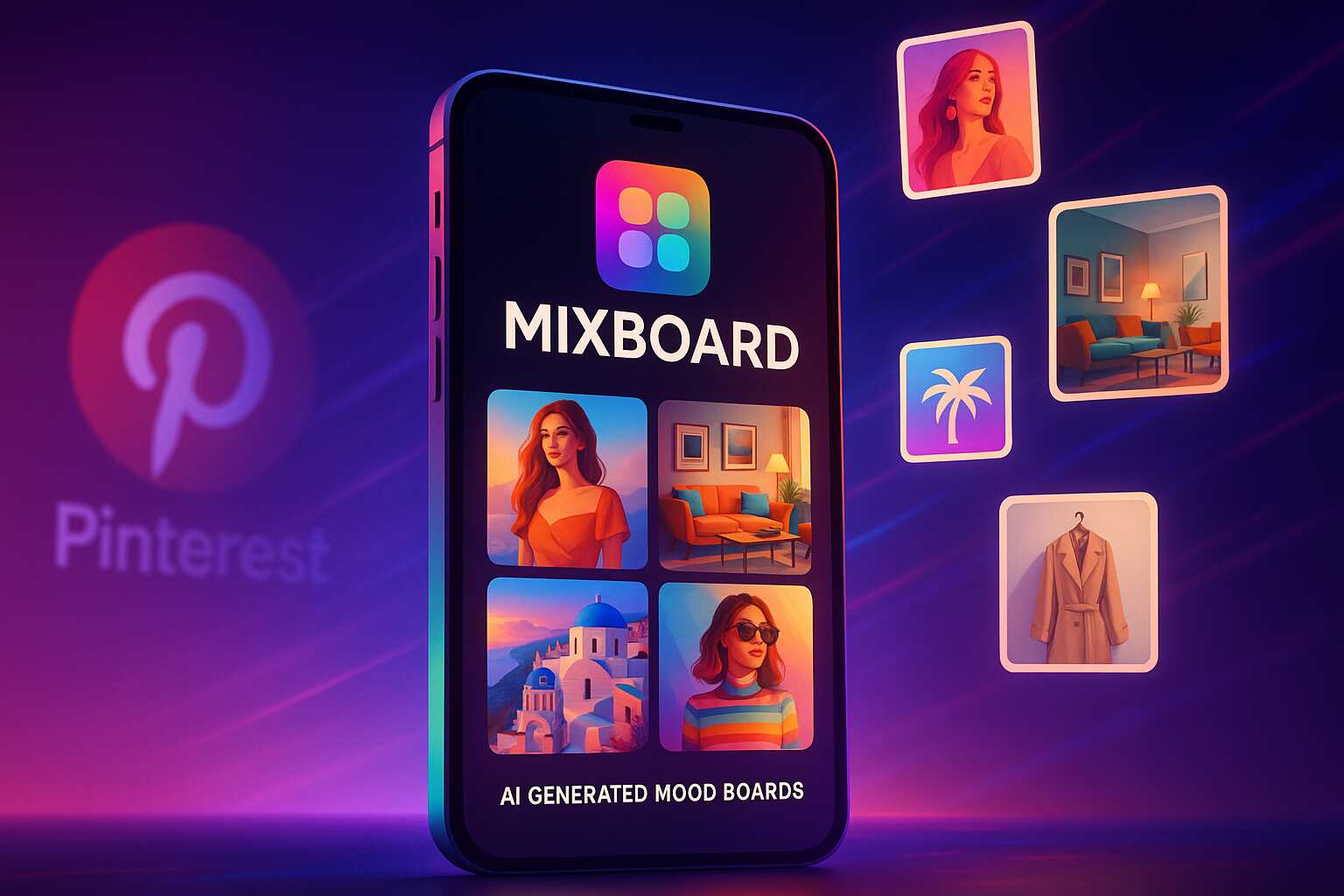
Google has officially entered the creative inspiration space with the launch of Mixboard, an AI-powered mood board app designed to rival Pinterest. Unlike traditional platforms where users manually curate ideas, Mixboard leverages artificial intelligence to generate boards based on prompts, themes, or uploaded visuals. This step signals Google’s attempt to blend AI-driven creativity with social discovery, aiming to capture the growing demand for personalized content inspiration.
The app is set to reshape how designers, influencers, and everyday users brainstorm, curate, and share ideas online. But can it truly take on Pinterest’s dominance?
What is Mixboard?
Mixboard is Google’s latest experiment in AI creativity. At its core, it:
- Lets users create mood boards instantly using text prompts or uploaded images.
- Suggests curated themes across fashion, interior design, travel, and lifestyle.
- Uses Google’s deep AI models to recommend complementary colors, styles, and trends.
- Offers collaboration tools, enabling group boards similar to shared Google Docs.
(Explore our feature on how AI tools are transforming design workflows across industries.)
Why Google Built Mixboard
Pinterest has dominated the mood board space for over a decade, but its growth has plateaued. Google sees a gap: users increasingly want smarter, AI-assisted inspiration rather than manual curation.
- AI Advantage: Mixboard can generate unique boards in seconds.
- Integration Edge: Google can tie the app into its ecosystem—Search, Photos, and even Google Shopping.
- Monetization Play: Like Pinterest, Mixboard could become a hub for ad-driven product discovery.
Key Features of Mixboard
1. AI-Generated Mood Boards
Users type prompts like “minimalist bedroom with warm lighting” and get a ready-made board.
2. Visual Matching
Upload a single photo, and Mixboard expands it into a full theme, suggesting items, colors, and layouts.
3. Smart Collaboration
Multiple users can co-curate boards in real time, making it ideal for design agencies or event planners.
4. Product Discovery
Integration with shopping links could let users buy directly from boards, giving it an edge over Pinterest’s affiliate-heavy model.
(Read our analysis on Google’s push into AI-driven shopping experiences.)
Expert & Market Reactions
- Tech Analysts: See Mixboard as part of Google’s larger push to integrate AI into consumer-facing products.
- Designers: Applaud the speed of AI-driven inspiration but raise questions about originality.
- Users: Early testers report excitement over faster board creation but remain curious about privacy and data use.
Challenges Ahead for Google
Despite its promise, Mixboard faces hurdles:
- Pinterest’s Community Loyalty: Pinterest has a decade of user-generated content and communities.
- Privacy Concerns: AI-based personalization often raises red flags about data collection.
- Adoption Curve: Convincing designers and brands to switch platforms will take time.
Bigger Picture
Mixboard reflects a broader trend—AI becoming the creative assistant in everyday life. From drafting designs to curating inspiration, users now expect technology to do the heavy lifting. If Google plays its cards right, Mixboard could redefine the mood board space, but if not, it may join the list of Google’s ambitious experiments that never scaled.
Conclusion
With Mixboard, Google has taken direct aim at Pinterest’s turf. Backed by AI and the Google ecosystem, the app promises faster, smarter, and more interactive mood board creation. The coming months will reveal whether users embrace this AI-driven creativity tool or stick with Pinterest’s tried-and-tested format.
Related Posts



Stay Informed With the Latest & Most Important News
Previous Post
Next Post


Advertisement









Advertisement