

Now Reading: CDS Chauhan: Nuclear Threat Must Be Part of India’s Security Calculus
-
01
CDS Chauhan: Nuclear Threat Must Be Part of India’s Security Calculus


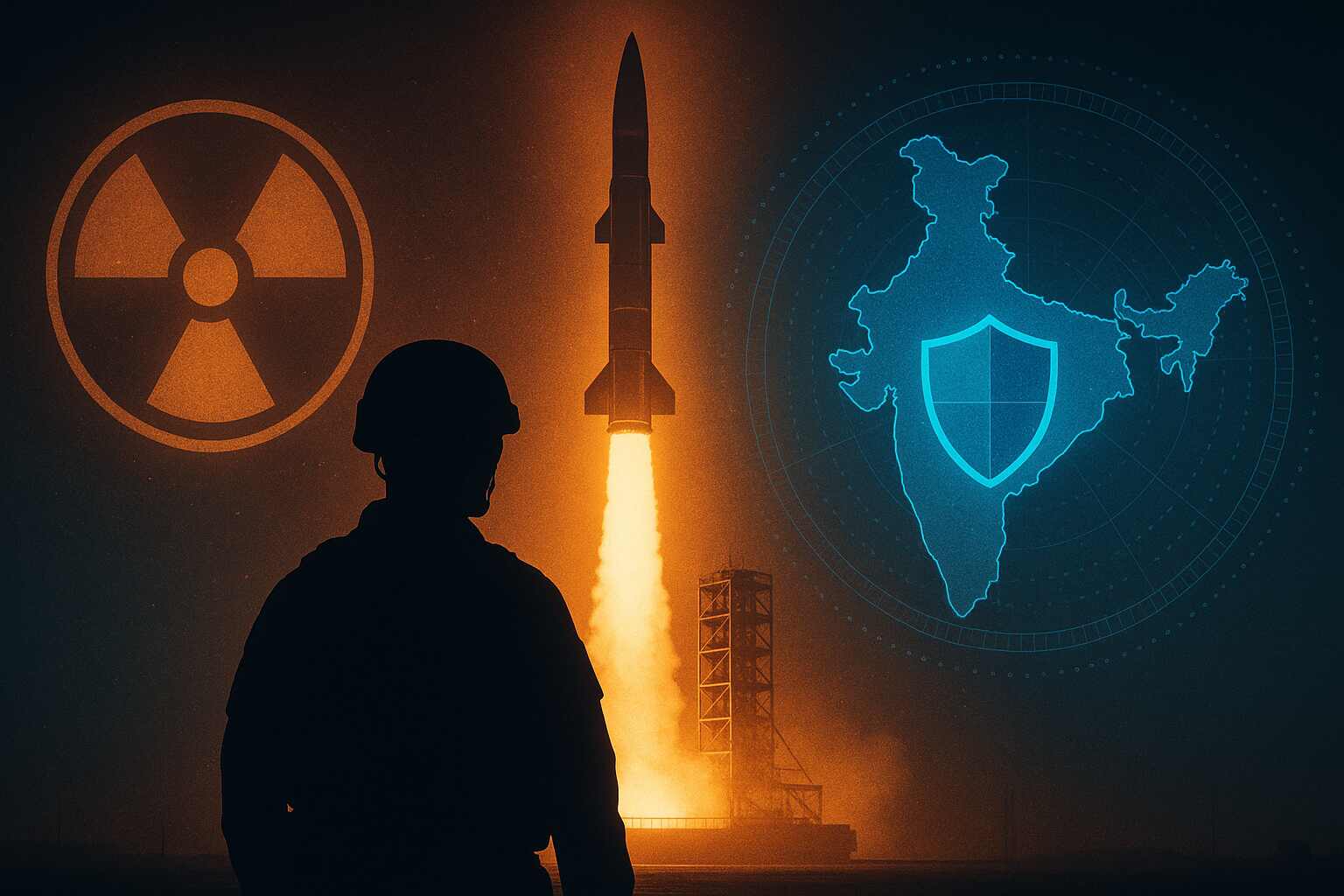
India’s Chief of Defence Staff, General Anil Chauhan, has underscored that the possibility of a nuclear attack must remain an essential part of India’s security calculus. His remarks reflect the shifting global and regional security landscape, where unconventional threats—especially nuclear capabilities—cannot be ignored.
With rising geopolitical instability, regional rivalries, and the advancement of new-age warfare, Chauhan’s cautionary note calls for a deeper reassessment of India’s defense preparedness and strategic deterrence.
The context behind the statement
General Chauhan’s statement came during a high-level security dialogue addressing India’s future defense needs. He emphasized that while conventional military threats remain significant, nuclear preparedness cannot be sidelined in strategic planning.
The warning comes at a time when nuclear rhetoric is being amplified globally—be it Russia’s standoff with the West, North Korea’s aggressive testing, or tensions in South Asia involving Pakistan and China.
(Also read: Intermediate Range Agni-Prime Missile tested successfully)
India’s nuclear doctrine
India has traditionally followed a “No First Use” (NFU) policy since the adoption of its nuclear doctrine in 2003. This means India pledges not to launch a nuclear strike unless attacked first. However, the doctrine is not static and has often been debated by strategic experts.
- NFU principle: Projects India as a responsible nuclear power.
- Credible minimum deterrence: Ensures capability without aggressive stockpiling.
- Deterrence posture: Focused on discouraging adversaries from nuclear escalation.
General Chauhan’s remarks highlight that while the doctrine remains intact, India must constantly adapt its strategies to evolving nuclear realities.
The global backdrop: Escalating risks
The world is witnessing heightened nuclear anxieties:
- Russia-Ukraine conflict: Moscow’s repeated nuclear warnings have unsettled global stability.
- North Korea’s testing spree: Ongoing missile and nuclear tests challenge Asia-Pacific security.
- China’s arsenal expansion: Beijing is rapidly modernizing its nuclear stockpile.
- Pakistan’s tactical nukes: Islamabad’s battlefield nuclear strategy raises concerns of miscalculation.
India’s strategic planners must therefore balance deterrence with modernization of defense infrastructure.
(Read more: Terrorism still a persistent threat: Jaishankar at G20)
Why nuclear preparedness matters for India
India’s geographic and strategic position makes nuclear awareness critical. With two nuclear-armed neighbors—China and Pakistan—the probability of miscalculation or escalation cannot be ruled out.
Key considerations for India’s security calculus:
- Maintaining second-strike capability through a strong nuclear triad.
- Enhancing early-warning systems and surveillance infrastructure.
- Modernizing missile systems like Agni-series and submarine-based deterrents.
- Strengthening civil defense and public awareness protocols.
Reactions from strategic experts
Defense analysts largely welcomed Chauhan’s remarks, saying they align with India’s long-term security interests. Experts argue that while India should continue advocating global disarmament, realism demands preparedness for worst-case scenarios.
Some, however, caution that highlighting nuclear threats too frequently could escalate regional tensions. Balancing deterrence and diplomacy remains the real test for policymakers.
Bigger picture: India’s evolving defense posture
India has already accelerated investment in indigenous defense systems, missile modernization, and space-based monitoring. Nuclear preparedness fits into the broader multi-domain warfare strategy that includes cyber, space, and AI-driven capabilities.
By keeping nuclear scenarios in strategic planning, India ensures it is not blindsided in case adversaries adopt coercive postures.
Conclusion: A message of deterrence and vigilance
General Chauhan’s warning is not a call for aggression but a reminder of prudence. In today’s unpredictable world, nuclear preparedness is about ensuring peace through credible deterrence.
For India, the challenge is to safeguard national security without triggering an arms race, staying true to its responsible nuclear stance while preparing for all possibilities.
Related Posts



Stay Informed With the Latest & Most Important News
Previous Post
Next Post


Advertisement







Advertisement
