

Now Reading: Sonia Gandhi’s Letter Raises Questions Over IPS Officer’s Death and Social Justice
-
01
Sonia Gandhi’s Letter Raises Questions Over IPS Officer’s Death and Social Justice

Sonia Gandhi’s Letter Raises Questions Over IPS Officer’s Death and Social Justice

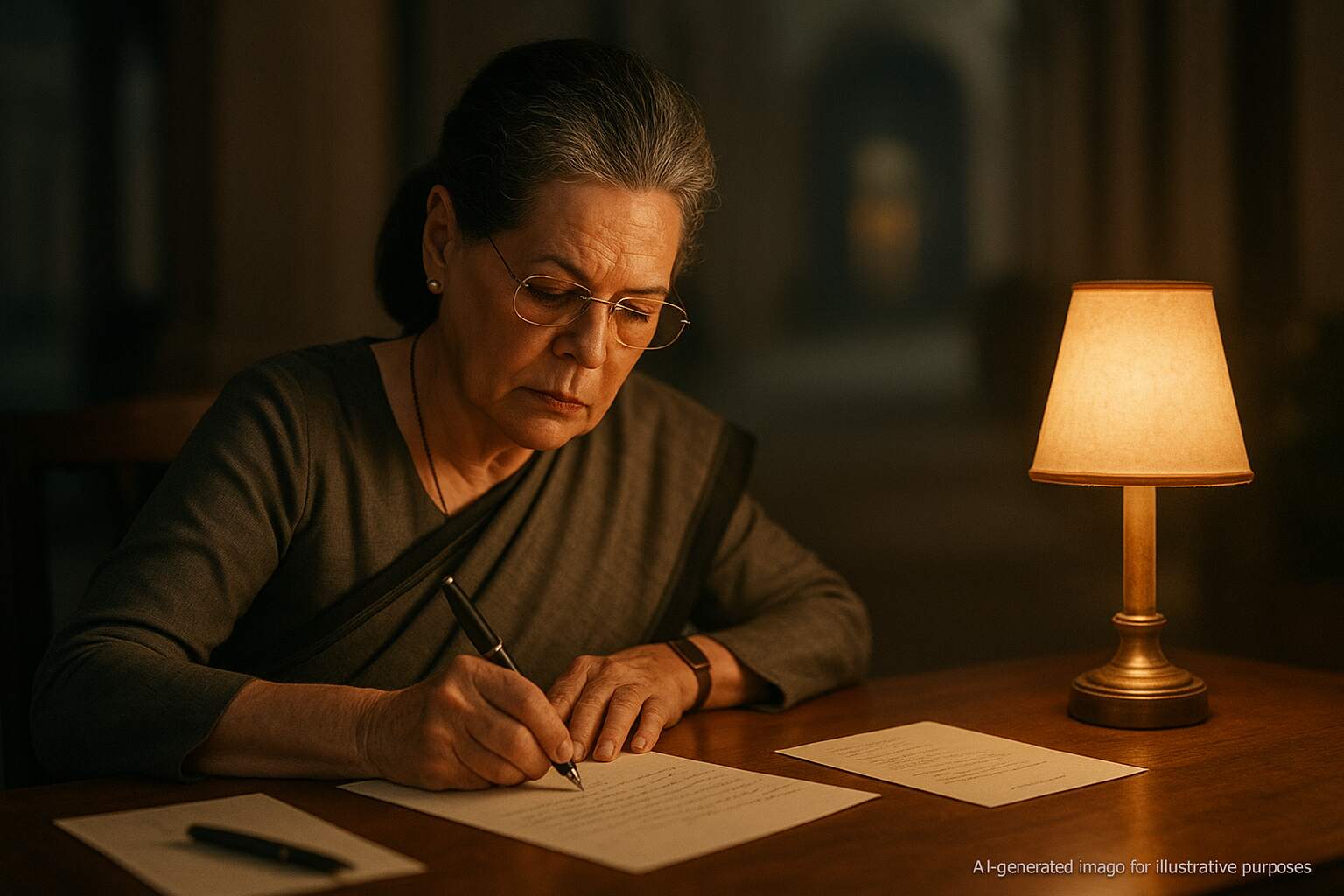
In a powerful message that has reignited discussions on social justice and institutional fairness, Congress leader Sonia Gandhi has written a personal letter to the wife of a deceased Haryana IPS officer, describing the case as “shocking and deeply painful.”
The officer, who allegedly died by suicide, has left behind questions about bias, workplace stress, and discrimination within the police system. Sonia Gandhi’s intervention signals that the issue has now moved beyond a state-level concern to a national conversation on justice and accountability.
What Happened
The Haryana IPS officer’s death earlier this month triggered widespread debate across the state and on social media. According to preliminary reports, he had been dealing with extreme work pressure and possible internal bias linked to his social identity.
While an official investigation is underway, several advocacy groups and former bureaucrats have called for a high-level inquiry into the matter. The officer’s family claims that repeated workplace harassment and unfair treatment may have led to his tragic death.
Sonia Gandhi, in her letter to the officer’s wife, expressed deep sorrow, saying that the incident reflects the “urgent need for sensitivity and fairness” in public institutions.
Sonia Gandhi’s Message
In her handwritten note, Sonia Gandhi reportedly told the officer’s widow that she shares her grief and anger. She condemned what she termed as the systemic neglect of social justice, saying no officer or citizen should feel alienated or discriminated against because of their social background.
Her letter also called for transparency in the investigation and urged the authorities to ensure that the case does not get buried in bureaucratic delays.
She wrote that India’s institutions must “uphold equality and compassion — not fear and exclusion.”
Her words have found emotional resonance among activists and citizens who have long complained that social prejudice continues to shape professional hierarchies, even in elite services like the Indian Police Service.
To read more on similar issues of institutional bias, visit Caste and Class Divide Inside India’s Power Structures.
Political and Public Response
The letter has drawn strong reactions from across the political spectrum. Congress leaders have praised Sonia Gandhi for “giving voice to the voiceless,” while BJP spokespersons have accused the Opposition of politicising a personal tragedy.
Social media platforms have seen a flood of reactions under hashtags like #JusticeForIPSOfficer and #SocialJusticeNow, with users demanding a fair and independent probe.
Several retired officers have shared that systemic inequality and internal politics often go unnoticed until such tragedies occur.
Human rights organisations have also asked the Union Home Ministry to ensure that institutional mechanisms against workplace harassment are properly enforced across police departments.
For a related background, read Why India Needs a Reform in Police Work Culture.
The Larger Message
Beyond the immediate case, Sonia Gandhi’s letter underlines a deeper issue — the invisible barriers that still persist in government services. Despite decades of constitutional safeguards, many officers from marginalised communities report that they continue to face subtle forms of exclusion.
Experts point out that such discrimination not only affects morale but also weakens the very idea of social equality that the Indian Constitution promises.
The conversation has also expanded to include mental health awareness among public servants, with calls for counselling support and grievance redressal systems to be made more effective.
The Bigger Picture
This episode comes at a time when debates on representation, equity, and inclusion are gaining traction in both politics and society. Sonia Gandhi’s letter, while emotional, also serves as a political reminder that social justice remains a core ideological pillar of the Congress Party.
Observers believe her statement may push other leaders to address the subject more openly, especially ahead of the 2025 state elections, where caste and representation continue to shape voter sentiments.
However, beyond political messaging, the real challenge remains ensuring that officers — regardless of caste or background — find equal dignity and safety in the workplace.
Conclusion
The death of the Haryana IPS officer and Sonia Gandhi’s heartfelt letter have reopened old wounds about inequality in India’s institutions. While investigations continue, the incident has once again reminded the country that true justice goes beyond punishment — it begins with empathy and fairness.
As the nation mourns a promising officer’s loss, the question remains: will this tragedy finally push reforms, or will it fade like many before it?
Related Posts
Stay Informed With the Latest & Most Important News
Previous Post
Next Post


Advertisement








Advertisement