

Now Reading: Patel’s Kashmir Vision: PM Modi Blasts Nehru Over Integration
-
01
Patel’s Kashmir Vision: PM Modi Blasts Nehru Over Integration


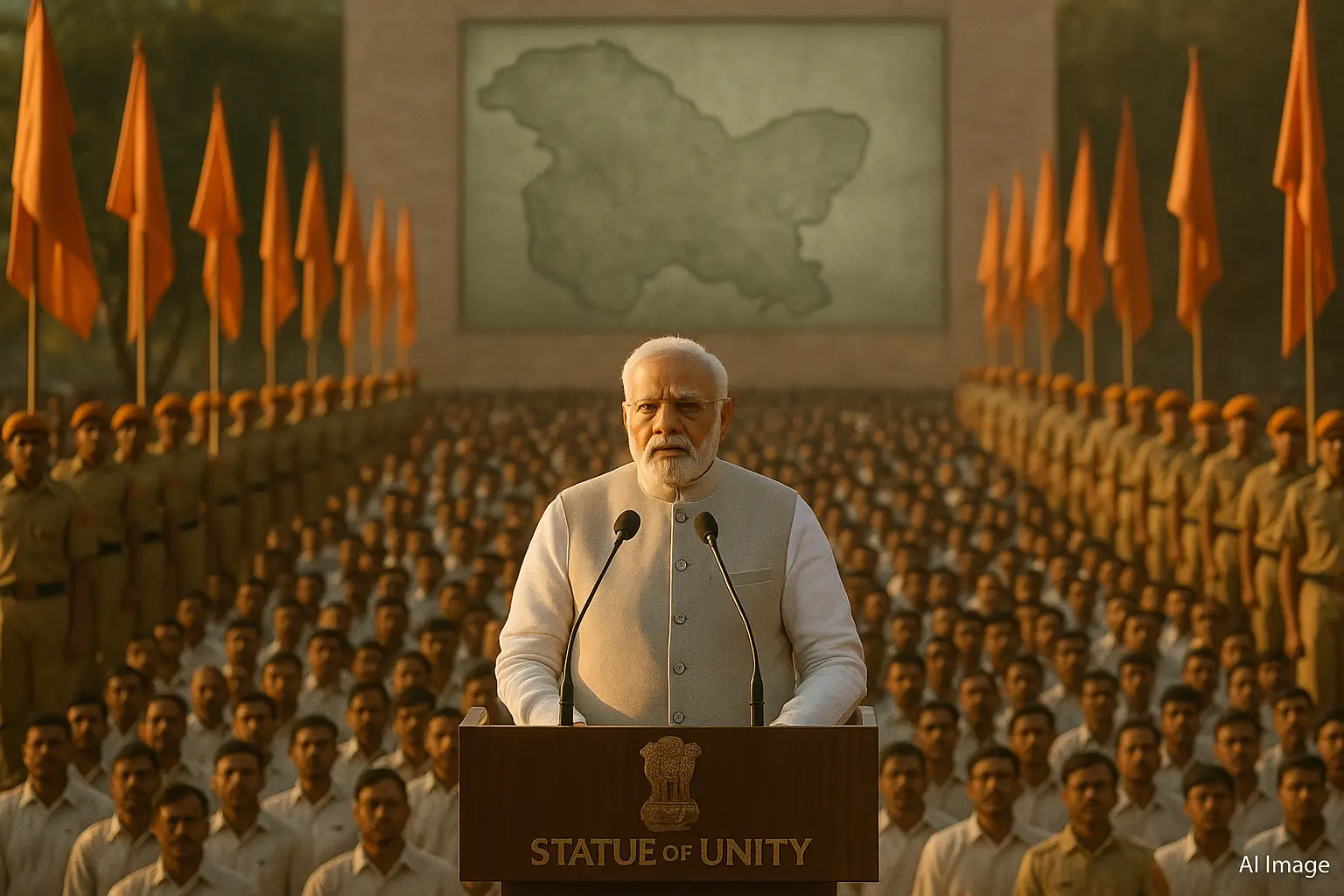
Addressing a gathering on Rashtriya Ekta Diwas in Ekta Nagar, Gujarat, Prime Minister Narendra Modi asserted that “Sardar Patel wanted the entire Kashmir region with India, but Nehru did not allow that wish to be fulfilled.” The keyword Sardar Patel unite Kashmir appears naturally here to enhance SEO visibility. Modi said that because of this historic choice, India suffered decades of turmoil and national sovereignty was compromised.
The Context: Ekta Diwas Tribute and Kashmir Integration Claims
On October 31, during celebrations marking Sardar Patel’s 150th birth anniversary, the Prime Minister paid homage at the Statue of Unity and criticised past governments. He argued that the visionary leader who integrated over 550 princely states after independence was denied the chance to do the same for Kashmir. Modi emphasised that this omission had long-term consequences for the nation’s unity.
(Read More: “Sardar Patel at 150: Echoes from India’s Unification Journey”)
Analysis: Why the Contention Over Kashmir Resurfaced
The Narrative of Unfinished Integration
Modi’s statement places Kashmir’s full integration into India as Patel’s unfinished legacy—one he says was hampered by then-Prime Minister Nehru. This framing links national identity, constitutional reforms and sovereignty in one broad sweep.
Political Implications and Legacy Revision
By attributing blame for decades of unrest to Nehru’s decision-making, the Prime Minister reinforces a revisionist view of modern Indian history. It places the BJP in alignment with patriotic sentiments and shifts debate around historical accountability.
Constitutional and Sovereignty Dimension
Modi highlighted that Kashmir was assigned a separate flag and constitution, diverging from Patel’s vision of unified India. The implication is that India’s constitutional architecture itself was flawed by earlier political decisions.
(Read More: “How Kashmir’s Constitutional Status Shaped Modern India”)
Reactions: Mixed Responses Across Political Spectrum
Major opposition parties quickly responded. The Indian National Congress defended Nehru’s legacy and called the remarks “divisive and revisionist.” Meanwhile, BJP leaders welcomed the speech as a bold acknowledgement of the nation’s full integration narrative. Analysts noted that the timing—on Ekta Diwas—allows the party to link historical patriotism with current political messaging.
Bigger Picture: Historical Revisionism and Geopolitical Messaging
Modi’s remarks signal how historical narrative is now intertwined with current policy rhetoric. The statement links national unity, Kashmir integration and counter-terrorism into one framework. In the geostrategic context of the Indo-Pacific, the message is clear: unresolved legacy issues are now portrayed as threats to sovereignty.
Conclusion
By declaring that Sardar Patel’s goal of unifying Kashmir was thwarted by Nehru, the Prime Minister has reframed a pivotal moment in India’s history—linking it to present-day discussions on national unity and security. Whether it deepens legacy debates or reshapes voter perception, this claim marks a key moment in the political narrative leading up to future elections.
Related Posts


Stay Informed With the Latest & Most Important News
Previous Post
Next Post

Advertisement





Advertisement
