

Now Reading: PM alleges Congress cut key verses of Vande Mataram in 1937
-
01
PM alleges Congress cut key verses of Vande Mataram in 1937


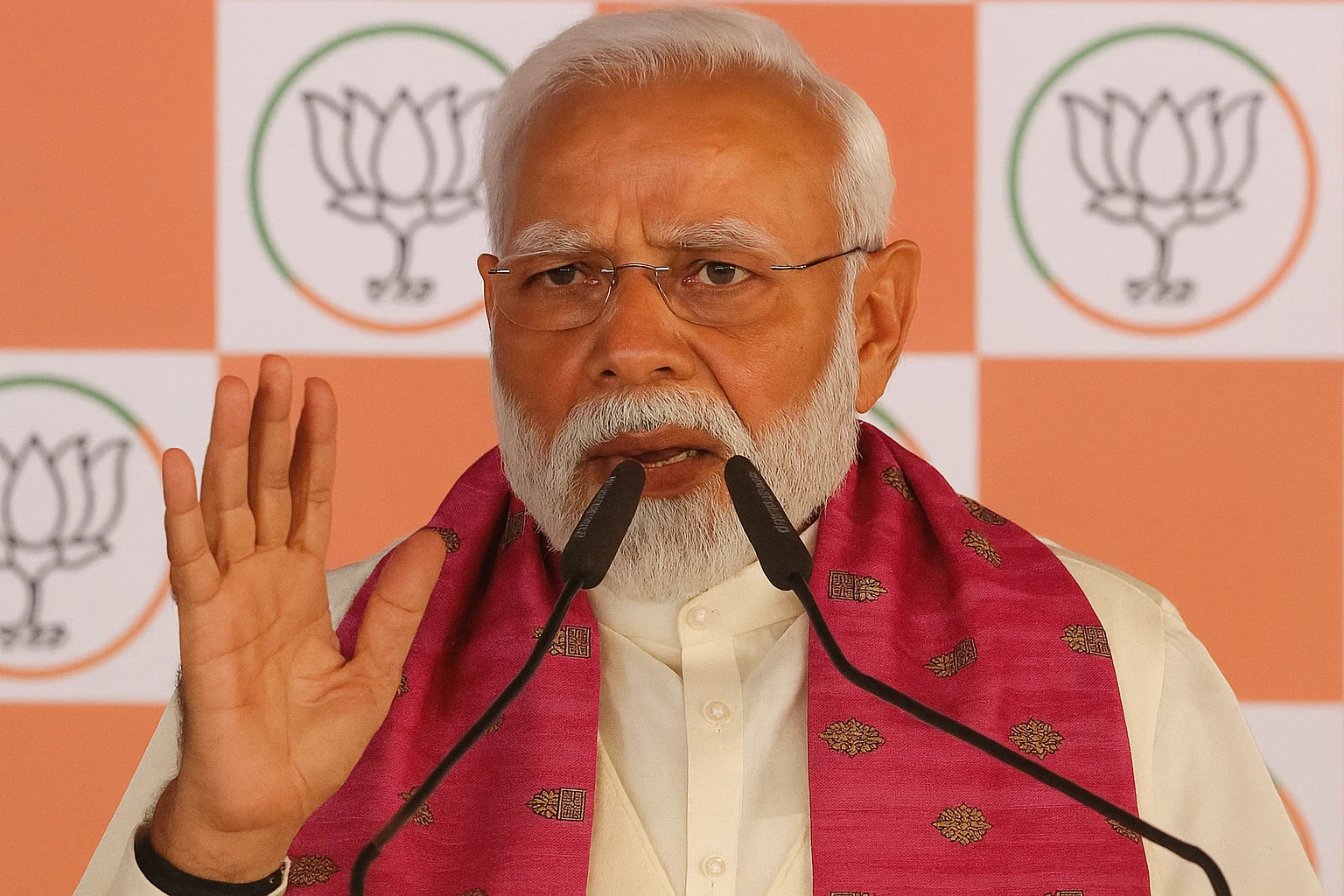
The Editorial Team of Behind The Headlines reports that Prime Minister Narendra Modi accused the Vande Mataram of being “torn into pieces” when the Indian National Congress decided in 1937 to drop significant verses of the song. The allegation came at an event marking 150 years of the song and triggered a sharp reaction from Congress leadership.
Details / Background
“Vande Mataram,” penned by Bankim Chandra Chatterjee in the 1870s and published in his 1882 novel Anandamath, became a rallying cry during the Indian freedom struggle. The Indian National Congress session in October 1937 formally adopted only the first two stanzas of the poem as the national song, reportedly omitting later verses that mention Hindu goddesses like Durga.
At a commemoration event on 7–8 November 2025, Prime Minister Modi claimed that the exclusion of those verses in 1937 by Congress had “sowed the seeds of the country’s partition” and questioned the motives behind that decision. The Home Minister also announced a nationwide plan to revive the full version of the song in school and national programmes.
Analysis
The Prime Minister’s allegation connects a historical song committee decision to larger themes of national unity and cultural identity. By linking the alleged omission in 1937 to the logic of the country’s later division, the claim infuses historical policy with present-day political implications.
On one hand, the move frames Vande Mataram as more than just a historic hymn—it positions it as a symbolic litmus test of national integrity. On the other hand, critics will contend that the decision in 1937 was made in the context of communal sensitivities and the need for inclusive governance, not purely cultural compromise.
The announcement of plans to “sing the full version” also signals how cultural instruments are increasingly mobilised in political discourse. The question remains whether the revived emphasis will translate into broader civic education or remain symbolic.
Reactions / Statements
The Congress party swiftly rejected the Prime Minister’s remarks, calling them “historical misrepresentation” and demanded an apology. It pointed out that the decision to adopt the first two stanzas in 1937 was aimed at maintaining communal harmony and not a deliberate act of division.
The BJP and its supporters welcomed the remarks, framing them as a revival of cultural pride and an affirmation of national heritage. They highlighted Vande Mataram’s role in the freedom movement and criticised any selective version as undermining that legacy.
Bigger Picture / Future Impact
This debate reflects deeper questions about how national songs, symbols and historical narratives are used in contemporary politics. As the government rolls out programs to celebrate Vande Mataram’s 150th year, the framing of “full vs. truncated” versions may influence school curricula, civic rituals and public commemorations.
The controversy also comes amid electoral cycles and identity politics—showing how historical cultural decisions are not only revisited but re-interpreted for present-day messaging. If the government indeed pushes the “full version” in education and state programmes, it could shift how younger generations engage with national songs and their history. At the same time, it raises questions about whether cultural inclusion allows for diversity and dissent rather than uniform patriotism.
Conclusion
Prime Minister Modi’s allegation that Congress dropped key verses of Vande Mataram in 1937 has rekindled a long-dormant debate over the national song’s completeness and symbolism. While the historical facts show the first two verses were formally adopted in 1937, the interpretation of why the later stanzas were omitted remains contested. As the song enters its 150th year of remembrance, how India chooses to remember, teach and use it will continue to reflect broader tensions between unity, identity and history.
Internal Links
- Behind The Headlines: The rise of patriotic songs in India’s freedom struggle
- Behind The Headlines: Cultural symbols and modern Indian politics
Related Posts


Stay Informed With the Latest & Most Important News
Previous Post
Next Post


Advertisement




Advertisement
