Now Reading: South Korea’s New Trade Deal with US Reduces Export Uncertainty
-
01
South Korea’s New Trade Deal with US Reduces Export Uncertainty


South Korea has taken a major step to protect its export-based economy by signing a new trade agreement with the United States. This deal has brought relief to Korean exporters, especially those working in automobile, semiconductor, shipbuilding, and energy sectors.
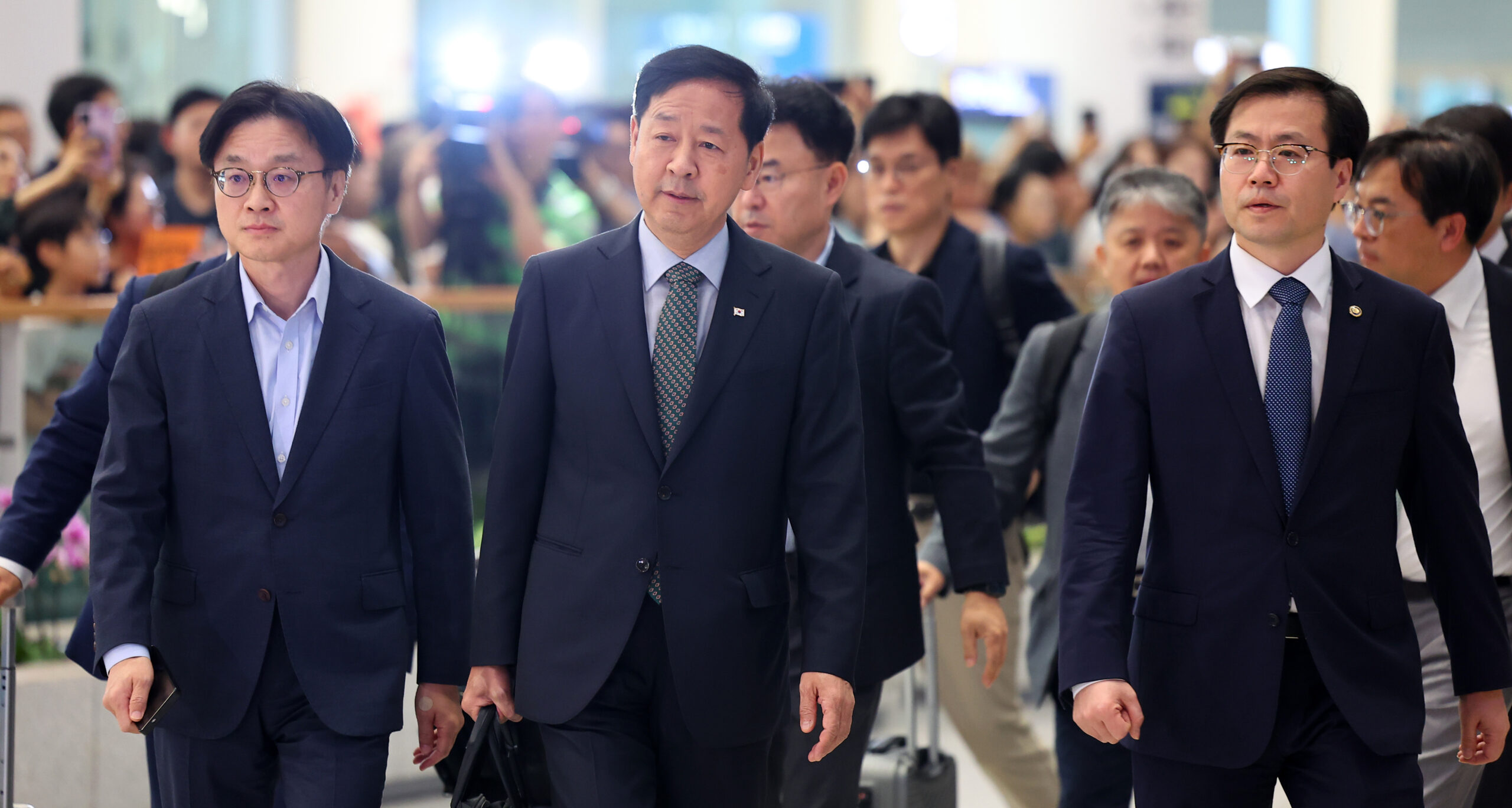
The announcement was made by Industry Minister Kim Jung-kwan on Monday, during a special meeting held to plan the country’s export strategies in response to changing US tariff policies.
What Was the Problem Before?
In recent months, Korean businesses were facing difficulties because of the United States’ decision to increase import tariffs. These tariffs were set to be as high as 25%, which would have made Korean products much more expensive in the American market, leading to a possible drop in sales.
This situation created uncertainty for exporters, and many industries were concerned about losing their competitive edge against countries like Japan and members of the European Union.
What’s in the New Agreement?
The latest deal, finalized last week between South Korea and the US, has helped resolve many of these concerns.
- The US has agreed to reduce tariffs on Korean goods to 15% instead of 25%.
- In return, South Korea has promised to:
- Invest $350 billion in various sectors inside the United States.
- Purchase $100 billion worth of American energy products, such as liquefied natural gas (LNG).
Additionally, the tariff on Korean-made vehicles exported to the US has also been lowered from 25% to 15%, making South Korean cars more affordable in the American market.
What Does the South Korean Government Plan Next?
During the meeting, which was attended by major trade officials, industry leaders, and business groups, Minister Kim shared the government’s next steps:
“With this trade deal, short-term export problems have been eased. Now, we will work to help our businesses remain competitive globally,” Kim said.
He also promised that the South Korean government would:
- Build stronger cooperation with the US in key industries such as:
- Shipbuilding
- Automobiles
- Semiconductors
- Biopharmaceuticals
- Support Korean companies in exploring new opportunities in the American market.
- Prepare additional support policies to help exporters adjust to the changing global trade environment.
Where Does This Leave South Korea in Global Trade?
With Japan and the European Union facing similar tariff rates, South Korea now stands on equal ground with its major trade competitors in the US market. This is a big win for Korean exporters, who were previously at risk of losing business due to higher costs.
Still, the global trade landscape remains uncertain, especially with the US government adopting more protectionist policies under former President Donald Trump’s influence. South Korea’s industry leaders believe the country must keep improving its own industrial strength, and stay alert to future challenges.
Jan Jagran Darpan’s Editorial Insight:
This agreement between South Korea and the US is more than just a number game of percentages and billions. It is a reflection of how global trade today is driven by political deals as much as by products and innovation.
South Korea has shown that with clever negotiation and bold investment, it can protect its businesses and stay competitive in an unpredictable world market. But the real challenge lies ahead—ensuring Korean industries remain future-ready, and not just dependent on trade pacts.
For India and other developing economies, there’s a clear lesson: strategic partnerships, trade diplomacy, and sector-focused investments are key to surviving in today’s tough global economy.
Related Posts

Stay Informed With the Latest & Most Important News
Previous Post
Next Post

Advertisement