Now Reading: Supreme Court on Bihar SIR: Kapil Sibal Puts Election Commission on the Spot
-
01
Supreme Court on Bihar SIR: Kapil Sibal Puts Election Commission on the Spot

Supreme Court on Bihar SIR: Kapil Sibal Puts Election Commission on the Spot

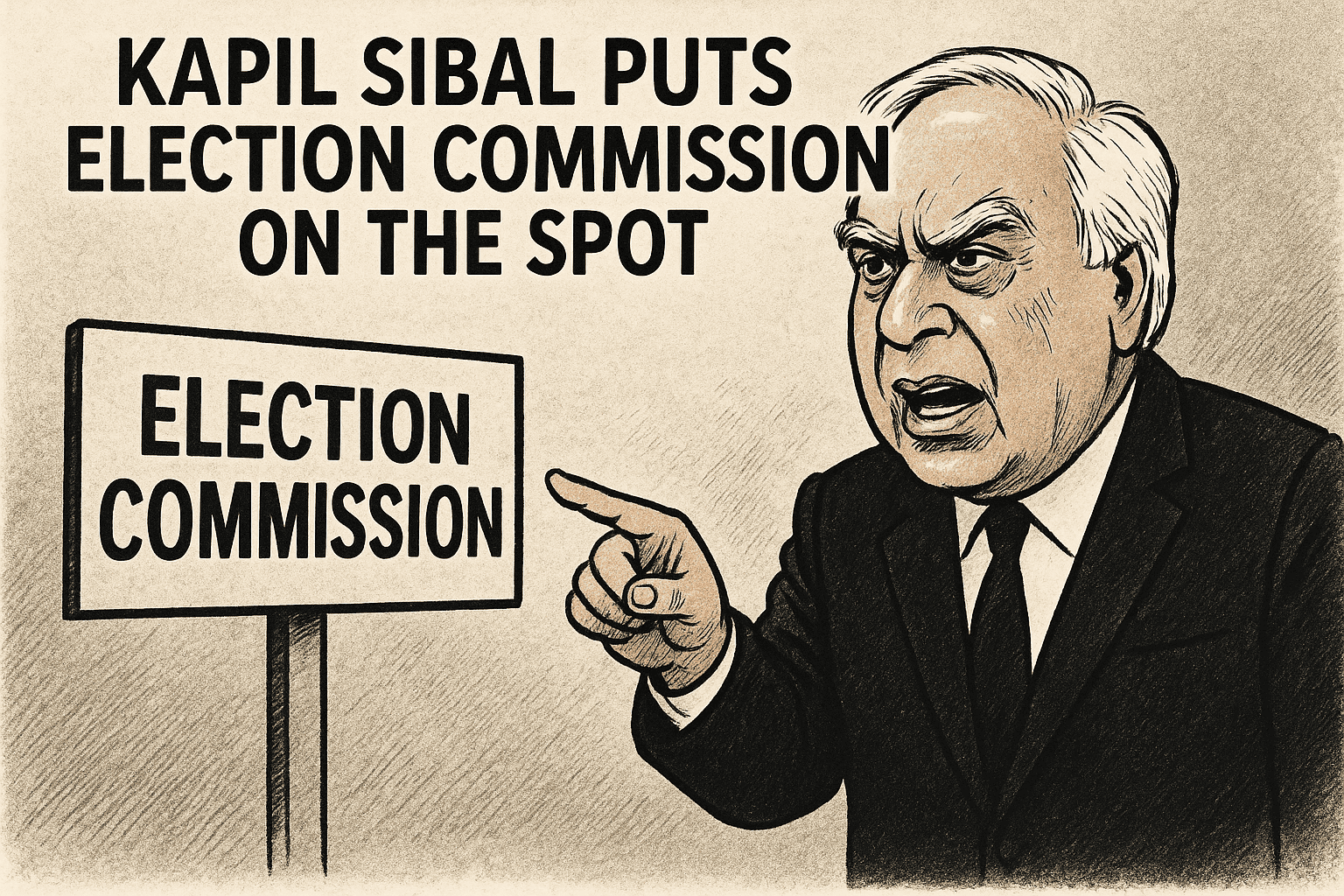
In the Courtroom: A Forceful Challenge to the Election Commission
At a key hearing in the Supreme Court, veteran lawyer Kapil Sibal launched a pointed and relentless examination of the Election Commission’s (EC) approach to the Special Intensive Revision (SIR) of voter rolls in Bihar. His challenging questions put the EC on the defensive — marking a rare moment of public scrutiny in India’s electoral process.
What Is the Special Intensive Revision (SIR)?
The SIR is a rapid exercise aiming to update voter lists before elections. In Bihar, it involved large-scale deletions and additions across districts. While the EC frames it as essential for cleaning up faulty or duplicate records, opposition parties and voters have raised alarms over missing entries and alleged disenfranchisement.
Sibal’s Key Lines of Questioning
- Precedural Transparency
Sibal pressed the EC on whether it followed due process in removing names. He challenged their verification methods, asking if internal criteria were consistently applied or inconsistently enforced. - Impact on Voters
He highlighted cases where voters reported missing names despite having valid identification. “Were repeated entries of common people wrongly deleted?” he demanded. - Transparency of Criteria
Questioning the lack of clarity around deletion protocols, Sibal demanded to know how the EC determined which names to remove, and what recourse was available to affected individuals. - Responsibility and Accountability
He urged the EC to clarify why certain individuals — including public figures — remained on the list while common voters were dropped.
Election Commission’s Response
The EC defended its procedures, stating it undertook SIR with the aim of ensuring “clean and accurate voter lists.” They stressed that rigorous checks and data validation protocols were in place, and that individuals removed could challenge their exclusion using official mechanisms.
However, Sibal’s lines of questioning exposed perceived gaps in transparency and procedural consistency—raising concerns about fairness and accountability.
Legal Stakes and Broader Implications
This hearing has become about more than list corrections. It’s a test of democratic fairness:
- Voter Rights — The court’s response could set precedent for how voter disenfranchisement concerns are addressed.
- EC’s Legitimacy — The Commission’s reputation hinges on its ability to show SIR was not arbitrary.
- Public Trust in Elections — Beyond Bihar, the outcome may influence national perceptions of electoral credibility.
What to Expect Next
The Supreme Court has asked both parties to respond further and will review the procedural evidence presented by the EC. Public interest remains high, especially among voters who found themselves unexpectedly removed from rolls.
Editorial Take
The Sibal questioning of the EC marks a significant checkpoint for Indian elections. It underscores that election authorities must balance urgency with fairness. The judiciary’s role in safeguarding these processes is vital—even when the institution being questioned is meant to uphold democratic norms.
Related Posts



Stay Informed With the Latest & Most Important News
Previous Post
Next Post


Advertisement