

Now Reading: Swadeshi, Not Shunning: RSS Chief Reframes Self-Reliance in a Global Age
-
01
Swadeshi, Not Shunning: RSS Chief Reframes Self-Reliance in a Global Age

Swadeshi, Not Shunning: RSS Chief Reframes Self-Reliance in a Global Age

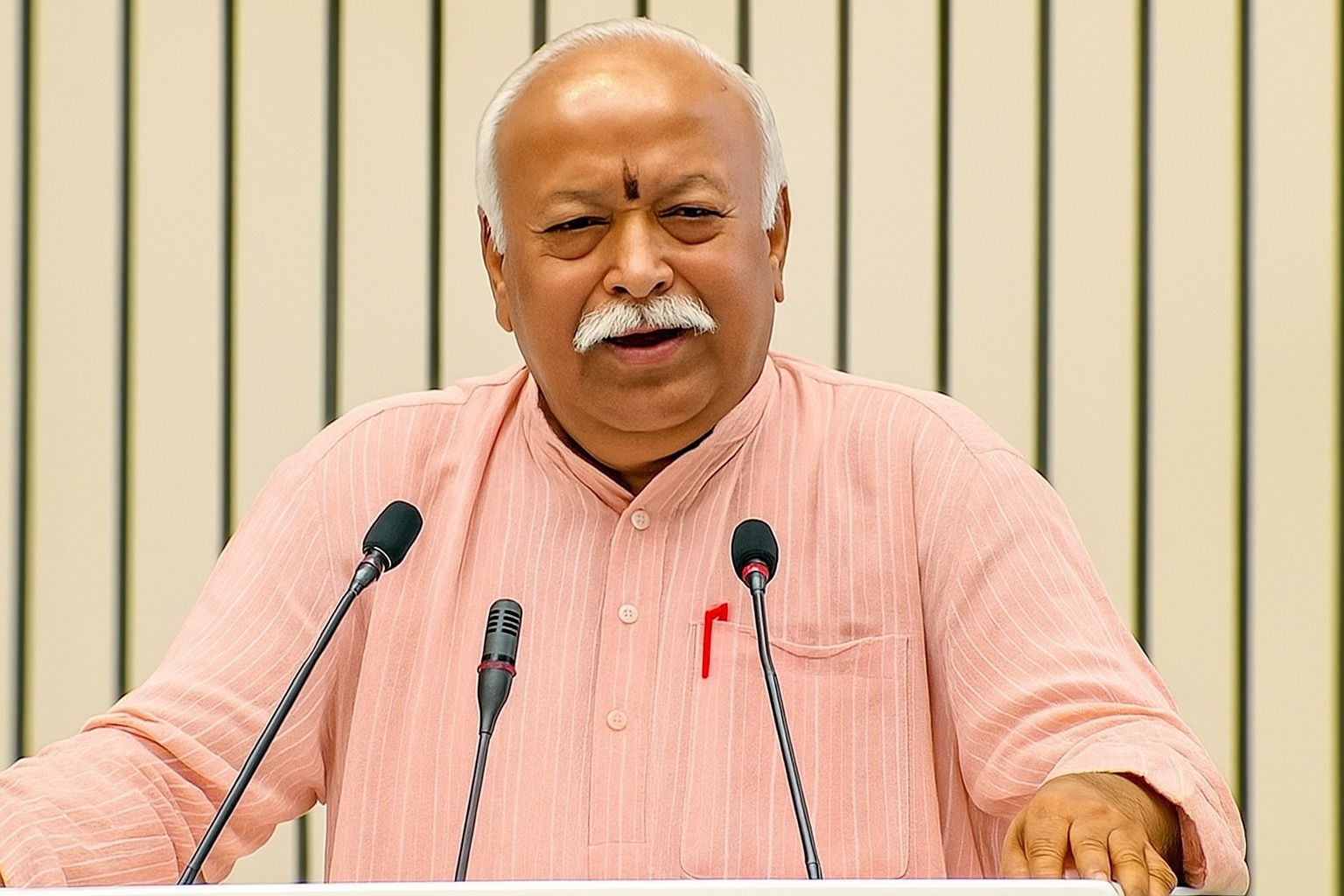
Amid rising global trade tensions—particularly in light of new tariffs—RSS Chief Mohan Bhagwat made a pointed public address emphasizing that international trade must remain voluntary, not forced. Highlighting the everyday application of Swadeshi (indigenous self-reliance), Bhagwat framed trade as a reflection of mutual respect, cooperation, and economic dignity.
Self-Reliance Without Closing Doors
Contrary to isolationist interpretations, Bhagwat clarified that self-reliance doesn’t mean shutting out foreign commerce. His central message: India should prioritize what it can produce locally, importing only those necessities it cannot manufacture, while ensuring no external compulsion defines its trade trajectory.
Embedding Swadeshi in Daily Decisions
Bhagwat encouraged citizens to embrace Swadeshi as a lifestyle—not just in economics, but in values and consumption. He offered simple illustrations like choosing homemade lemon water over global-brand soft drinks, or exploring local heritage sites alongside international tourism. These, he said, reinforce community economies without breaking ties with the world.
Ethical Commerce as National Imperative
Beyond imports and tariffs, Bhagwat elevated the dialogue to ethical trade—claiming commerce devoid of pressure preserves sovereignty and dignity. He urged that trade relationships be built on choice, reciprocity, and strategic communication, not coercion.
Broader Reflections: Culture, Unity, and Dharma
Bhagwat tied economic philosophy to culture, urging adherence to constitutional values and harmony among diverse sections of society. He denounced rising societal trends like “wokeism” and cancel culture, framing them as threats to unity. By invoking Gandhi’s “seven social sins,” he emphasized that unchecked materialism and commerce devoid of morality undermine deeper societal balances.
Related Posts



Stay Informed With the Latest & Most Important News
Previous Post
Next Post


Advertisement








Advertisement
