

Now Reading: Modi, BRICS, and Trump: The Geopolitical Gamble Behind India’s Balancing Act
-
01
Modi, BRICS, and Trump: The Geopolitical Gamble Behind India’s Balancing Act

Modi, BRICS, and Trump: The Geopolitical Gamble Behind India’s Balancing Act


In the ever-shifting landscape of global politics, India under Prime Minister Narendra Modi finds itself at a crossroads, playing an increasingly delicate diplomatic game. The balancing act involves not just the BRICS bloc—an evolving alliance of emerging economies—but also the unpredictable winds of American politics, especially with the looming return of Donald Trump. At the heart of this intricate geopolitical puzzle lies a simple yet high-stakes question: Can India maintain strategic autonomy without alienating key allies or compromising on national interests?
BRICS: A Platform for Aspirations or a Trap of Contradictions?
The BRICS grouping—Brazil, Russia, India, China, and South Africa—was once viewed as a symbol of emerging multipolarity in a world long dominated by the West. Today, as newer members like Iran and Egypt eye entry and China pushes for greater dominance, India’s position appears more complicated than ever.
While Modi’s presence at recent BRICS summits signaled India’s commitment to multilateralism, it also exposed the fault lines within the bloc. China’s aggressive posturing along the LAC (Line of Actual Control) and its economic dominance in the group cast a long shadow. Yet, India has not exited BRICS. Why?
The answer may lie in Modi’s long-term vision: to transform India into a global power that cannot be ignored on any platform. Exiting BRICS would mean conceding the stage to China and letting Beijing shape the narrative of the Global South unchallenged. By staying, Modi ensures that India remains an influential voice among emerging powers—even if uncomfortable compromises are occasionally required.
The Trump Factor: Friend or Future Foe?
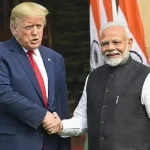
As the U.S. heads into another potentially polarizing election cycle, with Donald Trump once again a strong contender, New Delhi must prepare for a renewed era of transactional diplomacy. Trump’s first term was a mixed bag for India—warm personal ties with Modi, tough rhetoric on trade, but strategic alignment on China. A second Trump presidency could bring more of the same unpredictability.
Unlike the Biden administration, which emphasizes rules-based international order and global partnerships, Trump views alliances in terms of dollars and deals. India could be pressured on defense purchases, trade balances, and its Russian oil imports. On the flip side, Trump’s disdain for China and his preference for bilateral over multilateral agreements could give Modi room to negotiate on his own terms.
Modi, with his assertive nationalism and sharp political instincts, may find it easier to navigate Trump’s America than some of his peers. But it would come at the cost of aligning with an isolationist U.S., just as India attempts to lead a more inclusive Global South.
A Risky Middle Path
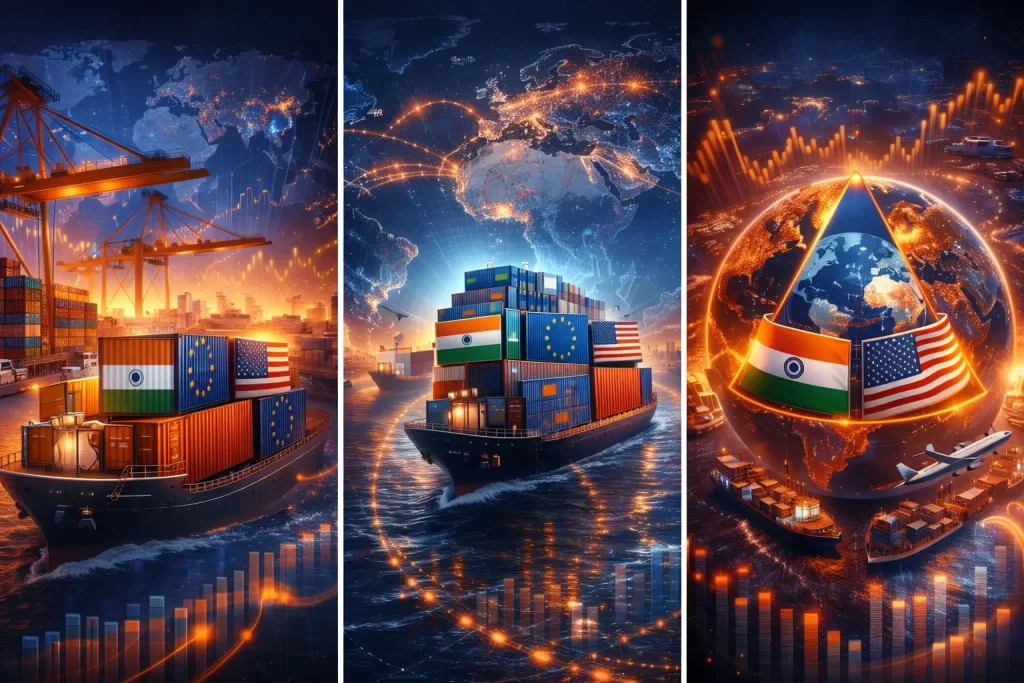
India’s foreign policy under Modi is increasingly marked by what experts term “multi-alignment”—a conscious decision to avoid taking sides, while extracting maximum benefits from all partners. The recent push for the India-Middle East-Europe Economic Corridor (IMEEC) counters China’s Belt and Road Initiative. At the same time, India has continued its trade with Russia, despite Western disapproval, and remains an active Quad member alongside the U.S., Japan, and Australia.
This hedging strategy, while pragmatic, is fraught with risks. It demands exceptional diplomatic finesse and leaves little room for error. A single miscalculation—whether on BRICS policy, a border incident with China, or a Trump-imposed trade sanction—could unravel years of careful positioning.
The Domestic Lens: Optics and Legacy
For Modi, foreign policy is not just about international prestige—it’s domestic politics writ large. Every summit handshake, every defense deal, and every global platform is an opportunity to portray India as a “Vishwa Guru”—a global teacher and leader.
This geopolitical posturing plays well at home, especially with a voter base that values national pride and strength. Modi’s handling of Trump, BRICS, and even China is carefully choreographed to support the narrative of a confident, rising India.
But leadership on the global stage also brings accountability. As India seeks a permanent seat at the UN Security Council and more influence at global financial institutions, the world will expect clarity—especially in times of conflict. Playing all sides may not always be seen as leadership; sometimes, it risks appearing indecision.
Final Thought: High Stakes, High Reward
Modi’s balancing act is undoubtedly bold. It places India in a unique position—neither a full ally of the West, nor a passive participant in alternative groupings like BRICS. If managed well, this strategy could elevate India as a true swing power in 21st-century geopolitics. If mismanaged, it could leave the country diplomatically cornered, economically vulnerable, and strategically overexposed.
As Trump eyes a comeback and BRICS expands into uncharted territory, Modi’s geopolitical gamble is entering its most critical phase. India must now move from being everywhere to being effective—because in global diplomacy, presence without purpose rarely yields power.
Related Posts


Stay Informed With the Latest & Most Important News
Previous Post
Next Post


Advertisement





Advertisement
