

Now Reading: Thailand’s Young PM Ousted After Leaked Call Fires Up Border Crisis
-
01
Thailand’s Young PM Ousted After Leaked Call Fires Up Border Crisis


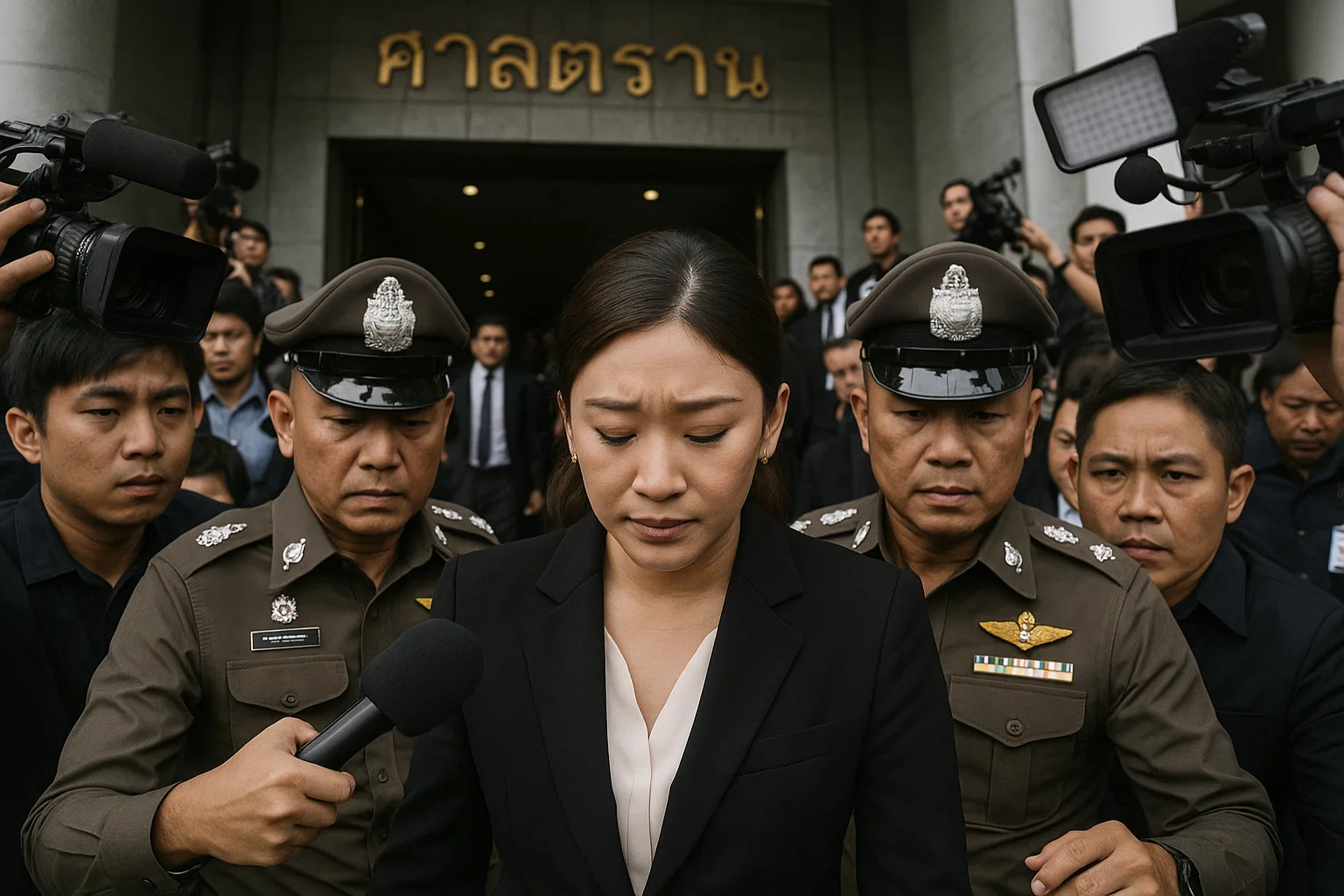
A Leaked Conversation Upends the Power StructureThailand’s political landscape was rattled on August 29 when the Constitutional Court issued a decisive 6–3 verdict removing Prime Minister Paetongtarn Shinawatra from office. The ruling stemmed from an explosive leak of a sensitive phone call with Cambodian Senate President Hun Sen.
In that call, which surfaced amid escalating tensions over a tragic border clash, Paetongtarn referred to Hun Sen as “uncle” and appeared to criticize the Thai army. This deeply unguarded exchange, released publicly by Hun Sen, touched off accusations that she had prioritized personal loyalties over national duty—sparking a public and political backlash that proved too great to withstand.
From Phone Leak to Political Collapse: Timeline of the Crisis
On June 15, 2025, the Thai PM reached out to Hun Sen, tapping into a longstanding personal connection to defuse border tensions. Tragically, weeks later, one Thai soldier and several Cambodians died in the skirmishes.
Barely three days after the call, Hun Sen leaked the recording. Amid public outrage—fueled by her apparent alignment with Cambodian concerns and critique of the military—Paetongtarn lost the support of key coalition allies like the Bhumjaithai Party. Her deputy, Anutin Charnvirakul, resigned, and soon the Constitutional Court suspended her pending investigation.
From that suspension to final removal, her government unraveled in less than three months. Phumtham Wechayachai stepped in as acting prime minister as Parliament now scrambles to elect a new leader.
Dynasty in Distress: The Shinawatra Pattern
This is not the first time a Shinawatra prime minister has been dismissed on ethical or judicial grounds.
- Thaksin Shinawatra, ex-Prime Minister and Paetongtarn’s father, was ousted in a military coup in 2006 and later faced corruption convictions.
- Yingluck Shinawatra, her aunt, was removed in 2014 by court ruling.
- Paetongtarn herself now joins this pattern—each removed at the height of controversy, reflecting the ongoing power struggle between popular mandate and entrenched establishment forces.
Her removal marks the fifth court-backed ouster of a prime minister in Thailand since 2008, spotlighting the judiciary’s overwhelming influence in government continuity.
Border Clash: The Broader Geopolitical Fault Line
The immediate backdrop of the controversy—the Thailand-Cambodia border clashes of summer 2025—added fuel to the fire.
- Royal forces on both sides exchanged fire, dozens were killed, and civilian displacement soared.
- The Thai government responded by recalling ambassadors, imposing bans on Thai goods in Cambodia, and staging military responses, including mortar exchanges and drone alerts.
- Diplomatic posture deteriorated swiftly. The leak, in this volatile context, was not just an embarrassment—it was a blow to national sovereignty and credibility.
Ethical Quandary: “Uncle”, Army Critique, and National Interest
The court’s ruling focused on the ethical breach. As PM, Paetongtarn was expected to conduct herself with restraint. Referring to Hun Sen as “uncle”—a familial term of endearment—suggested partiality. Worse, characterizing a Thai military commander as an “opponent” during border discussions blunted Thailand’s negotiating posture and stirred alarm among nationalists.
Critics condemned the call as an abdication of duty, while her supporters suggested it was an impulsive gesture to de-escalate tensions. Yet in politics, perception can be just as powerful as intent.
Political Fallout and Uncertain Succession
Immediately after the verdict:
- Paetongtarn’s removal deepened political instability.
- The ruling coalition, already shaky, lost its majority.
- Phumtham Wechayachai remains interim PM, but with limited mandate.
- Thailand now faces urgent questions about who will lead next and how—whether through a coalition deal or a fresh election.
For the Pheu Thai Party, the fall reduces both public trust and political leverage. Meanwhile, the conservative establishment—long wary of the Shinawartras—may face new choices: allow democratic continuity or continue judicial interventions.
A Democracy Constantly Challenged
Critics argue that repeated judicial interventions, including the removal of elected leaders like Paetongtarn, have hollowed out genuine democratic expression in Thailand. With major institutions like the military, judiciary, and palace exerting outsized influence, each dismissal reminds voters of the fragility of their sovereignty.
Experts warn that this pattern creates a cycle of instability and erodes public confidence in electoral governance, making reform harder and polarization deeper.
Related Posts


Stay Informed With the Latest & Most Important News
Previous Post
Next Post

Advertisement







Advertisement