Now Reading: US government shutdown looms after Senate vote collapse
-
01
US government shutdown looms after Senate vote collapse


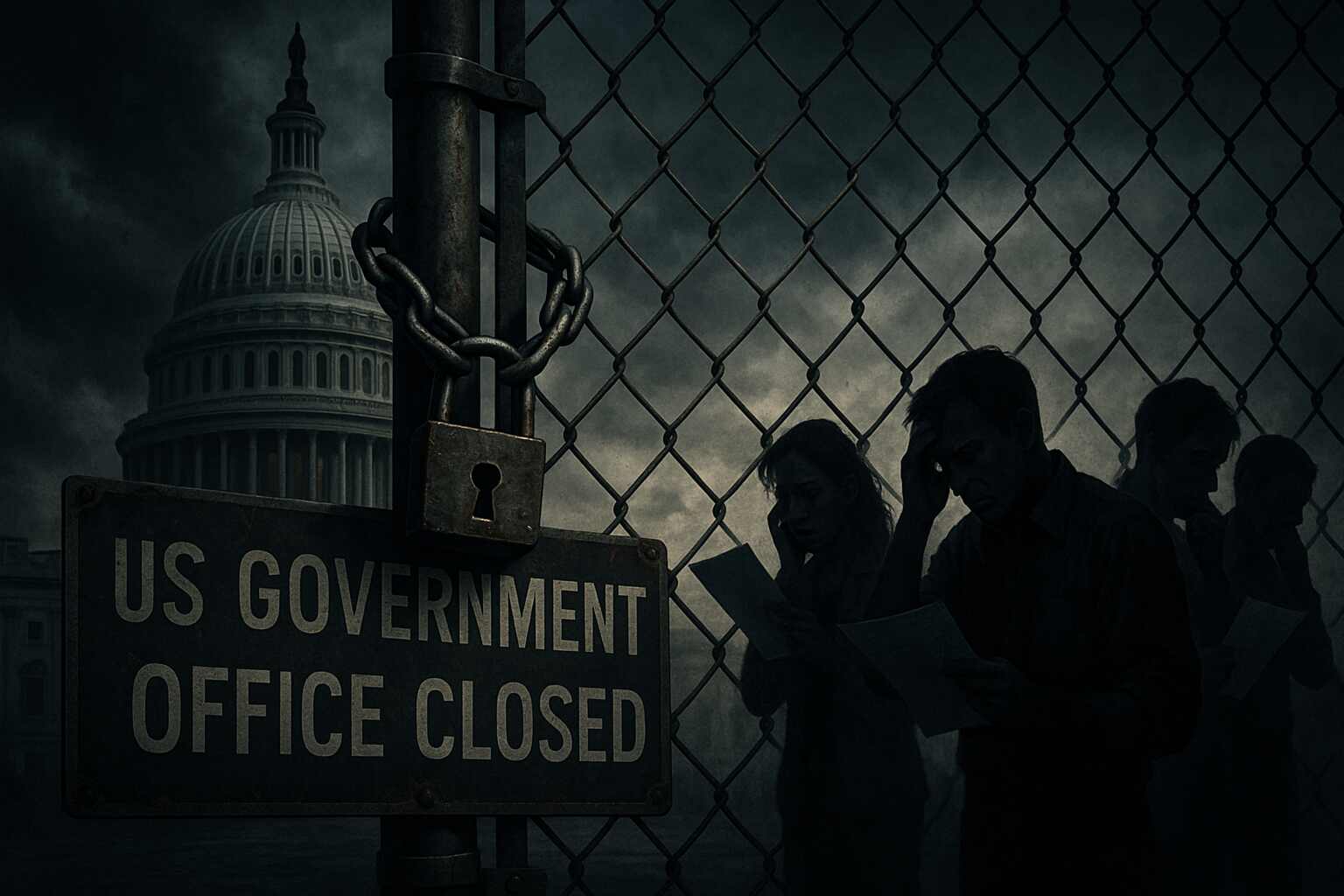
The United States is once again on the brink of a government shutdown after the Senate failed to pass a crucial spending bill. The deadlock comes amid sharp clashes between Democrats and Republicans, with former President Donald Trump adding fuel to the fire by warning of possible federal layoffs if the crisis continues.
This shutdown threat, if it materializes, could impact millions of government employees, stall public services, and weaken investor confidence at a time when the global economy is already navigating inflation and geopolitical tensions.
What triggered the deadlock
The spending bill failed to clear the Senate late Tuesday after heated debates over health care allocations and federal spending caps. Republicans, largely influenced by Trump’s stance, pushed back against provisions they claimed were “reckless giveaways,” while Democrats accused the opposition of holding the economy hostage for political gain.
The immediate consequence: without a funding extension, the US government risks running out of operational funds, leading to widespread disruptions.
(Also read: Possibility of nuclear attack part of India’s security calculus)
Trump’s warning: Layoffs on the table
Former President Donald Trump has intensified the crisis by threatening federal layoffs if the shutdown proceeds. Addressing supporters, Trump argued that “bureaucratic bloat” should be trimmed and warned that a shutdown could be an opportunity to cut what he called “wasteful jobs.”
His remarks have alarmed unions and federal workers, many of whom remember the hardship of the 2018–2019 shutdown, which lasted 35 days—the longest in US history.
Economic and social fallout
If the shutdown takes effect, several key areas will face disruptions:
- Government employees: Millions could be furloughed or forced to work without pay.
- Public services: Passport issuance, federal loans, and health inspections may be delayed.
- Markets: Investor sentiment could take a hit, affecting both Wall Street and global markets.
- Military and security: Troops may continue operations but face uncertainty around pay schedules.
Economists warn that repeated shutdowns damage trust in the US government’s ability to manage its finances, raising long-term borrowing costs.
Democrats push back
Democratic leaders accused Trump and Senate Republicans of manufacturing a crisis for political leverage ahead of the 2026 midterms. Senate Majority Leader Chuck Schumer said the standoff “endangers American families for the sake of partisan theater.”
President Joe Biden has urged lawmakers to “act responsibly” and protect essential services, warning that a shutdown would weaken America’s position globally.
Global implications
The looming shutdown is not just a domestic issue. With the US dollar serving as the backbone of global trade, any sign of instability shakes investor confidence worldwide. Emerging markets, already under pressure from high energy costs and currency fluctuations, could feel ripple effects if Washington’s gridlock deepens.
(Read next: Bihar voter list update removes 47 lakh names)
Lessons from past shutdowns
The last major shutdown in 2018–2019 cost the US economy an estimated $11 billion, according to the Congressional Budget Office. While some of this loss was recovered later, the damage to federal workers, contractors, and public morale lingered far longer.
Analysts suggest the current situation could be equally damaging, especially given Trump’s calls for layoffs that would add further instability.
The bigger picture: Governance under strain
The crisis highlights a recurring flaw in the US system: frequent brinkmanship over budget approvals. Critics argue that political battles have increasingly turned essential governance into high-stakes theater, where ordinary citizens bear the costs of elite deadlock.
If a compromise isn’t reached soon, the US may once again face images of shuttered government offices, unpaid workers protesting, and mounting international criticism of Washington’s dysfunction.
Conclusion: Countdown to shutdown
With no immediate resolution in sight, the US government stands dangerously close to a shutdown. Trump’s threats of layoffs have only heightened fears of economic pain and political instability.
As the deadline looms, the standoff serves as a stark reminder of how fragile governance becomes when partisanship overshadows responsibility. For Americans, the question is no longer if a shutdown is disruptive—but how deep its scars will run this time.
Related Posts



Stay Informed With the Latest & Most Important News
Previous Post
Next Post


Advertisement