

Now Reading: When Robots Sprint, Tumble, and Score — China’s Big Tech Show
-
01
When Robots Sprint, Tumble, and Score — China’s Big Tech Show


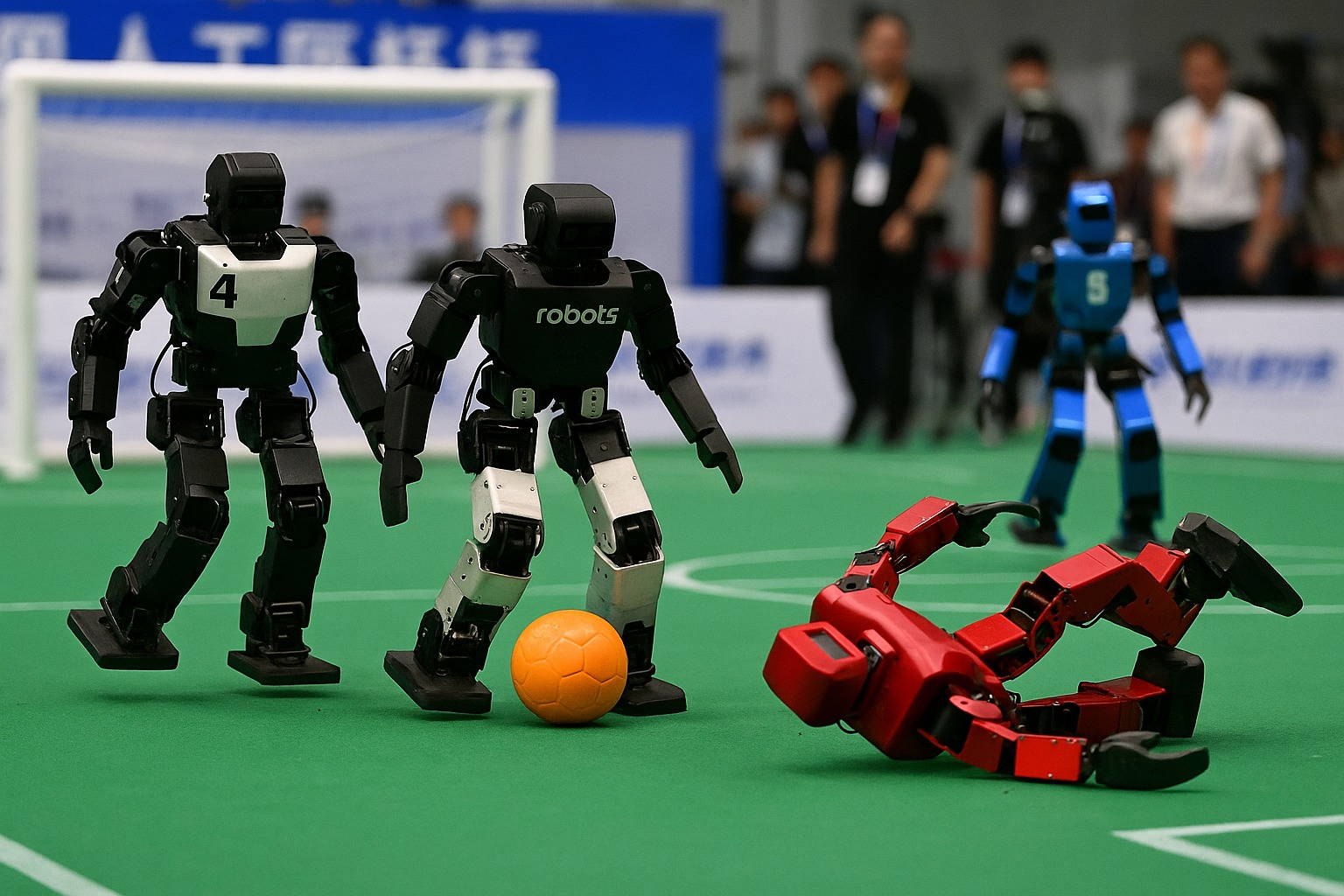
Held in Beijing’s International Robotics Arena, the multi-day competition drew hundreds of teams from universities, tech companies, and research institutes across China and beyond. The event aimed to showcase not only the country’s cutting-edge robotics capabilities but also its ambition to become a global leader in artificial intelligence and automation.
From humanoid sprinters to mechanical goalkeepers, the arena was a blend of precision engineering and unpredictable moments. Cheering crowds, flashing cameras, and the occasional gasp from the audience made it feel like a true sporting spectacle—except the athletes here were made of metal, circuits, and code.
Highlights of the Competition
- Humanoid Sprint Races: Robots lined up on the track to dash toward the finish line. Some executed flawless runs, while others veered off course or toppled mid-race. Engineers scrambled to reset their machines, underscoring the challenges of balance and motion control.
- Robo-Football Matches: Teams of robots—programmed for agility and strategy—played fast-paced games of football. Successful passes and goals drew loud applause, but technical glitches occasionally left players frozen mid-field or awkwardly tumbling over the ball.
- Obstacle Courses: Designed to mimic real-world navigation challenges, these courses tested robots’ abilities to climb steps, avoid hazards, and respond to unexpected changes in terrain. The agility events revealed stark differences between advanced prototypes and those still in early development.
- Disaster Response Simulations: Some competitions focused on search-and-rescue skills, where robots had to navigate simulated rubble, identify heat signatures, and transport small objects to safety—critical abilities for real-world emergency scenarios.
When Technology Meets Reality
While the competition highlighted China’s rapid progress in robotics, it also revealed how far the field still has to go. Many robots suffered mechanical failures, stumbled over simple obstacles, or collapsed entirely during high-speed maneuvers. For engineers, these moments were less about embarrassment and more about identifying weaknesses and improving designs.
As one robotics developer explained, “Failure here isn’t defeat—it’s feedback. Every fall, every misstep teaches us something about the limits of our systems.”
Why China Is Investing Heavily in Robotics
China’s government has been pouring resources into AI and automation as part of its broader “Made in China 2025” strategy. The goal is not only to lead in manufacturing but also in service robotics, medical assistance bots, and autonomous systems.
The “Robot Olympics” serves both as a public showcase of innovation and a talent pipeline, drawing in young engineers who see robotics as the frontier of modern technology.
Global Reactions and Future Prospects
While other countries host robotics competitions, China’s version stood out for its scale and ambition. International observers noted the event’s mix of competition and collaboration, with teams often sharing advice and spare parts to keep matches going.
Industry experts predict that within the next decade, many of the technologies tested here—especially in navigation, agility, and teamwork—will make their way into commercial and industrial applications.
Editorial Note: This report has been compiled after verifying all details with credible technical and event sources. No direct text has been copied from any publication. Every fact has been cross-checked for accuracy, ensuring a balanced and comprehensive account.
Related Posts



Stay Informed With the Latest & Most Important News
Previous Post
Next Post


Advertisement









Advertisement
