

Now Reading: Upar Se Order? EC Fights Back with QR Code After Rahul Gandhi’s Explosive Claim
-
01
Upar Se Order? EC Fights Back with QR Code After Rahul Gandhi’s Explosive Claim

Upar Se Order? EC Fights Back with QR Code After Rahul Gandhi’s Explosive Claim

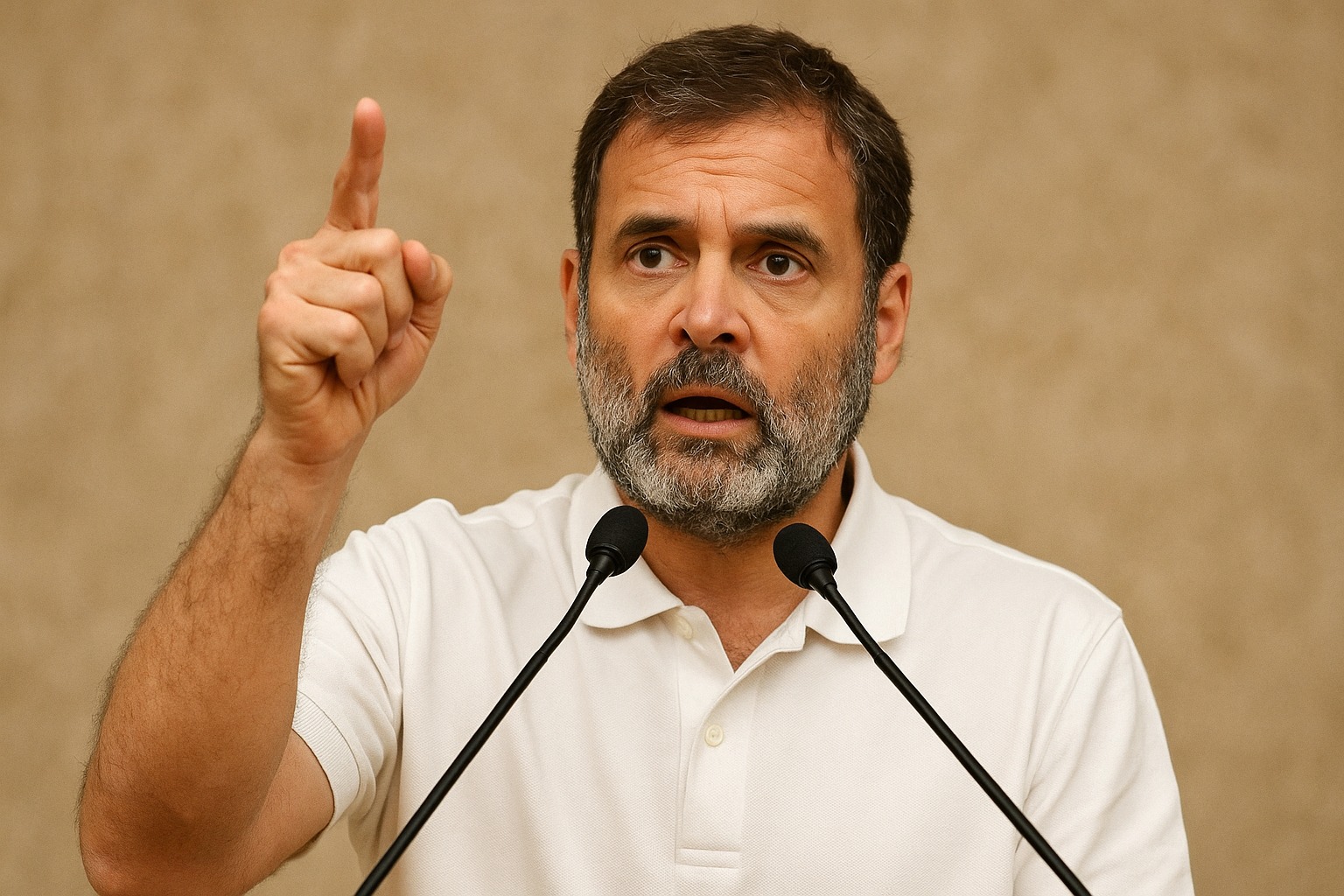
The political atmosphere in Bihar ahead of the 2025 Assembly Elections has been charged after Congress leader Rahul Gandhi released a video alleging that thousands of voters were being deliberately removed from the electoral rolls under “orders from above.” The video, widely shared on social media, reignited debates over transparency in the voter registration process.
In the clip, Rahul Gandhi claimed that marginalized communities, particularly the poor and Dalits, were being targeted through systematic deletion of names from the rolls. He described the alleged move as a “direct attack on democracy,” urging people to remain vigilant and demand accountability.
The remark “upar se order” (orders from above) has stirred heated speculation, with opposition parties accusing the ruling establishment of manipulating the voter base to secure an advantage in the upcoming polls.
The Election Commission’s Response
The Election Commission (EC) in Bihar was quick to respond. Officials dismissed the claims of arbitrary deletions, insisting that the process of voter list revision is fully transparent and open to public scrutiny.
To counter the allegations, the Commission has taken an unusual step—publicly sharing a QR code that allows citizens to instantly verify their names on the electoral roll. By scanning the code, voters can check if their details are intact, apply for corrections, or raise objections in real time.
Officials stressed that no voter can be removed without due process. Notices are sent before any deletion, and citizens have the right to appeal if their names are found missing. The EC reiterated that the drive is part of the annual revision exercise mandated by law, not a politically driven move.
Political Ripples in Bihar
Rahul Gandhi’s allegations have landed at a sensitive moment. Bihar is heading for a high-stakes election where both the NDA and INDIA bloc are vying to consolidate their positions. For the Congress, raising questions about voter rights serves both as a campaign strategy and as a way to galvanize support among disenfranchised groups.
The ruling BJP and its allies, however, have countered strongly. Party leaders accused Gandhi of spreading misinformation and undermining faith in democratic institutions. They argue that the EC is an independent body and that questioning its integrity amounts to disrespecting constitutional authority.
Public Reaction: Confusion and Concern
The larger public reaction in Bihar has been a mix of confusion and concern. While many welcomed the EC’s QR code initiative as a tool of empowerment, others admitted uncertainty about how to use it, particularly in rural areas with low digital literacy. Civil society groups have now demanded that the Commission conduct on-ground awareness drives so that no voter is left uninformed.
For common voters, the debate highlights a deeper issue: trust in institutions. Whether or not Rahul Gandhi’s allegations hold weight, the controversy has pushed the spotlight back on electoral accountability, just months before polling.
What Lies Ahead
The EC’s proactive response has cooled immediate tensions, but the matter is unlikely to fade soon. With elections approaching, every remark and counter-remark will be amplified. Analysts believe that Rahul Gandhi’s narrative of “voters being deleted on orders from above” could become a recurring theme in his campaign speeches.
For the Election Commission, the challenge will be to reassure citizens that the integrity of the voter rolls is intact while addressing the perception battle playing out in political circles
Related Posts



Stay Informed With the Latest & Most Important News
Previous Post
Next Post


Advertisement







Advertisement
