Now Reading: Rahul Gandhi’s Vote Chori Claim Sparks BJP’s ‘Bomb Phus’ Jibe
-
01
Rahul Gandhi’s Vote Chori Claim Sparks BJP’s ‘Bomb Phus’ Jibe

Rahul Gandhi’s Vote Chori Claim Sparks BJP’s ‘Bomb Phus’ Jibe

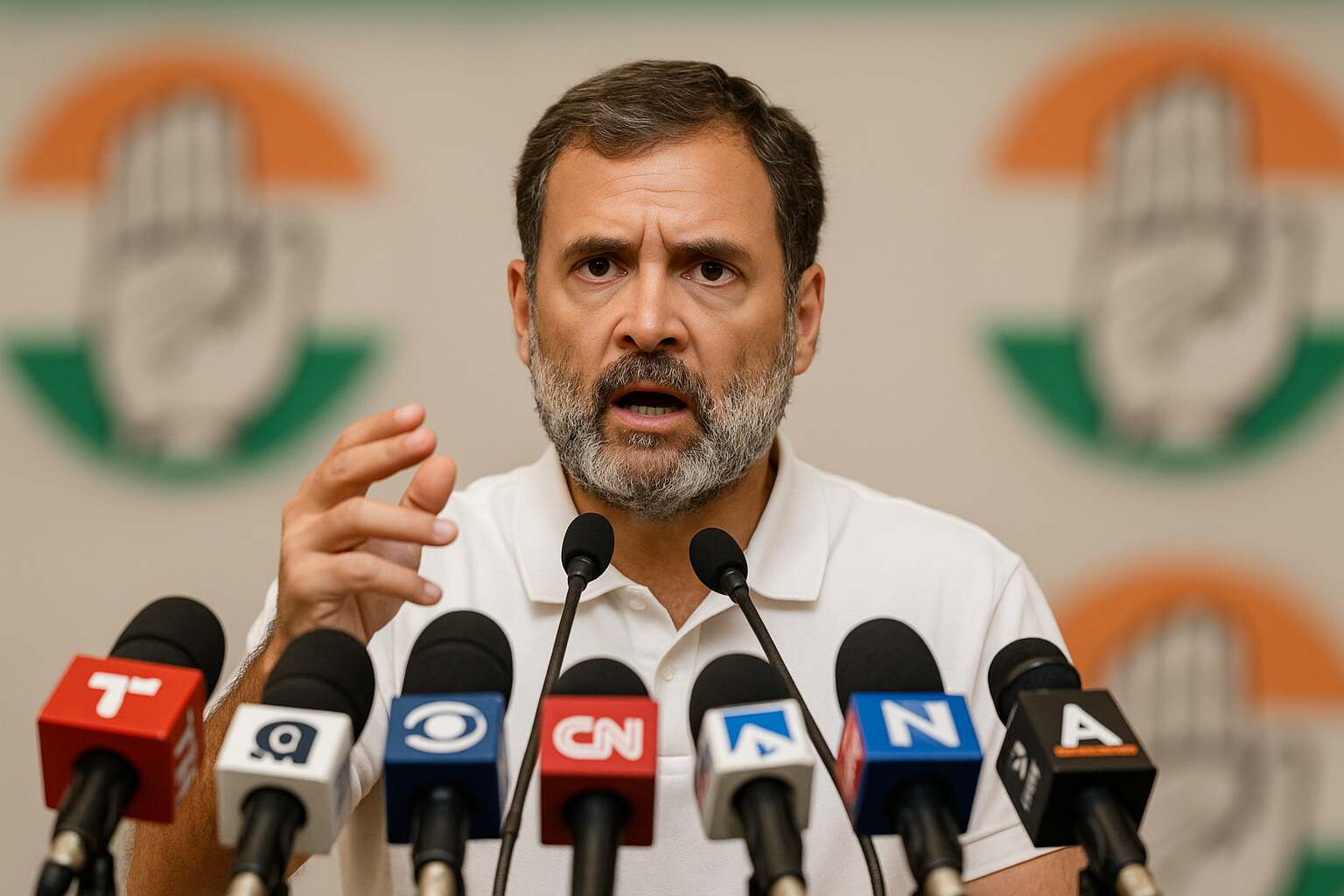
Congress MP Rahul Gandhi on Thursday accused the ruling party of orchestrating large-scale vote chori in recent elections, calling it nothing short of a “hydrogen bomb” for Indian democracy. However, the Bharatiya Janata Party (BJP) quickly dismissed his charges, mocking the claim as a “bomb phus” moment. The exchange has reignited debates around electoral integrity, political strategy, and the timing of such allegations, especially with the Bihar Assembly elections 2025 around the corner.
Rahul Gandhi’s Allegations
At his press conference, Gandhi alleged that lakhs of votes had been tampered with across constituencies. He claimed this manipulation was not an isolated incident but part of a larger “systematic attempt” to weaken democratic institutions. Gandhi added that common voters had been cheated, and said this revelation was intended to serve as a wake-up call to the nation.
BJP’s Sharp Response
BJP leaders were quick to counterattack. Within hours, social media was flooded with comments from senior leaders who dismissed Gandhi’s charges as baseless. “Rahul Gandhi promised a hydrogen bomb but ended up with a bomb phus,” one leader quipped, turning his claim into a viral mocking phrase.
This reaction follows a pattern seen in previous political battles, where the ruling party has turned opposition allegations into campaign opportunities.
Timing and Political Context
The timing of Gandhi’s remarks raises questions. With Bihar polls just weeks away, his “vote chori” charge could be aimed at consolidating the Congress base and creating a narrative of victimhood. The BJP, however, sees it as an act of desperation, pointing out that Gandhi has raised similar concerns in the past without presenting conclusive evidence.
(See our earlier reports on Bihar Election 2025 campaign narratives and EC assurances on voter list integrity for context.)
Larger Debate on Electoral Integrity
The issue of electoral transparency remains sensitive. India’s Election Commission has repeatedly asserted that its systems, including Electronic Voting Machines (EVMs), are tamper-proof. Yet, allegations of manipulation continue to surface, often at politically charged moments.
Analysts note that such debates risk undermining public trust in institutions, especially when evidence is not presented alongside claims.
Public Reactions and Social Media Buzz
Social media users were divided. While Congress supporters amplified Gandhi’s claims with hashtags like #VoteChoriExposed, BJP sympathisers turned “BombPhus” into a meme trend. For many neutral observers, the clash highlighted the intensifying political theatre ahead of the Bihar elections.
(For more on how memes are shaping election narratives, revisit our feature on politics in the age of digital satire.)
Bigger Picture
This episode is not just about one press conference. It reflects the high-stakes nature of Indian politics today, where each statement becomes a battlefield. With Rahul Gandhi positioning himself as a crusader against alleged electoral fraud and BJP leaders mocking him as politically irrelevant, the story sets the stage for a fiery election season.
Conclusion
Whether Rahul Gandhi’s claim triggers further investigation or remains a political talking point will depend on the evidence presented in coming days. For now, his “vote chori” charge and BJP’s “bomb phus” counter have added another chapter to India’s charged political climate.
Related Posts



Stay Informed With the Latest & Most Important News
Previous Post
Next Post

Advertisement