

Now Reading: N Chandrasekaran’s Historic Extension: Tata Group Bets Big on Semiconductors, EVs, and Air India
-
01
N Chandrasekaran’s Historic Extension: Tata Group Bets Big on Semiconductors, EVs, and Air India

N Chandrasekaran’s Historic Extension: Tata Group Bets Big on Semiconductors, EVs, and Air India

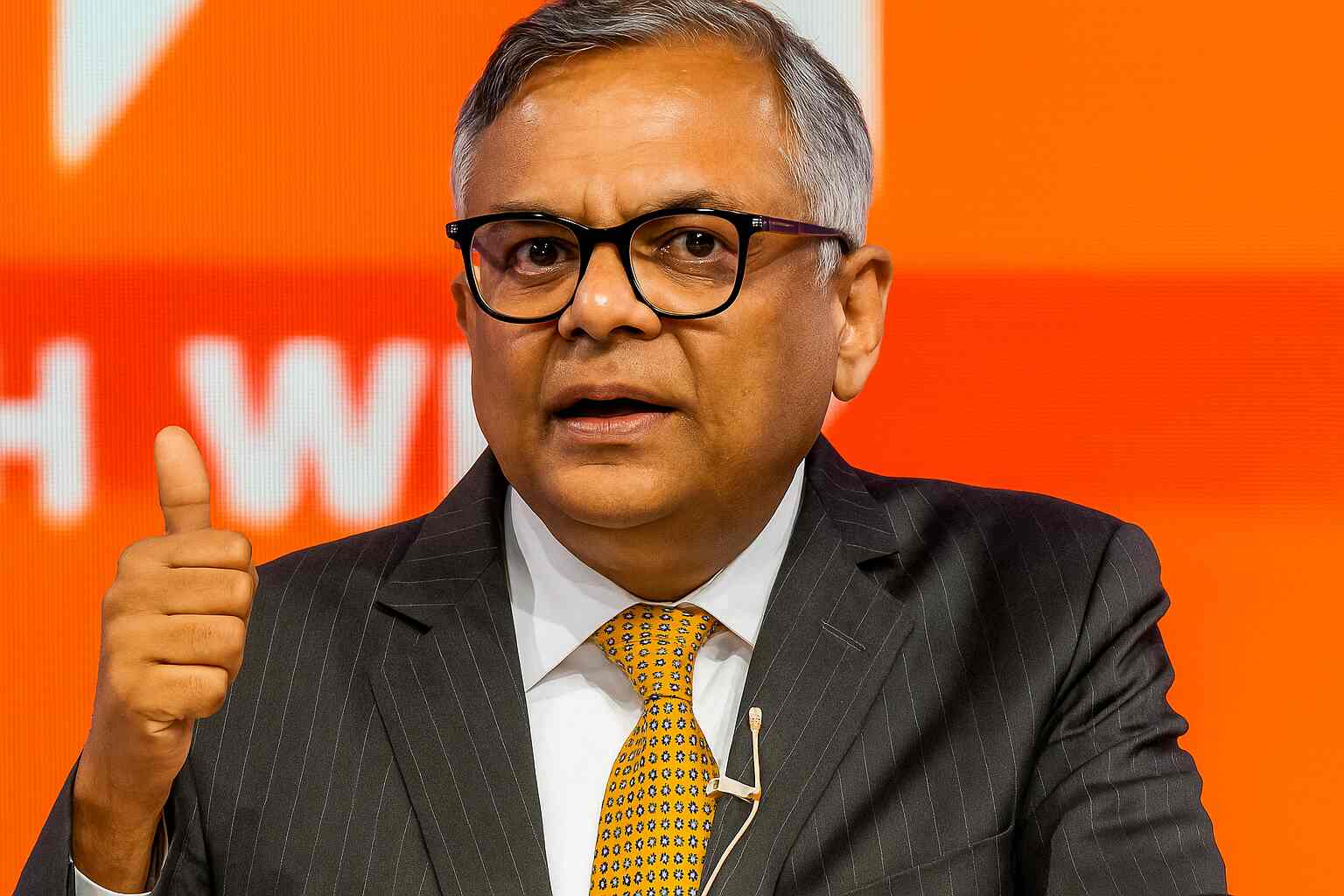
In a landmark move, the Tata Group has extended the tenure of its Chairman N Chandrasekaran for another five years, making it one of the longest leadership runs in the company’s modern history.
This decision marks a strong vote of confidence by the Tata Sons board in his vision and leadership, as the conglomerate moves into a bold new era of semiconductors, electric vehicles, and global-scale aviation under Air India.
For the 156-year-old group that defines much of India’s industrial and corporate legacy, Chandrasekaran’s reappointment is more than a management decision — it is a clear signal that the Tatas are preparing for global competitiveness in high-tech sectors that will define the next two decades.
Details: The man behind Tata’s modern transformation
N Chandrasekaran, fondly called “Chandra” within the business world, took over as Chairman of Tata Sons in 2017 after a turbulent leadership change. Since then, he has transformed the group’s structure, culture, and strategic focus.
Before his appointment, he led Tata Consultancy Services (TCS), the group’s most profitable arm, where he built one of the world’s largest IT services companies. That experience has shaped his approach at Tata Sons — using data, digital tools, and disciplined execution to modernize a diversified industrial empire.
Under his leadership, the group has expanded aggressively into technology-driven businesses, from electric mobility to renewable energy. His reappointment underscores Tata’s confidence in his ability to take these long-term bets to success.
(Read more: How Tata Motors became India’s EV leader)
Analysis: Why this extension is historic
This is not just another renewal — it is a defining moment for Tata Sons. N Chandrasekaran becomes one of the few Tata Group leaders to serve over a decade at the top, after iconic names like J.R.D. Tata and Ratan Tata.
What makes his extension historic is the timing. The group is entering industries that demand patience, capital, and deep global partnerships — semiconductors, artificial intelligence, aviation, and energy transition.
Chandrasekaran’s steady hand and global credibility are critical for navigating these transitions. His leadership has made the Tata Group more agile, collaborative, and forward-looking than it has been in decades.
His philosophy — “Keep it simple, but think big” — is now seen across Tata companies, from consumer goods to technology and automobiles.
Tata’s major bets under Chandrasekaran
1. Semiconductors:
The Tata Group’s entry into semiconductor manufacturing is its most ambitious project yet. With plans to set up fabrication units in Gujarat, Tata Electronics aims to make India a global hub for chip production. This move aligns with the government’s “Make in India” vision and positions Tata at the heart of the country’s digital independence.
2. Electric Vehicles (EVs):
Tata Motors has already become India’s leading EV manufacturer, holding over 70% of the market share. The company is expanding its EV lineup and infrastructure through Tata Power’s charging network. Chandrasekaran’s strategy ties together energy, technology, and mobility into one seamless ecosystem.
3. Air India Revival:
The return of Air India to the Tata fold was symbolic and strategic. Under Chandrasekaran, the airline is undergoing a complete transformation — from fleet renewal and digital systems to customer service. The merger with Vistara aims to create a globally competitive Indian airline that can stand alongside Emirates, Singapore Airlines, and Qatar Airways.
4. Sustainability and Green Energy:
The group’s companies — Tata Power, Tata Steel, and Tata Chemicals — are integrating sustainability into their operations. Chandrasekaran’s “One Tata” approach encourages collaboration across verticals to achieve net-zero goals.
(Read more: Tata Power’s green transition journey)
Reactions: Board, industry, and market welcome the move
The decision to extend Chandrasekaran’s tenure has been met with wide approval from business circles and investors.
The Tata Sons board called it “a continuation of strong, steady leadership in times of global change.” Ratan Tata, who continues as Chairman Emeritus, is believed to have played an advisory role in supporting the decision.
Market analysts see this as a stabilizing move, ensuring continuity in the group’s multi-billion-dollar transformation projects. “No other Indian industrial group is taking as many bold bets at once. Chandrasekaran’s leadership gives them credibility,” said a senior market observer.
Shares of several Tata companies rose marginally following the announcement, reflecting investor confidence in his leadership.
Bigger Picture: The Tata vision under Chandrasekaran
The Tata Group’s roadmap under N Chandrasekaran goes beyond profits — it’s about nation-building in a new technological age.
By investing in semiconductors, EVs, and digital infrastructure, the group is aligning itself with India’s long-term economic goals. Tata Sons is also expanding its global footprint in financial services, hospitality, and consumer brands, giving the conglomerate both depth and diversity.
His leadership represents a blend of traditional Tata values — trust, ethics, and responsibility — with a modern focus on speed, innovation, and sustainability.
Industry insiders call this phase the “Digital Tata Era,” where even legacy businesses are adopting data-driven decision-making. The group is also exploring partnerships in AI, climate tech, and next-gen manufacturing.
(You may also like: Why India’s private sector is leading the AI revolution)
Conclusion
N Chandrasekaran’s reappointment is not just about corporate continuity — it’s about confidence in a vision that connects India’s industrial past with its digital future.
Under his watch, the Tata Group has transformed from a traditional industrial empire into a forward-looking technology powerhouse. With new ventures in chips, clean energy, and aviation, the group is shaping how India will compete in the global economy of tomorrow.
As the board’s decision shows, Tata’s future — much like Chandrasekaran’s leadership — is built on quiet strength, long-term conviction, and a clear sense of purpose.
Related Posts


Stay Informed With the Latest & Most Important News
Previous Post
Next Post
Advertisement






Advertisement
