Now Reading: NDA finalises seat-sharing, BJP and JD(U) to contest 101 seats each, Chirag Paswan gets 29
-
01
NDA finalises seat-sharing, BJP and JD(U) to contest 101 seats each, Chirag Paswan gets 29

NDA finalises seat-sharing, BJP and JD(U) to contest 101 seats each, Chirag Paswan gets 29

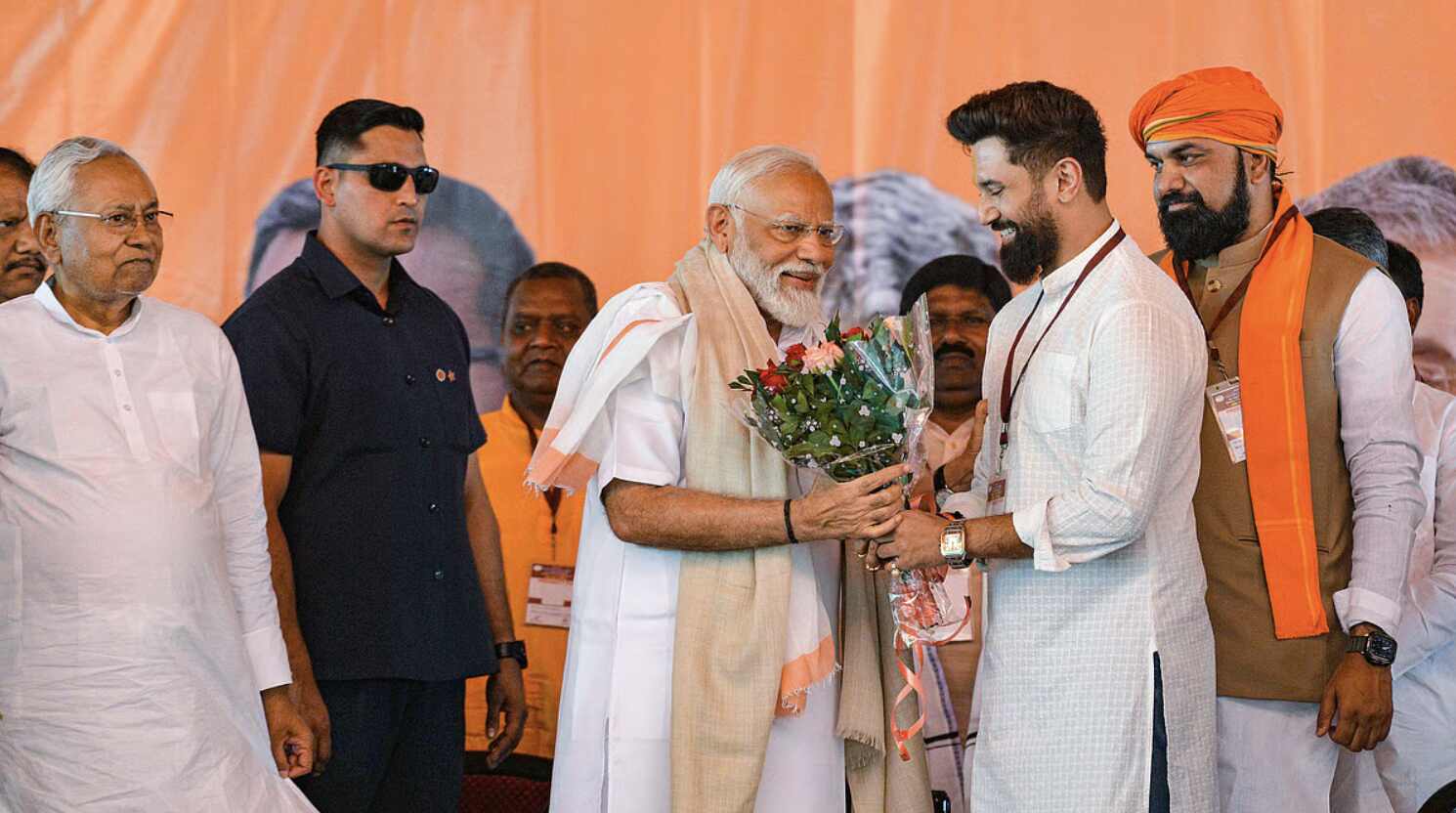
The National Democratic Alliance (NDA) has finally sealed its seat-sharing formula for the upcoming Bihar Assembly elections in 2025. After several rounds of discussions, the Bharatiya Janata Party (BJP) and Janata Dal (United) have decided to contest 101 seats each, while Chirag Paswan’s Lok Janshakti Party (Ram Vilas) has been allotted 29 seats.
This decision brings clarity to weeks of speculation about the alliance’s internal negotiations. It also signals that the NDA is preparing for a united fight to retain power in the politically crucial state.
According to senior leaders, the agreement was reached after top-level talks involving Union Home Minister Amit Shah, Bihar Chief Minister Nitish Kumar, and LJP (Ram Vilas) chief Chirag Paswan. The announcement is expected to strengthen coordination among NDA partners in the run-up to the elections scheduled early next year.
Details: The final seat distribution and key constituencies
The NDA’s seat-sharing deal divides Bihar’s 243 Assembly constituencies among its major allies. Both BJP and JD(U) will contest an equal share of 101 seats each, maintaining the balance that helped them form a stable government in the past.
Chirag Paswan’s LJP (Ram Vilas), which played a crucial role in consolidating Dalit and youth votes during the 2020 elections, has been given 29 seats — a number considered both symbolic and strategic.
The BJP will field candidates primarily in urban and semi-urban seats, while JD(U) will focus on its strongholds in rural and northern Bihar. The LJP will contest mostly in western and central regions where Paswan’s influence remains strong.
Party sources say that some smaller regional allies may be accommodated later under the NDA umbrella through seat adjustments.
(Read more on Behind The Headlines: Chirag Paswan’s rising role in Bihar politics)
Analysis: Why this seat-sharing matters
This equal division of seats between BJP and JD(U) reflects a delicate political understanding between Nitish Kumar and the BJP’s central leadership. In the past, seat allocation had often caused tension within the NDA, but this year’s early consensus indicates that both parties want to avoid friction ahead of the polls.
For the BJP, this arrangement ensures a strong urban base and continuity in its alliance with JD(U), which has been essential in countering the RJD-led Mahagathbandhan.
For Nitish Kumar, it guarantees his relevance and control within the coalition, especially after repeated political switches over the years. He will be projected as the NDA’s chief ministerial face, with the BJP playing a supportive yet significant role.
Chirag Paswan’s inclusion completes the picture — the young LJP leader has emerged as a key ally who can attract younger voters, Dalits, and first-time voters. His acceptance of 29 seats also shows his willingness to strengthen the NDA’s unity rather than challenge it.
(Read more from Behind The Headlines: The Chirag Equation and NDA’s balancing act)
Reactions: Leaders hail “unity”, opposition calls it “desperation”
Following the announcement, NDA leaders hailed the seat-sharing formula as a “historic and balanced” decision that reflects collective strength.
BJP state president Samrat Choudhary said that the alliance was “fighting unitedly for Bihar’s development.” Nitish Kumar, too, expressed satisfaction, saying that the agreement “shows the maturity and stability of the NDA.”
Chirag Paswan described the deal as a “win-win” for all sides. He added that the LJP’s 29 seats would be “enough to make a difference in the state’s political equation.”
Meanwhile, the Opposition alliance, led by Tejashwi Yadav’s Rashtriya Janata Dal (RJD), dismissed the announcement as a “political adjustment out of fear.” Tejashwi said that “NDA partners are dividing seats, but people of Bihar will divide their votes.”
Political experts believe that this exchange of statements sets the tone for a heated and personality-driven campaign in the months ahead.
Bigger Picture: What it means for Bihar’s 2025 polls
This seat-sharing deal could have a long-term impact on Bihar’s political landscape. For the NDA, it ensures that every major partner feels represented, preventing any public fallout.
The alliance now faces a two-front challenge — retaining its traditional voter base while countering the RJD-Congress alliance, which is expected to campaign aggressively on issues like unemployment, inflation, and migration.
Observers note that the real test for the NDA will be in maintaining voter enthusiasm amid anti-incumbency. Nitish Kumar’s leadership will be under close watch, especially after his recent political flip-flops between alliances.
At the same time, the BJP is expected to highlight Prime Minister Narendra Modi’s welfare and infrastructure schemes in Bihar to consolidate its urban and middle-class voter base.
The addition of Chirag Paswan could also help the NDA expand its reach among Dalit voters and younger sections of the population — making the 2025 Bihar polls one of the most closely fought elections in recent memory.
(You may also like: Who will win Bihar Election 2025? First opinion poll gives clear majority to NDA)
Conclusion
The NDA’s seat-sharing agreement for the Bihar Assembly Elections 2025 is more than just a political announcement — it’s a statement of unity, timing, and balance.
With BJP and JD(U) taking equal shares and Chirag Paswan joining as a steady partner, the alliance appears more organized than in past elections. Whether this formula converts into votes will depend on how well they campaign together and respond to local issues.
For now, one thing is clear — the Bihar election race has officially begun, and the NDA has fired the first big shot.
Related Posts



Stay Informed With the Latest & Most Important News

Advertisement