
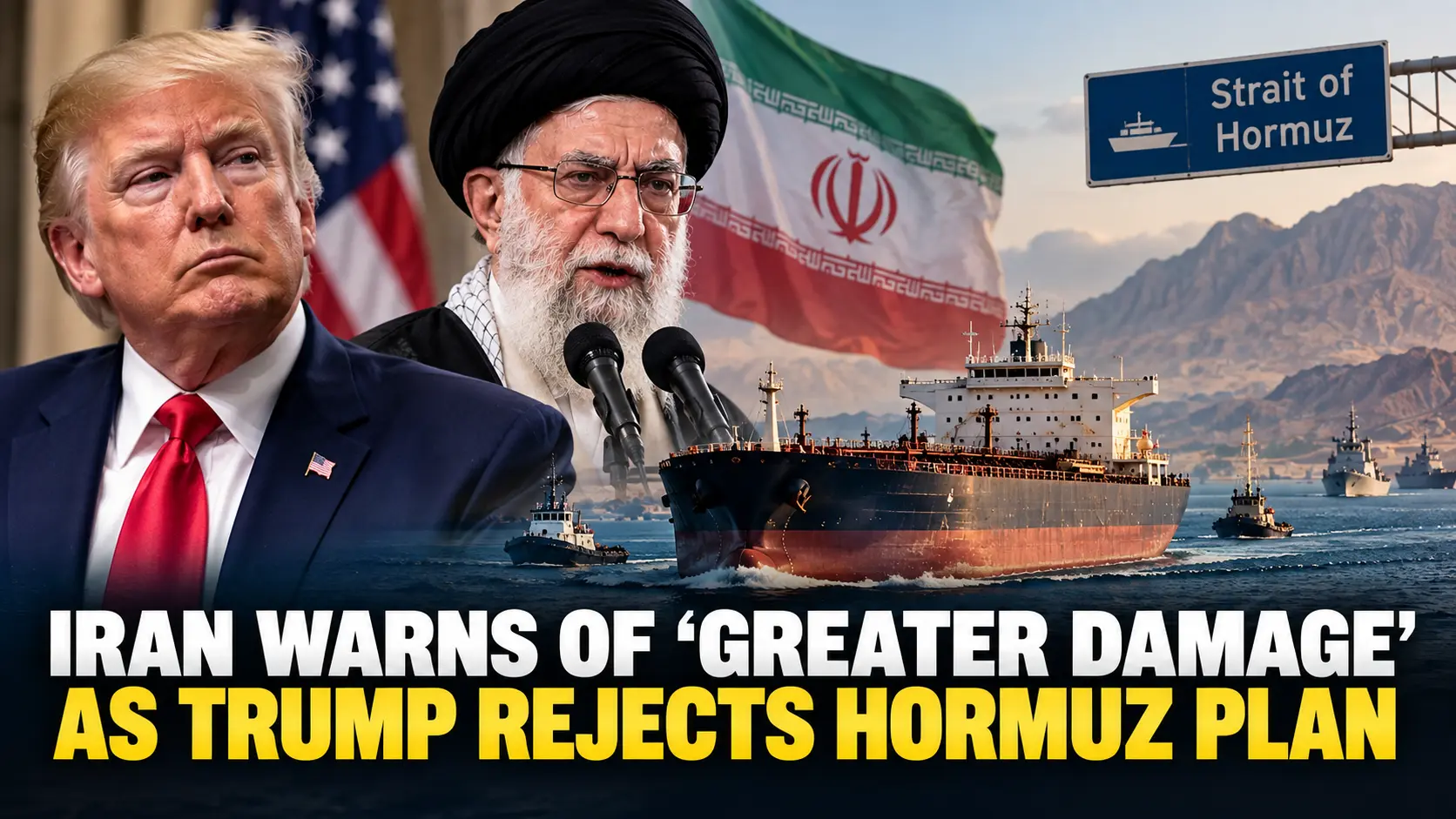
Iran has warned of a stronger response to any renewed US attack after Donald Trump rejected Tehran’s proposal to reopen the Strait of Hormuz within seven days.
Iran has warned that any renewed US military action could result in greater damage for Washington, while Tehran continues to push for a negotiated settlement over the Strait of Hormuz and the wider conflict. The warning came after US President Donald Trump said he had rejected an Iranian proposal aimed at reopening the strategic waterway and restarting broader negotiations.
The Editorial Team of Behind The Headlines reports that Iran's Foreign Minister Abbas Araghchi said Tehran was still waiting for a definitive US response through mediators, despite Trump's public rejection. He maintained that Iran's conditions for reopening the strait remained unchanged and that diplomacy was the only way to resolve the standoff.
What was Iran's Hormuz proposal?
Iran had presented a roadmap during the UN General Assembly that envisaged a seven-day process leading to the reopening of the Strait of Hormuz and a pause in regional fighting.
Under the proposal, Tehran wanted the United States to ease military pressure, lift its naval blockade of Iranian ports and waive sanctions affecting Iranian oil sales. The roadmap could then lead to wider negotiations on issues including Iran's nuclear programme.
Iran's position was that reopening the waterway would be conditional on these demands being met.
Araghchi said Tehran had transmitted the proposal through mediators and was waiting for Washington's formal position before deciding its next steps.
Why did Trump reject it?
Trump publicly rejected the proposal, arguing that Iran was seeking an immediate reopening of Hormuz because it was under severe pressure.
The US president has maintained a hard-line position towards Tehran and has demanded changes to Iran's conduct, including over its nuclear programme. He has also indicated that a broader agreement could come after the US midterm elections in November.
The US position and Iran's conditions therefore remain far apart.
Iran warns of a stronger military response
Iranian military officials have now signalled that Tehran remains prepared for another confrontation.
Iranian Army spokesperson Mohammad Akraminia said the country's armed forces were prepared for a renewed US attack and warned that Washington could face greater losses if it launched another operation.
The warning does not necessarily mean that a new attack is imminent. At the same time, Tehran continues to publicly advocate negotiations, creating a situation in which military preparations and diplomatic messaging are continuing simultaneously.
Why the Strait of Hormuz matters
The Strait of Hormuz is one of the world's most important energy shipping routes.
Before the current conflict, roughly one-fifth of global oil and gas shipments passed through the waterway. Disruption has therefore affected not only Iran and the Gulf countries but also international energy markets and economies that depend on imported oil and gas.
Traffic through the strait has already been significantly disrupted by the conflict. Some tankers have continued to move through the waterway, but activity remains far below normal levels. An unidentified projectile also struck a tanker in the strait earlier this month, injuring two crew members, according to British maritime authorities.
The economic stakes are rising
The prolonged disruption has consequences beyond shipping.
Lower oil flows can tighten global supply, potentially increasing crude prices and transportation costs. Countries that import large quantities of oil are particularly exposed because higher crude prices can increase their import bills and put pressure on inflation and currencies.
The conflict has also affected alternative routes. Continued instability involving Iran-backed Houthi forces in Yemen has put additional pressure on shipping through the Red Sea, reducing the number of straightforward alternatives for Gulf energy exports.
Diplomacy is still on the table
Despite Trump's rejection, Iran has not withdrawn its diplomatic proposal.
Araghchi has said Tehran is waiting for mediators to communicate Washington's definitive position. Iran has also continued to argue that the Hormuz question can be resolved through negotiations rather than continued military confrontation.
That leaves three broad issues connected to the current standoff:
Hormuz: Iran links reopening the waterway to specific US concessions.
Military confrontation: Iranian officials say their forces are prepared for renewed attacks.
Diplomacy: Tehran continues to call for negotiations, while Washington has so far rejected the latest proposal.
For global markets, the immediate concern is whether the standoff produces another disruption to energy supplies. For the region, the larger question is whether the competing military and diplomatic tracks eventually converge into a negotiated arrangement—or lead to another escalation.