
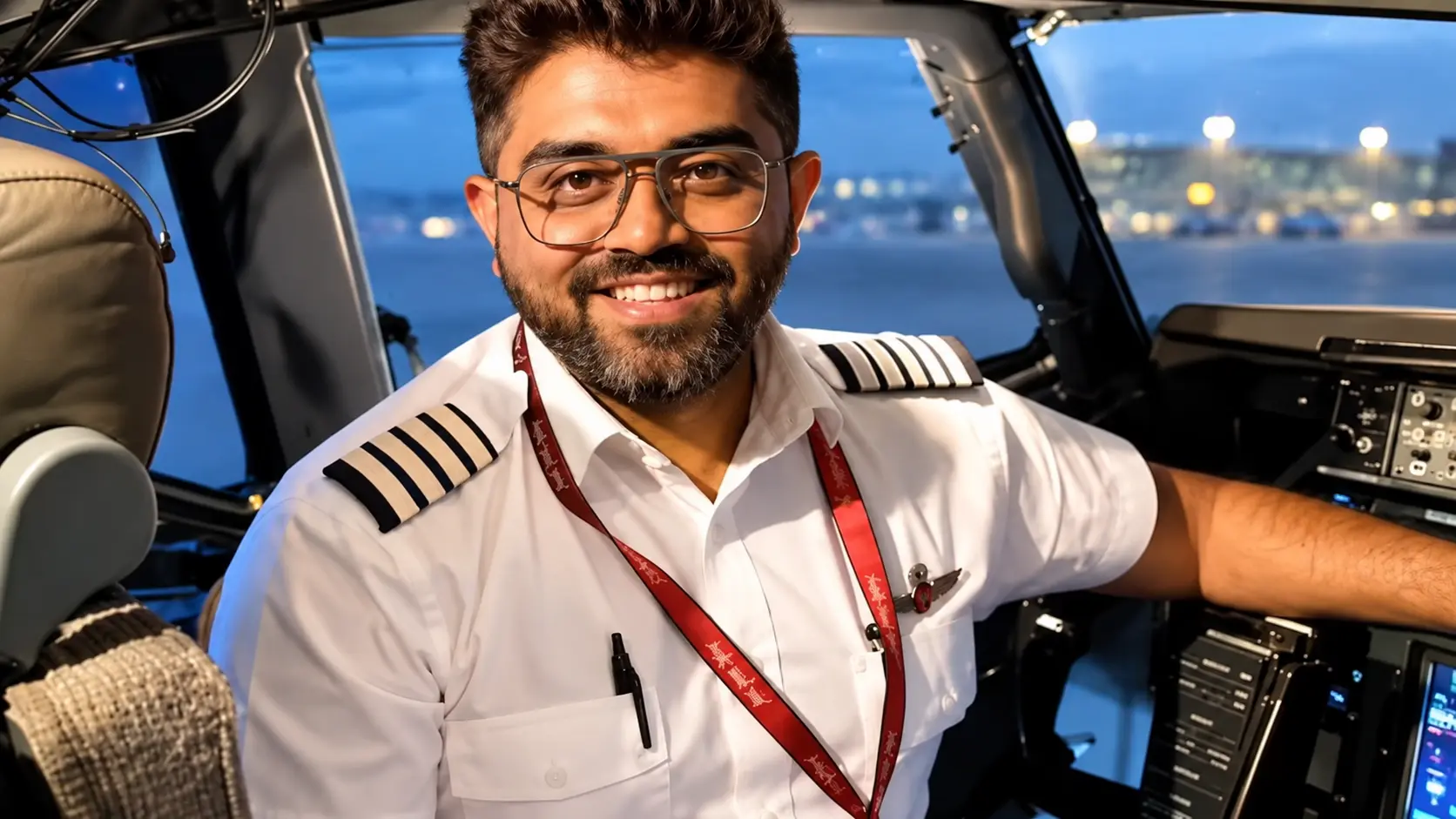
Captain Smit Machchhar was stabbed by his co-pilot during a Dubai-Tel Aviv flight, but his actions helped passengers and crew regain access to the cockpit before the aircraft landed safely in Saudi Arabia.
The Editorial Team of Behind The Headlines reports that an Indian captain played a crucial role in averting a potential aviation disaster after he was attacked by his co-pilot aboard a Flydubai flight travelling from Dubai to Tel Aviv on September 30.
Captain Smit Machchhar, who was in command of Flight FZ1073, was reportedly stabbed during a confrontation inside the cockpit. The Boeing 737 MAX 8 subsequently went into a dramatic descent over Saudi Arabia before passengers and other crew members intervened. The aircraft eventually made an emergency landing at Tabuk, with all 174 passengers safe.
What happened inside the cockpit?
The sequence began more than two hours after the aircraft departed Dubai.
According to accounts from Israeli officials and passengers, the co-pilot attacked Machchhar inside the cockpit. The Indian captain was seriously injured during the struggle, while the aircraft began losing altitude rapidly.
Flight-tracking data indicates that the aircraft dropped by roughly 14,000 feet in around 30–40 seconds, an extraordinary descent that triggered an emergency situation. The aircraft subsequently transmitted emergency and unlawful-interference signals before diverting towards Tabuk.
The exact sequence of events inside the cockpit is still being investigated.
Flydubai has confirmed that an incident occurred but has urged people not to speculate about its cause or motive while authorities investigate.
Despite being seriously injured, Machchhar reportedly managed to open the cockpit door.
That action became critical.
Passengers and crew were then able to enter the cockpit and overpower the attacker. Other pilots who were travelling on the aircraft subsequently helped stabilise the aircraft and complete the emergency landing in Saudi Arabia.
Israeli Prime Minister Benjamin Netanyahu credited Machchhar's actions with helping prevent a catastrophic outcome, while Indian Prime Minister Narendra Modi also praised the captain's courage.
Several passengers and crew members were involved in bringing the confrontation under control, meaning the safe outcome was the result of multiple people acting during an unfolding emergency, rather than the actions of one person alone.
Who is Captain Smit Machchhar?
Machchhar is an Indian pilot from Mumbai with extensive experience flying Boeing 737 aircraft.
Before joining Flydubai in 2022, he spent around 11 years with SpiceJet, where he progressed to senior commander and later worked as a line training captain involved in training and checking other pilots.
His professional profile lists approximately 9,750 flying hours. He joined Flydubai as a direct-entry captain in June 2022 and has been based in Dubai.
His aviation experience became particularly significant during Wednesday's emergency because the incident involved a sudden loss of control and a physical confrontation inside the flight deck.
What happened to the aircraft?
The aircraft was flying from Dubai to Tel Aviv when the incident occurred over northern Saudi Arabia.
After the sudden descent and cockpit struggle, the aircraft diverted towards Tabuk Airport. The flight eventually landed safely, and passengers were taken care of before continuing their journey to Israel.
All 174 people aboard were reported safe. Machchhar and the other pilot were taken to hospital in Saudi Arabia. Machchhar underwent surgery and was reported to be in stable condition.
Saudi authorities arrested the attacker, who has been identified in reports as an Omani national. His motive remains unclear and is subject to investigation.
Was this really a “9/11-style” attempt?
The phrase “9/11-style” has been used in some reports and commentary because the incident involved an alleged attempt to take control of a passenger aircraft and potentially crash it.
However, it is important to distinguish that description from established facts.
There was no crash, all passengers survived, and authorities have not yet publicly established the attacker's full motive. Israeli officials have said the co-pilot appeared to be trying to crash the aircraft, while Flydubai has cautioned against premature conclusions while the investigation continues.
The comparison therefore describes the potential consequence of the alleged act, not an event equivalent to the September 11 attacks.
Why the incident is significant
The episode raises several questions about aviation security, cockpit access and how airlines respond when the threat comes from inside the flight deck itself.
Commercial aviation relies heavily on the cockpit remaining a controlled and secure environment. In this case, the aircraft faced an extraordinary combination of circumstances: a physical confrontation between pilots, a rapid loss of altitude and the need for other people aboard to regain access to the cockpit.
The safe landing at Tabuk ultimately involved the captain's actions, passengers who intervened, crew members and additional pilots who helped recover control of the aircraft.
For now, investigators still have to establish exactly what happened inside the cockpit, how the attack unfolded and what motivated the co-pilot.
But one fact is clear: Flight FZ1073 reached the ground safely, and Captain Smit Machchhar's decision to open the cockpit door while seriously injured was a critical part of that outcome.