
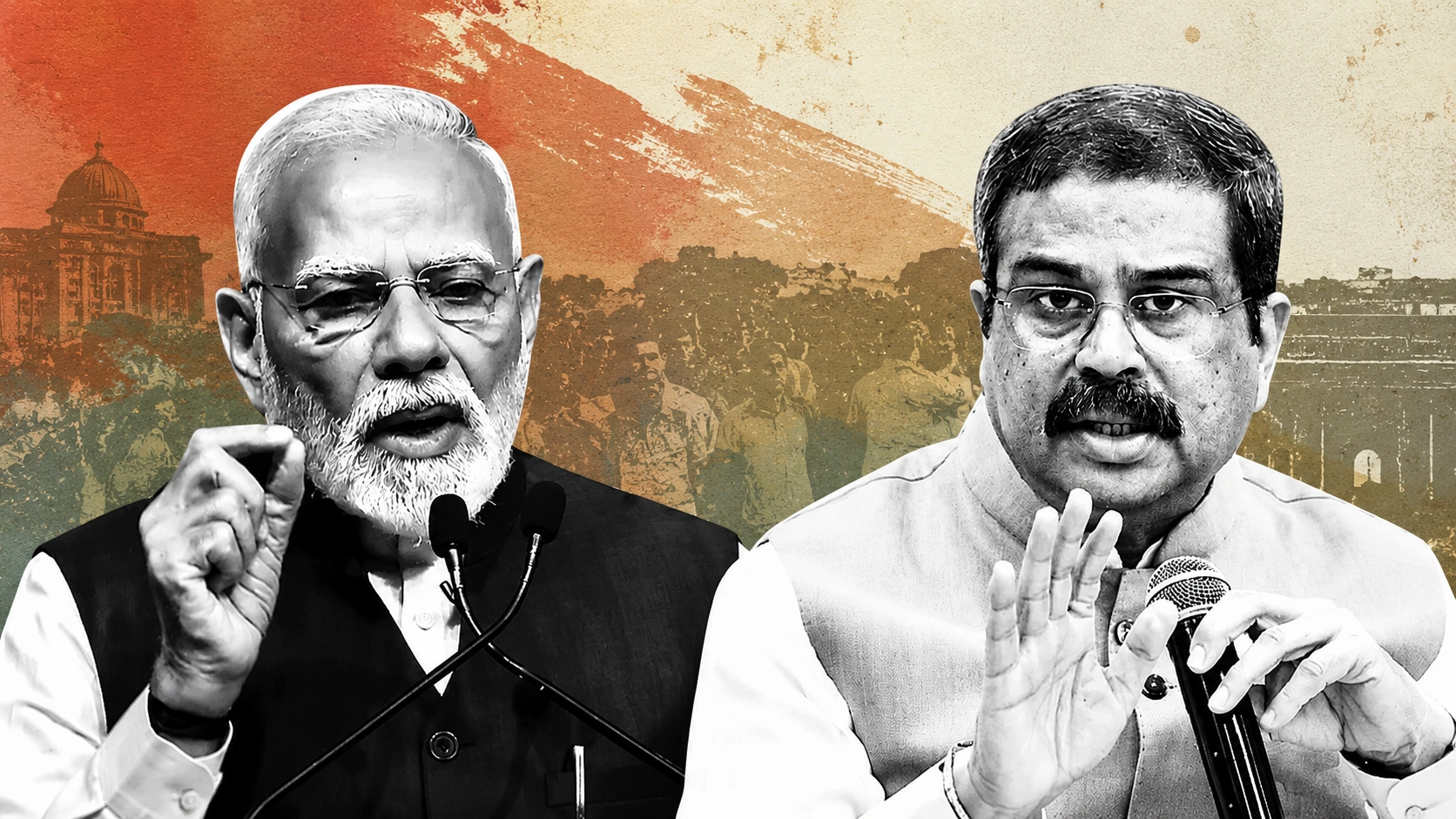
Union Education Minister Dharmendra Pradhan's resignation is being viewed as a significant political course correction by the Narendra Modi government after weeks of sustained nationwide protests over alleged examination irregularities. According to the source, the resignation was not merely about assigning responsibility but reflected a broader attempt by the BJP leadership and the RSS to contain mounting public anger and prevent long-term political damage.
The article argues that the scale of the protests, particularly the mobilisation of students and young people, transformed what initially appeared to be an administrative issue into a major political challenge. As demonstrations intensified and gained nationwide attention, pressure reportedly increased within the BJP ecosystem to respond decisively.
According to the report, senior RSS leaders were believed to be concerned that prolonged unrest among students could alienate a crucial voter base. The opinion suggests that these concerns contributed to internal discussions on adopting a conciliatory approach instead of allowing the protests to continue indefinitely.
It further claims that Prime Minister Narendra Modi's decision to accept Pradhan's resignation was part of a larger strategy aimed at:
Demonstrating political accountability.
Reducing public anger over examination controversies.
Rebuilding trust among students and parents.
Preventing the opposition from capitalising on the issue in the months ahead.
Beyond the resignation, the government has also announced steps toward reforms in the examination system, including a task force to recommend structural changes and proposals for stricter anti-paper leak legislation. The opinion piece argues these measures are intended to signal that the government is addressing systemic issues rather than relying solely on a ministerial resignation.
This concludes that while Dharmendra Pradhan's exit may have eased immediate political pressure, the larger challenge for the government will be restoring confidence in India's examination system. It argues that lasting credibility will depend on implementing meaningful reforms and ensuring transparency, rather than treating the resignation as the final resolution to the crisis.