
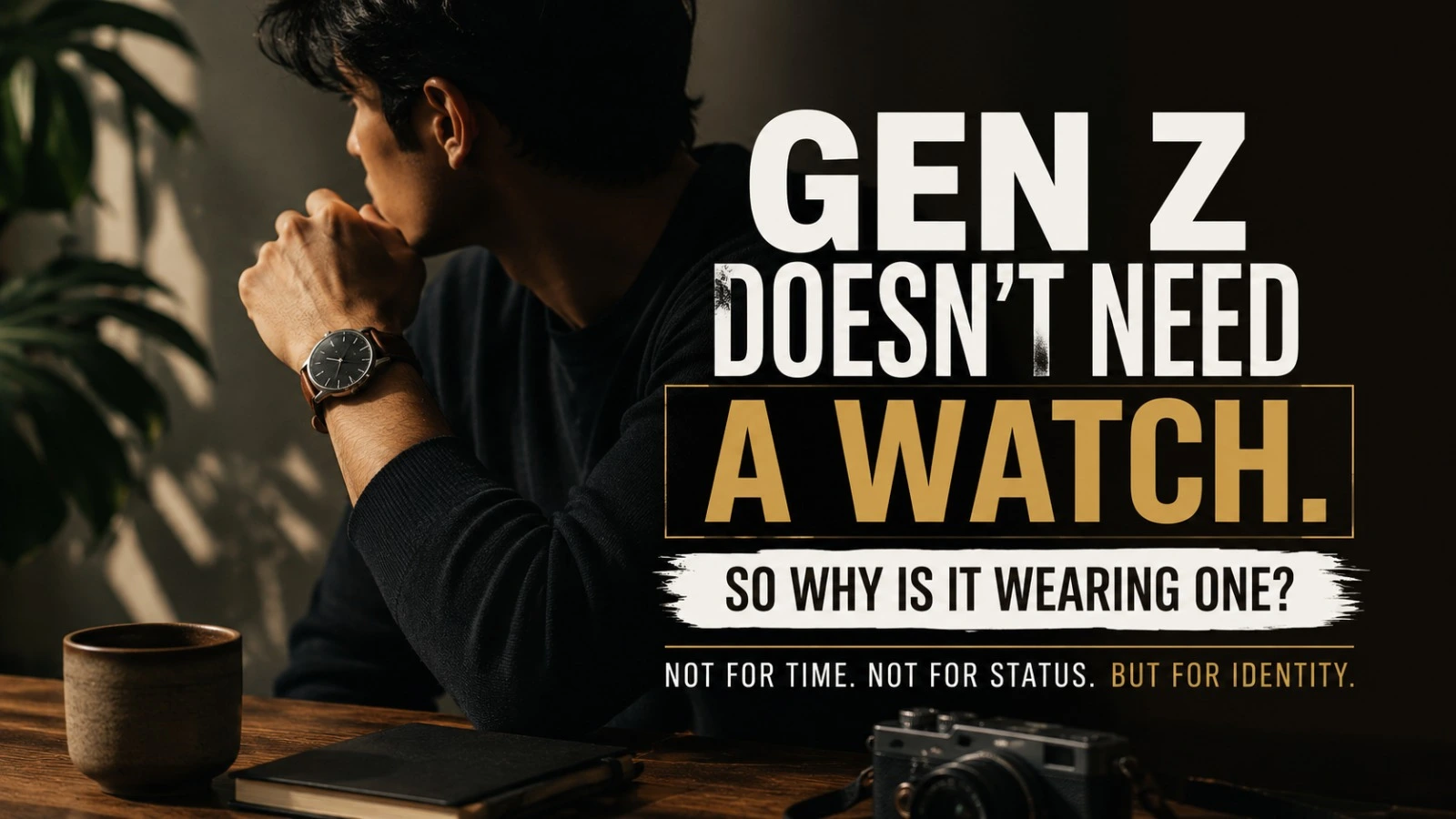
A generation raised on smartphones is bringing the traditional wristwatch back as a form of style, identity and personal expression.
For Gen Z, checking the time has never really required a watch. Phones, laptops, smartwatches, cars and even digital billboards have made the traditional function of a wristwatch almost unnecessary. Yet watches are finding their way back onto younger wrists. The Editorial Team of Behind The Headlines reports that the attraction is no longer simply about telling time or displaying wealth; for many young men, a watch has become a quieter way of expressing personality, taste and attention to detail.
The appeal is partly about permanence. Gen Z has grown up with disappearing messages, rapidly changing technology and fashion trends that can become outdated within months. A well-made watch offers something different: an object that can remain relevant for years and, in some cases, become part of a person's personal history. A first serious watch may be connected to a first salary, a new job, graduation, a major achievement or an important life change. Over time, the object can become less about its price and more about the memory attached to it.
The shift is also changing what younger consumers expect from luxury. Loud branding and oversized designs do not necessarily carry the same appeal they once did. Instead, there is growing interest in restrained designs, classic proportions, quality finishing and details that are appreciated by the wearer even when nobody else notices them. A mechanical movement, a textured dial, a well-made strap or the way a watch develops character over time can matter more than a large logo.
The watch has become a style statement
A watch used to answer a simple question: What time is it?
Today, almost anything around us can answer that question.
The smartphone has made the practical purpose of the wristwatch almost redundant. Yet that may have made the watch more interesting as a fashion object.
When something is no longer necessary, choosing to wear it becomes a deliberate decision.
That is exactly what is happening with younger consumers.
A watch can complete an outfit in the same way that shoes, sunglasses or a jacket can. It can be subtle enough to go unnoticed by most people while still being important to the person wearing it.
That makes the watch less of a gadget and more of an accessory with personality.
Why permanence matters to Gen Z
There is an interesting contradiction at the heart of the watch revival.
Gen Z is perhaps the most digitally connected generation yet, but it is increasingly drawn to things that feel tangible and lasting.
Phones are replaced.
Apps disappear.
Social-media trends move at extraordinary speed.
Fashion cycles become shorter.
A traditional watch operates on a completely different timeline.
A good mechanical watch can be serviced, repaired and worn for decades. It does not become obsolete because a new operating system has been released.
That sense of permanence can be particularly attractive to younger buyers who are surrounded by products designed around constant upgrades.
The watch does not ask to be upgraded.
It simply continues to exist.
Luxury is becoming quieter
The definition of luxury is changing too.
For years, luxury fashion often relied on immediate recognition. A large logo or instantly recognisable design could communicate status without requiring any explanation.
Among younger consumers, the appeal can be more understated.
A smaller or moderately sized case, brushed metal, a simple dial or a leather strap can communicate a very different kind of confidence.
The idea is not necessarily to make people ask, “How expensive is that?”
It is to make someone think, “That looks good.”
This is where watches become particularly powerful.
Unlike a large logo, a well-designed watch can communicate taste without demanding attention.
Smartwatch and traditional watch can coexist
The return of traditional watches does not mean Gen Z is abandoning technology.
In fact, the opposite is true.
Smartwatches remain incredibly useful for workouts, health tracking, notifications, navigation and everyday productivity.
But functionality and personal style do not always have to come from the same object.
A smartwatch may make perfect sense during a morning run.
A traditional watch may feel better at a dinner, wedding, meeting or date.
One tracks information.
The other contributes to the way someone presents themselves.
This distinction explains why some younger consumers are comfortable owning both.
They are not choosing between technology and tradition.
They are giving each one a different role.
The first serious watch can become a personal milestone
The most interesting part of the trend may have little to do with luxury at all.
For many people, the first meaningful watch is connected to a particular moment.
It could be purchased with the first salary.
It could mark a promotion.
It could be a graduation gift.
It could be bought before moving to another city.
It could even be inherited from a parent or grandparent.
That emotional connection can give a watch an importance that its specifications or price cannot explain.
A phone is usually replaced when something better arrives.
A watch can become more valuable precisely because it has been there for a long time.
Its scratches, worn strap and signs of use can become part of the story.
Why younger buyers are learning about watches
The internet has also changed the way people buy watches.
A young buyer can now spend hours learning about movements, case sizes, materials, complications, servicing and the history of different designs before spending money.
That creates a more informed consumer.
The appeal is no longer limited to knowing a brand name.
Some enthusiasts care about what is inside the case, how the movement works, how the dial is finished or how the watch was designed.
That knowledge creates a different kind of appreciation.
Two watches may have similar prices, but the person who understands why one particular watch appeals to them may value it far more.
In that sense, watches reward curiosity as much as spending power.
The rise of personal taste over obvious status
The Gen Z watch conversation is therefore not simply another story about young consumers buying expensive products.
It is also about personal taste.
A person can choose a vintage-inspired mechanical watch without wanting to impress anyone.
Another may prefer a simple digital watch because it fits their personality.
Someone else may buy a luxury timepiece after years of saving for it.
There is no single definition of what a watch means.
And that may be the biggest change.
The watch is moving away from being a universal symbol of punctuality or status and becoming something much more personal.
Why the old watch still works in a digital world
Perhaps the reason watches have survived the smartphone is that their real value was never only about time.
Time was simply the original function.
Today, the watch can represent craftsmanship, nostalgia, style, achievement, family, individuality or even patience.
It is an object that can sit quietly on the wrist without needing an internet connection, notification or software update.
And for a generation surrounded by constant digital noise, that simplicity may itself be part of the attraction.
Gen Z does not need a watch to know what time it is.
It wears one because knowing the time is no longer the point.