
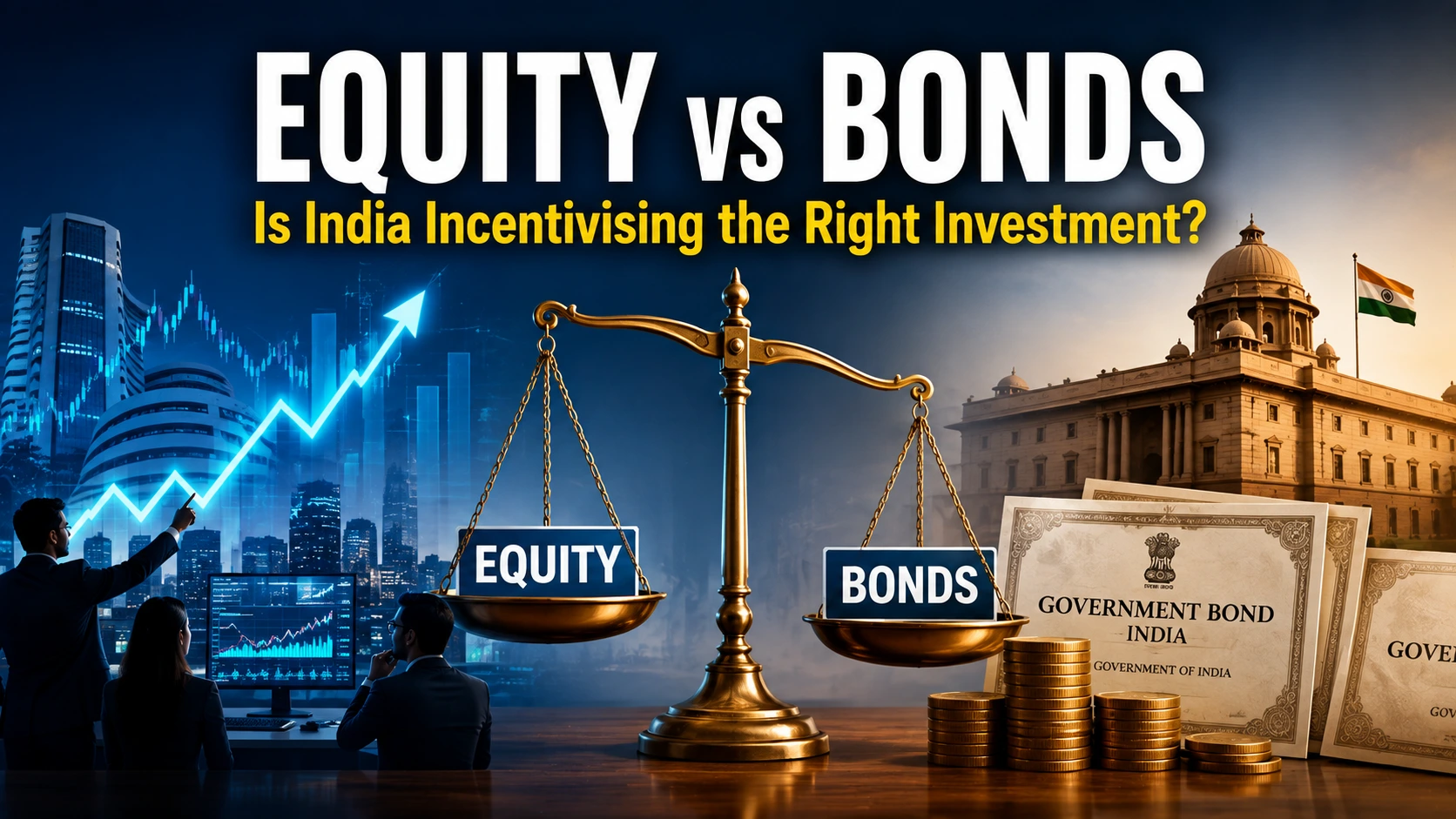
India's recent tax changes have triggered an interesting debate among economists. While the government has announced major tax incentives for foreign investors buying Indian government bonds, some experts argue that the same enthusiasm should have been shown towards investments in Indian stocks.
The debate was sparked by an opinion article by entrepreneur and media founder Raghav Bahl, who described the move as a "missed Goldilocks moment" for India's economy. His argument is simple: if the goal was to attract foreign capital, why encourage debt instead of equity?
What Did the Government Change?
As part of its broader economic strategy, the government announced significant tax relief for foreign investors in Indian government securities (G-Secs).
The changes include exemptions on taxes such as income tax, long-term capital gains tax (LTCG) and short-term capital gains tax (STCG) for eligible foreign investments in government bonds. The objective is to attract more overseas money into India's debt market, reduce borrowing costs and support the rupee.
Why Are Economists Divided?
Supporters of the move believe that attracting foreign investment into government bonds can:
Lower the government's borrowing costs.
Increase demand for Indian debt.
Bring more foreign exchange into the country.
Help stabilise the rupee during periods of global uncertainty.
However, critics believe the policy focuses on the government's financing needs rather than long-term economic growth.
What Is the 'Goldilocks Moment'?
Raghav Bahl argues that India should have recreated the tax environment that existed between 2004 and 2008, when long-term capital gains tax on equities had been abolished and securities transaction tax (STT) was introduced instead.
According to him, those years witnessed:
Strong foreign investment.
A stronger rupee.
Higher foreign direct investment (FDI).
Rapid stock market growth.
Increased private equity inflows.
He believes favourable tax treatment for equities helped make India an attractive destination for global investors during that period.
Why Does He Prefer Equity Over Debt?
The core argument is about the type of capital entering the country.
Equity investment means investors buy ownership in Indian companies. It helps businesses expand, create jobs and absorb risk because investors share in profits and losses.
Debt investment, on the other hand, involves lending money to the government through bonds. While it helps finance public spending, it also increases the country's debt obligations.
According to the article, encouraging more equity rather than debt would create stronger long-term economic benefits.
What Is the Criticism of the New Tax Policy?
Bahl estimates that the government may forgo thousands of crores in tax revenue by exempting foreign bond investors. He argues that a similar tax concession for equity investments could have attracted substantially larger amounts of long-term risk capital instead of increasing dependence on foreign debt.
In his view, the policy effectively creates a highly attractive tax regime for government bonds while leaving equity investments comparatively less competitive.
What Is the Government's Likely Rationale?
Although the government has not framed the policy in the same terms as the criticism, economists say the decision likely reflects immediate macroeconomic priorities, including:
Keeping government borrowing costs under control.
Supporting the rupee amid global financial volatility.
Ensuring stable capital inflows during uncertain international conditions.
These objectives can be particularly important when global interest rates remain elevated and financial markets are volatile.
How Does This Affect Ordinary Indians?
The impact is indirect but important.
If the strategy succeeds:
Government borrowing could become cheaper.
Financial stability may improve.
Pressure on the rupee could ease.
Inflation risks linked to currency depreciation may reduce.
However, if critics are correct, India could miss an opportunity to attract more long-term investment into businesses, which could otherwise support employment, innovation and economic growth over time.
The Bigger Picture
The debate is ultimately about quality versus quantity of capital.
Few disagree that India needs foreign investment. The real question is what kind of investment should receive the biggest incentives.
Supporters of the government's approach argue that today's global uncertainty requires strengthening financial stability first. Critics counter that India should prioritise attracting long-term equity capital that builds businesses rather than expanding debt.
As India seeks to become a larger global economic power, striking the right balance between stability and growth will remain a key policy challenge.