

Now Reading: EC Launches Special Revision of Voter Rolls in 12 States and Union Territories
-
01
EC Launches Special Revision of Voter Rolls in 12 States and Union Territories

EC Launches Special Revision of Voter Rolls in 12 States and Union Territories

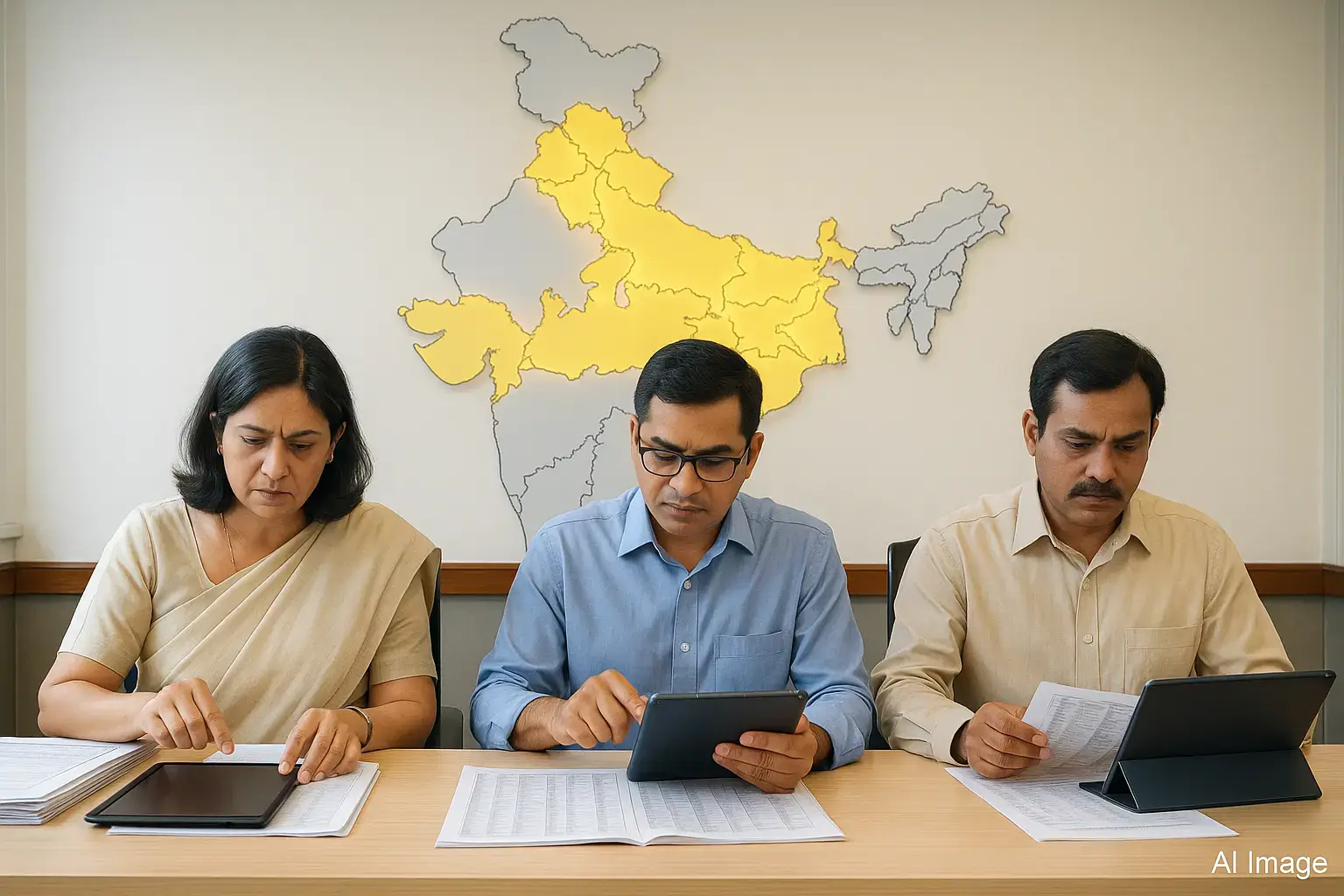
In a major pre-election exercise, the Election Commission of India (ECI) has announced a Special Intensive Revision (SIR) of electoral rolls across 12 states and Union Territories. The move is part of its continuing effort to ensure that voter lists are updated, accurate, and inclusive before the upcoming election cycle in 2025.
According to officials, this revision will focus on identifying duplicate entries, removing deceased voters, and enrolling first-time voters who have turned 18. The exercise reflects the Commission’s priority to strengthen transparency and voter participation before crucial state and national elections.
Why the Revision Was Needed
The revision comes at a time when several states are preparing for assembly elections, and voter accuracy has become a national concern. Reports of missing names and duplicate entries in the past elections prompted the ECI to act early.
The Commission noted that rapid population shifts, migration for jobs, and urbanisation often cause inaccuracies in voter databases. This special revision aims to address those issues while using new technology to make the process faster and cleaner.
Officials have also said that the initiative aligns with India’s push for “clean rolls, clean polls.” The effort will use Aadhaar seeding, house-to-house verification, and a dedicated online portal for voter updates.
Which States and UTs Are Covered
The Special Intensive Revision covers:
Assam, Arunachal Pradesh, Bihar, Jammu & Kashmir, Jharkhand, Manipur, Mizoram, Nagaland, Odisha, Sikkim, Tripura, and the Union Territory of Puducherry.
Each state and UT will follow a detailed timeline that includes draft publication, claims and objections, and final roll release before elections.
Officials have stated that the revision will be supervised by the Chief Electoral Officers (CEOs) of each region, supported by local booth-level officers. Digital dashboards will track daily progress and ensure all corrections are reflected before the final publication.
(Read More: “Bihar Election 2025: EC Tightens Monitoring for Fair Polls”)
Technology at the Core
One of the most striking aspects of this revision drive is its technological integration. The ECI is using a central voter database that allows real-time verification across states.
- Aadhaar Verification: Linking of Aadhaar numbers with voter IDs to eliminate duplicate entries.
- Geo-Tagging of Booths: Helps map polling locations accurately and identify population gaps.
- AI-assisted Verification: Systems now scan data patterns to detect potential fraud or fake identities.
- Voter Helpline App: Citizens can check, verify, and update their voter details online.
This digital push is part of the Commission’s goal to ensure every citizen’s vote is counted once — and only once.
(Read More: “India’s Digital Voting Reforms: How Tech Is Transforming Democracy”)
Inclusion of Young and First-Time Voters
A major focus of the SIR drive is the inclusion of new voters aged 18–19 years. Schools, colleges, and local youth organisations have been asked to assist in the awareness campaign.
The ECI has also planned special drives in rural and tribal regions where voter registration remains low. Local BLOs (Booth Level Officers) will conduct house-to-house visits with tablets for on-the-spot registration.
For citizens with disabilities and senior citizens, special arrangements are being made, including home-based registration and dedicated grievance redressal cells.
According to early estimates, this revision could add nearly 1.5 crore new voters to the national database by early 2026.
Ensuring Transparency and Accountability
Transparency remains the foundation of this entire exercise. Each step — from data entry to deletion — will be open for public scrutiny. The draft rolls will be published both online and offline, allowing citizens to verify and object within a fixed timeline.
The ECI is also introducing a ‘Track Your Objection’ feature, where users can monitor the status of their claims or corrections directly through their smartphones.
Observers from various political parties will be invited to oversee the revision process at local levels, ensuring bipartisan trust.
(Read More: “ECI’s New Voter Transparency Drive: A Step Toward Digital Accountability”)
Political and Administrative Reactions
Political reactions have been mixed but mostly positive. Leaders from both ruling and opposition parties welcomed the move, calling it an important step toward electoral integrity.
Election analysts, however, have urged the ECI to pay special attention to urban migration data, where voter lists often lag behind reality. Cities such as Patna, Ranchi, and Bhubaneswar have seen large demographic shifts, leading to outdated rolls.
Administrative officers said that intensive training has already begun for local officials who will carry out ground verification.
How Citizens Can Participate
Voters can play an active role in this revision drive:
- Check their names on the ECI website or the Voter Helpline App.
- Report errors or duplications through Form 8 online.
- Register as a new voter if they’ve recently turned 18.
- Track application status in real time via the ECI portal.
The Commission has also launched awareness campaigns on radio, social media, and local events under the theme “Your Vote, Your Voice.”
Citizens who miss this special window will still be able to register later, but those enrolled during this drive will form the base of the electoral list for upcoming state and Lok Sabha polls.
What Happens Next
Once the draft rolls are published, a one-month window will open for citizens to file claims or objections. These will be verified by local authorities before final lists are published.
The ECI aims to publish the final rolls by January 2026, giving sufficient time for upcoming elections such as Bihar Assembly 2025 and several state polls in the northeast.
This timeline ensures every voter has a fair opportunity to verify or correct their data — a key step toward reducing disputes during elections.
The Bigger Picture
This Special Intensive Revision reflects India’s ongoing transition toward digital democracy — where technology, transparency, and citizen participation come together.
By ensuring clean voter lists, the ECI is not just preparing for elections — it’s building public trust in the democratic process itself.
As India prepares for multiple major elections in 2025 and 2026, the message is clear: a credible voter roll is the foundation of credible elections.
Related Posts



Stay Informed With the Latest & Most Important News
Previous Post
Next Post


Advertisement








Advertisement
