

Now Reading: PM Modi’s China Visit: Xi Jinping Receives Indian PM at SCO Summit, A Diplomatic Reset After Seven Years
-
01
PM Modi’s China Visit: Xi Jinping Receives Indian PM at SCO Summit, A Diplomatic Reset After Seven Years

PM Modi’s China Visit: Xi Jinping Receives Indian PM at SCO Summit, A Diplomatic Reset After Seven Years

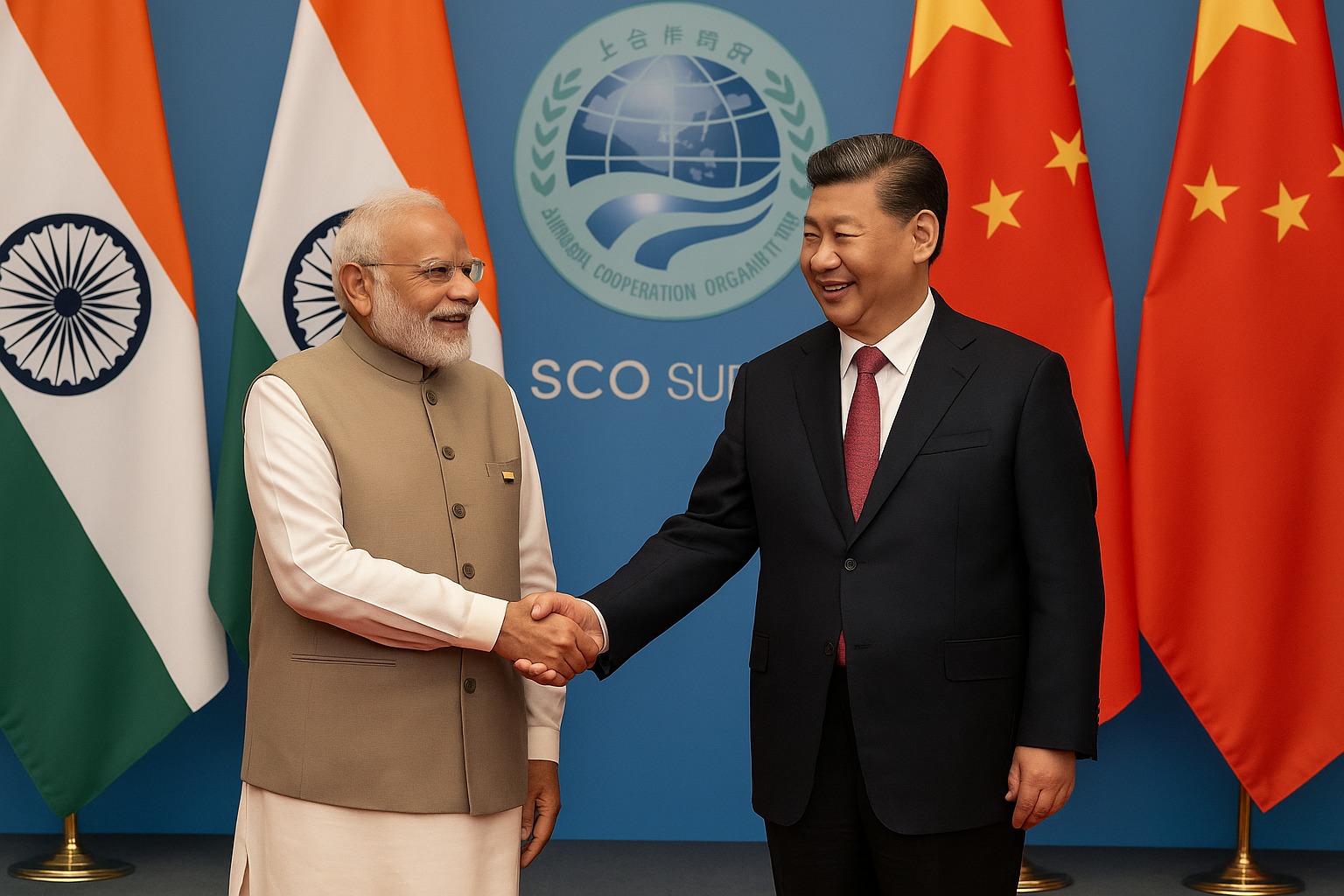
A Moment Seven Years in the Making
Prime Minister Narendra Modi’s landing in Tianjin, China, marked a diplomatic breakthrough. For the first time since 2018, Modi stepped onto Chinese soil, where he was formally received by President Xi Jinping. The event took place on the sidelines of the Shanghai Cooperation Organisation (SCO) Summit, a platform that has become central for Asia’s regional dialogue.
The reception carried heavy symbolism: two of Asia’s largest powers, strained by border clashes and geopolitical rivalries, signaling a willingness to engage face-to-face. For India, this was not just another summit—it was an opportunity to redefine its relationship with China amid global trade disruptions, U.S. tariff pressures, and shifting alliances with Russia and Japan.
Backdrop: From Galwan Valley to Tianjin
The Modi–Xi meeting cannot be viewed in isolation. Since the 2020 Galwan Valley clash, India–China relations had plunged into their deepest freeze in decades. Multiple rounds of military talks led to partial disengagement at certain friction points, but mutual distrust lingered.
In recent years, China’s growing influence in South Asia, coupled with India’s deepening ties with the U.S. and QUAD, added new layers of complexity. Meanwhile, the U.S. decision to impose tariffs on Indian goods due to energy ties with Russia opened fresh challenges for New Delhi. Against this backdrop, Modi’s China visit in 2025 was not just ceremonial—it was strategic.
Xi’s Reception: Symbolism Beyond Protocol
Xi Jinping personally receiving PM Modi underscored Beijing’s acknowledgment of India’s growing weight in the global order. Analysts see this as a calculated signal:
- China seeks to stabilize ties with India while fending off Western trade wars.
- India wants to maintain sovereignty in foreign policy while avoiding open hostilities with its neighbor.
- Both sides recognize that cooperation—even if limited—is critical for regional peace, trade, and energy security.
Key Highlights of the Modi–Xi Meeting at SCO
- Border Management Talks
Both leaders reiterated their commitment to maintaining peace at the Line of Actual Control (LAC). Mechanisms for better coordination between armed forces were discussed, signaling a push to reduce accidental confrontations. - Resumption of Connectivity
Plans to restart direct flights and ease visa rules were confirmed. This includes permissions for Indian pilgrims traveling to Kailash Mansarovar, a deeply symbolic confidence-building gesture. - Trade Agreements
China agreed to lift restrictions on exports critical to India’s infrastructure—rare earths, fertilizers, and tunnel-boring machinery. These decisions directly impact India’s manufacturing and green energy ambitions. - Solidarity on Tariffs
China publicly opposed U.S. tariffs on India, framing them as protectionist. This aligns Beijing and New Delhi on a rare common cause, underlining a shift toward South-South solidarity. - Regional Cooperation
Modi emphasized the welfare of 2.8 billion South Asians, stressing that India–China ties are vital for regional stability. Xi responded by framing the relationship as one requiring “mutual trust and respect.”
Why This Visit Matters Globally
The Modi–Xi meeting is significant on multiple fronts:
- Geopolitical Reset: It marks a recalibration after years of hostility, hinting at a “cold peace” where rivalry continues but conflict is contained.
- Economic Stakes: With global supply chains under stress, the lifting of export curbs helps India’s growth plans.
- Strategic Balance: India continues to engage the U.S., Japan, and Russia, but this visit demonstrates its multi-alignment approach—neither fully pro-West nor pro-China.
- Public Optics: The image of Xi formally receiving Modi conveys diplomatic parity and respect—important for domestic and international perception.
Challenges That Remain
While the optics were positive, challenges are far from resolved:
- Border disputes in Ladakh and Arunachal Pradesh remain unresolved.
- The trade imbalance still heavily favors China.
- Beijing’s ties with Pakistan continue to be a red flag for India.
- India’s active role in QUAD and ties with the U.S. still create suspicion in Beijing.
Thus, the visit can be seen as a step forward, but not a breakthrough.
India–China Relations: Looking Ahead
The meeting sets the stage for incremental trust-building:
- Security: Joint working groups to prevent accidental clashes.
- Economy: Renewed trade dialogue with focus on technology and energy.
- Culture: Religious pilgrimages and tourism resuming serve as human bridges.
• • Global Platforms: Cooperation within SCO, BRICS, and G20 will define whether both nations can coexist despite strategic competition.
Related Posts


Stay Informed With the Latest & Most Important News
Previous Post
Next Post
Advertisement





Advertisement
