

Now Reading: Delhi’s Street Dogs Get Justice: Here’s What the Court Finally Said
-
01
Delhi’s Street Dogs Get Justice: Here’s What the Court Finally Said


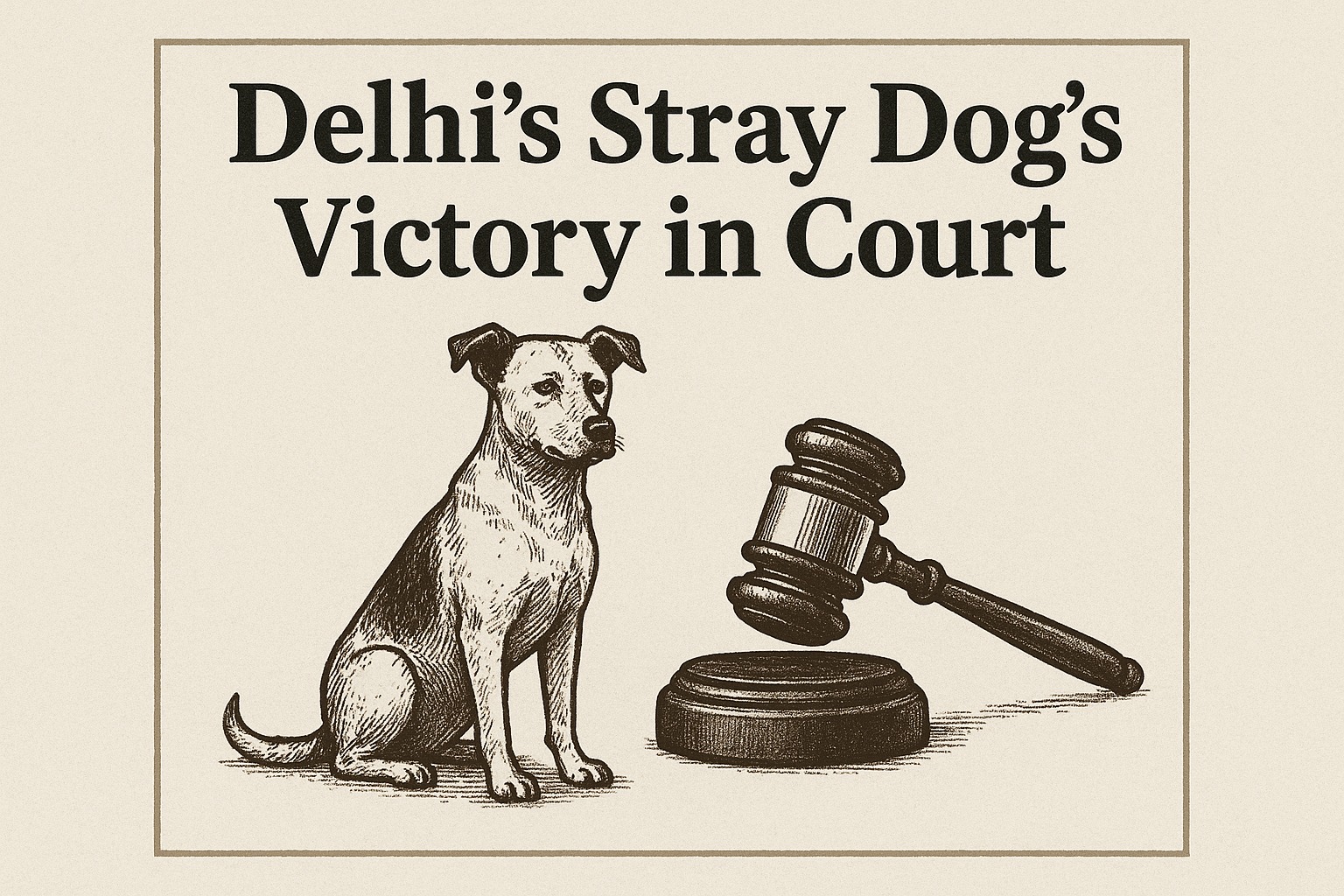
Delhi, India’s bustling capital, has always been home to two types of residents: its people and its stray animals, especially dogs. For decades, the relationship between humans and street dogs has been complex — a mix of affection, fear, and conflict. But in 2025, that fragile balance was shaken when rising dog-bite cases and rabies fears pushed authorities into action, culminating in a Supreme Court order that became the focus of heated debate across the country.
What began as a public health concern soon turned into a battle of values — safety vs. compassion, control vs. coexistence. The story of how Delhi moved from an order to remove dogs from its streets to a humane policy of sterilization, vaccination, and coexistence is not just about law; it is about how India sees itself in handling crises that affect both humans and animals.
This is the complete story — from the first sparks of panic to the courtroom twists, the public outcry, and the final verdict that may reshape India’s approach to street dogs for decades to come.
Chapter 1: The Rise of Dog Bite Cases
In early 2024, reports from Delhi’s civic hospitals began showing a troubling pattern: dog-bite incidents were on the rise, particularly involving children. By the end of the year, Delhi had reported more than 25,000 dog-bite cases, contributing significantly to India’s staggering total of over 4 lakh cases nationwide.
The numbers were not just statistics. Behind each figure was a story — a child bitten on the way to school, a delivery worker attacked while on duty, a family shaken by the possibility of rabies infection. Parents began voicing their fears openly. Schools issued advisories to parents about keeping children safe while walking in neighborhoods known for packs of strays.
Medical experts highlighted another grim detail: New Delhi recorded 49 rabies-related cases between January and July 2025 alone. Although rabies deaths were not widespread, the fear of the disease — which is almost always fatal once symptoms appear — created an atmosphere of panic.
Chapter 2: The Trigger — A Call for Action
The rising complaints soon reached the courts. Petitions were filed by residents and civic bodies arguing that the uncontrolled population of stray dogs posed a serious public health hazard. They sought urgent intervention, asking for stronger measures beyond the existing Animal Birth Control (ABC) program, which focused on sterilization and vaccination.
The matter reached the Supreme Court in August 2025, where justices listened to arguments ranging from citizen safety to animal rights protections. The initial sentiment of the bench leaned toward urgent action to protect human lives.
Chapter 3: The First Order — Mass Relocation of Stray Dogs
On August 11, 2025, the Supreme Court passed its first directive: all stray dogs in Delhi-NCR were to be rounded up and relocated permanently to shelters.
The rationale behind this order was simple in intent — if the dogs were removed from public spaces, citizens would feel safer, and dog-bite incidents would decline. Civic bodies were tasked with drawing up immediate plans for relocation.
But the ground reality was far more complicated. Delhi, like most Indian cities, did not have the capacity to house even a fraction of its stray dog population. Estimates suggested that India had over 62 million stray dogs, with lakhs roaming in Delhi alone. Shelters were overcrowded, underfunded, and often lacking proper veterinary support.
Almost immediately, experts warned that the plan was not only impractical but also inhumane.
Chapter 4: The Public Backlash
The Supreme Court’s order unleashed a wave of opposition across India.
- Animal Rights Activists: They argued that removing strays en masse would lead to cruelty and deaths, as existing shelters could not handle such numbers. Dogs would face neglect, disease, and starvation.
- Celebrities and Influencers: Prominent voices, including Bollywood actors, animal lovers, and NGOs, took to social media to condemn the move. Campaigns with hashtags like #JusticeForStrays and #HumaneDelhi began trending.
- Public Sentiment: For many ordinary citizens, the anger was not about denying the dog-bite crisis but about the blanket removal order. People who had been feeding stray dogs in their colonies for years felt betrayed. They feared losing the animals they had bonded with, sometimes treating them as family.
Protests broke out outside civic offices. Petitions flooded the court urging a review.
Chapter 5: The Legal Twist — Review Petition
Faced with mounting opposition, a review petition was filed in the Supreme Court. Lawyers representing animal welfare groups presented strong arguments:
- Legal Precedent: India’s Animal Welfare laws already protect stray dogs under the ABC (Animal Birth Control) rules.
- Scientific Evidence: Studies showed that removing strays only created a vacuum effect. Other dogs quickly occupied empty spaces, leading to an endless cycle of removals.
- Humane Principles: India, they argued, could not afford to abandon compassion in favor of a short-term fix.
The court, acknowledging the force of these arguments and the public outcry, agreed to revisit its order.
Chapter 6: The Final Verdict — Balance Between Safety and Compassion
On August 22, 2025, the Supreme Court issued a revised directive. This time, instead of mass relocation, the order adopted a scientific and humane approach:
- Sterilize-Vaccinate-Return Policy: Stray dogs would be captured, sterilized, vaccinated, and returned to the same locality. This would control the population over time without displacing dogs.
- Rabid and Aggressive Dogs: Only dogs identified as rabid or consistently aggressive would be removed permanently and kept in shelters.
- Feeding Points: Designated areas for feeding strays would be established, ensuring both animal welfare and public safety.
- Public Awareness: Civic bodies were instructed to launch awareness campaigns about safe interaction with street dogs and rabies prevention.
- Collaboration: NGOs, veterinary professionals, and resident welfare associations were directed to work with municipal bodies to implement the policy.
The verdict was hailed as a victory for both people and animals.
Chapter 7: What It Means for Delhi and India
The new order has profound implications:
- For Citizens: Safety concerns are being directly addressed. By removing aggressive dogs and controlling the population scientifically, the risk of bites and rabies is expected to decline.
- For Dogs: They will no longer face mass removal and neglect. Instead, they will be cared for through sterilization, vaccination, and designated feeding areas.
- For Governance: Civic bodies now face the challenge of implementation — a task that requires infrastructure, funding, and transparency.
Chapter 8: Challenges Ahead
While the verdict is progressive, the challenges are enormous:
- Scale of the Problem: With millions of strays nationwide, the sterilization target is daunting.
- Infrastructure Gaps: Municipal shelters are inadequate, and veterinary services are stretched thin.
- Defining “Aggressive”: Without clear guidelines, this term may be misused to target harmless dogs.
- Public Cooperation: Success depends on citizen participation — from not abandoning pets to supporting sterilization drives.
- Funding: Long-term, large-scale programs need sustained financial support.
Chapter 9: Voices from the Ground
- Residents: Some continue to worry, fearing bites in their neighborhoods. Yet many appreciate that the solution balances compassion with safety.
- Animal Lovers: Relief is widespread among feeders and NGOs who see the ruling as recognition of years of advocacy.
- Officials: Municipal authorities admit the task is overwhelming but believe that with cooperation, gradual success is possible.
Chapter 10: Lessons for the Future
The Delhi dog case highlights broader truths:
- Quick fixes fail when dealing with complex social and biological issues.
- Compassion and science must guide policy, not panic.
- Judicial flexibility matters — the Supreme Court showed responsiveness to public concern.
It also underscores the need for India to modernize its animal welfare systems, ensuring that cities can coexist safely with strays while addressing public health responsibly.
Conclusion: A Humane Way Forward
The journey from the initial mass relocation order to the revised policy is a story of how public voices, scientific reasoning, and judicial sensitivity can reshape outcomes. Delhi’s stray dog issue is far from resolved, but the new order represents hope — hope that humans and animals can share urban spaces with dignity, safety, and compassion.
It is a reminder that in the heart of a city as vast and restless as Delhi, justice is not just about protecting people, but also about honoring life in all its forms.
Related Posts



Stay Informed With the Latest & Most Important News
Previous Post
Next Post


Advertisement









Advertisement
