

Now Reading: Rising Ethanol Blends in India: Does E20 Really Gut Fuel Efficiency?
-
01
Rising Ethanol Blends in India: Does E20 Really Gut Fuel Efficiency?


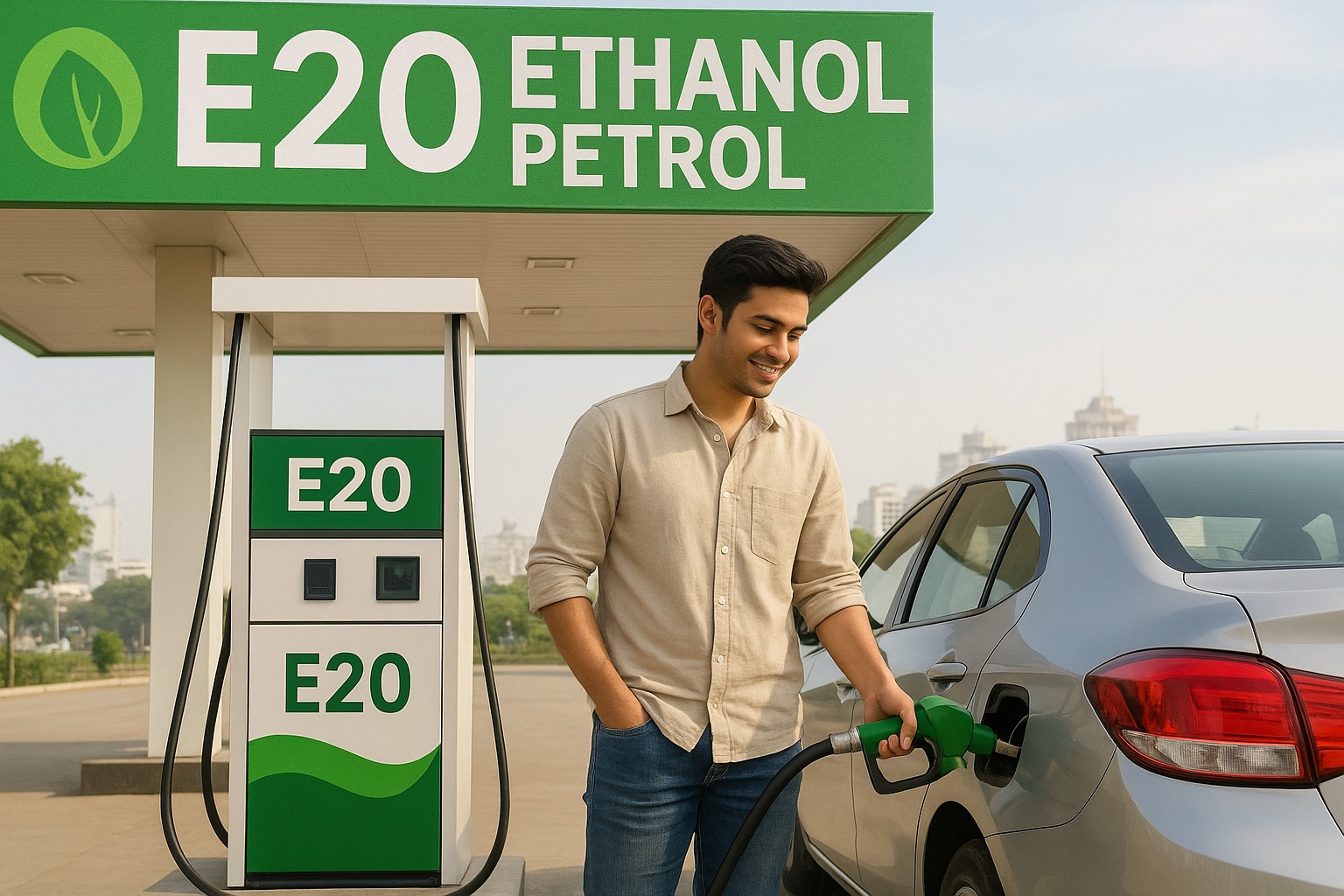
The New Fuel Reality: E20 Becomes the Norm
India has fast-tracked its shift toward greener fuels: all petrol sold nation-wide now contains 20% ethanol (E20), with older blends (E5/E10) phased out. This push, branded as a clean energy win, aims to curtail crude imports and cut carbon emissions, while also boosting the rural economy through ethanol production.
The Industry Speaks: “No Significant Fuel Efficiency Impact”
Leading oil companies and automakers, backed by the Society of Indian Automobile Manufacturers (SIAM) and the Automotive Research Association of India (ARAI), have reassured the public that the increased ethanol content does not significantly degrade fuel efficiency. Even older cars, they affirm, remain operationally unaffected under standard conditions. OEMs have committed to honoring warranties should any E20-related vehicle issues arise.
Slight Efficiency Dip? Experts Say It’s Manageable
Technically, ethanol packs less energy per liter than petrol, which could translate into a slight efficiency drop. Industry experts estimate a modest 2–4% decline in mileage—a figure that still retains mass acceptability. Moreover, this minor dip may be mitigated through engine tuning or adaptive fuel maps. Both the Petroleum Ministry and automakers insist any performance variation is temporary and addressable.
Public Pushback: Old Cars, Misunderstood Risks
Despite expert reassurances, everyday drivers—especially owners of older vehicles—have voiced concerns over real-world performance. Issues raised include reduced mileage, engine hesitation, or potential rubber component wear. As a result, some consumers have turned to expensive, low-ethanol fuels, while others have approached the Supreme Court over perceived erosion of vehicle health.
Industry voices categorize much of the backlash as confusion or misinformation, echoing that E20 compliance is safe across compliant vehicles.
A Broader Perspective: Green Gains, Economic Momentum
The switch to E20 isn’t just about engines—it’s about national benefit:
- Agricultural uplift: Higher ethanol demand boosts sugarcane and grain farmers.
- Energy security: Each litre of ethanol reduces India’s need for imported crude.
- Environmental impact: Lower carbon emissions and higher octane rating offer cleaner, smoother performance.
- Adaptation policy: New CAFE norms and incentives for flex-fuel vehicle adoption support longer-term transition planning.
Fuel Efficiency Realities vs. Global Models
Global studies reflect similar outcomes:
- A Finnish study found only a ~1% efficiency drop when switching from fuels with higher ethanol content—akin to India’s experience.
- Brazil’s long-running flex-fuel vehicle market handles blends like E25 effortlessly due to compatible vehicle designs. India is now accelerating toward a similar infrastructure and vehicle compliance model.
What Lies Ahead: Balanced Environmental Policy
Moving forward:
- OEMs must educate drivers on E20 benefits and vehicle compatibility.
- After-sales services should assist in tuning or part replacements to offset minor performance shifts.
- Oversight of older vehicles and awareness campaigns can reduce confusion and litigation.
• • E30 blends by 2030 offer even greater benefits—but require stronger vehicle ecosystem readiness.
Related Posts


Stay Informed With the Latest & Most Important News


Advertisement









Advertisement
