

Now Reading: Tarique Rahman to return after 26 years — next Bangladesh PM?
-
01
Tarique Rahman to return after 26 years — next Bangladesh PM?


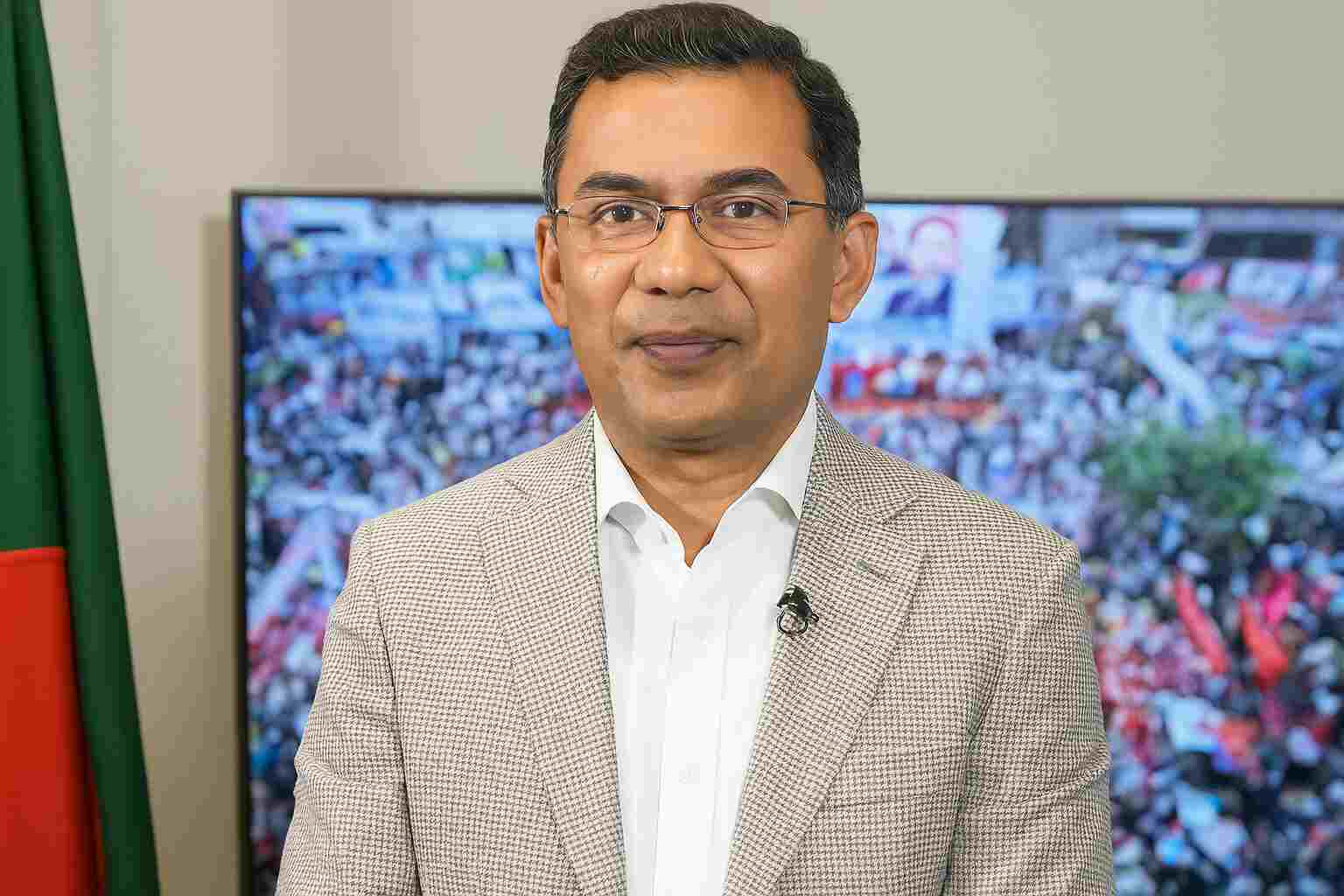
After a 26-year absence abroad, Tarique Rahman, son of former PM Khaleda Zia, has announced his return to Bangladesh with the intent to reenter the political fray. His reemergence comes amid a volatile post-uprising environment, revived judicial rulings, and questions about legitimacy. The phrase among his supporters is: “the time has come.” But can an exile leader truly stake claim to the prime minister’s throne? In this special analysis by The Editorial Team of Behind The Headlines, we trace Rahman’s exile, legal hurdles, political positioning, alliance dynamics, and the potential risks and implications of his homecoming.
The backstory: exile, politics and legacy
From power corridors to foreign soils
Tarique Rahman is acting chairman of the Bangladesh Nationalist Party (BNP) since 2018, succeeding his mother Khaleda Zia. Over the decades, he has been a polarizing figure—seen by many as the de facto leadership of his party from abroad.
His self-exile began under political pressure and legal cases during the late 2000s. He has lived in London since then, navigating numerous criminal and graft allegations filed in absentia. In recent months, a watershed moment struck: the Bangladesh High Court acquitted Rahman and 48 others in the 2004 grenade attack case.
With his path seemingly cleared in key cases, Rahman now claims the moment for return has arrived. He has publicly declared that he will contest the upcoming February 2026 election from Bangladesh.
Judicial rehabilitation and shifting political terrain
Part of Rahman’s comeback rests on judicial outcomes. In 2024, major rulings dropped charges linked to graft cases associated with his mother, Khaleda Zia. These acquittals dismantled barriers preventing his re-entry into candidacy.
Politically, Bangladesh is in flux. The student-led movement that dethroned long-time prime minister Sheikh Hasina ushered in a transitional regime led by Muhammad Yunus. In this interim space, Rahman’s return is being positioned as a rebirth of BNP’s legacy.
Even so, reabsorption into a changed political ecology—with new players, voter expectations, and alliances—will be far from smooth.
Political calculus: prospects, challenges & roadblocks
The support base and electoral math
Rahman’s potential strength lies in his established network among BNP loyalists, party structures in rural Bangladesh, and segments disillusioned with incumbent leadership. His return could galvanize grassroots revival.
Yet demographics have shifted: younger voters, urban middle classes, and undecided sectors may expect fresh faces over legacy leaders. To win mainstream legitimacy, Rahman must navigate beyond nostalgia.
Forming strategic alliances will be crucial. Whether BNP teams with smaller parties or absorbs new coalitions could determine whether Rahman’s candidacy is viable or symbolic.
Institutional resistance & power centres
Even with legal acquittals, Rahman must manage resistance from state institutions—security agencies, electoral commissions, bureaucracies entrenched under previous regimes. Anomalies in voter rolls, candidate disqualifications, or procedural hurdles might be deployed.
His optics abroad may be seized upon by opponents as evidence of detachment or foreign influence. Messaging mode and credibility will matter heavily.
Health, legitimacy, and perception
Khaleda Zia has been in health decline and medical treatment abroad. Some may question whether party leadership truly shifts to Rahman seamlessly, or whether family legacy will overshadow his legitimacy.
Additionally, concerns over corruption, past allegations, and political polarizations will resurface. Rahman will need strong narrative control and transparency.
Reactions, narratives & media discourse
Political voices
BNP insiders hail Rahman’s return as a historic moment—“reclaiming people’s mandate.” Opponents, however, challenge the timing and authenticity, questioning whether this signals a restoration of dynastic politics.
Some analysts caution that Rahman may be overconfident. They note uphill trajectories: forging new alliances, generating policy credibility beyond old rhetoric, and avoiding factionalism.
Public and civil society sentiment
In Bangladesh and diaspora communities, the announcement has triggered excitement and skepticism alike. Social media is flooded with welcoming messages and cautionary voices reminding of years of political turbulence.
Civil society groups emphasize democratic safeguards: transparent elections, free media, institutional checks. For many, Rahman’s return is not assured; its success depends on system fairness.
Media framing
International media frames the return as a comeback drama; local media often focus on legal rehabilitation and electoral readiness. Some cast the move as a gamble in a post-uprising political reset.
Broader Vision: implications for Bangladesh and regional politics
If Rahman succeeds, BNP may reclaim a major role in governance after decades abroad. His style and alliances post-return will define whether Bangladesh shifts to a more plural political order or slides into renewed instability.
Regionally, influence from India, strategic ties, and diplomatic maneuvers could hinge on who leads Dhaka next. Rahman’s return places Bangladesh at a crossroads—continuity of old structures or a turbulence of transformation.
His reintegration tests whether exile politics can convert into governing legitimacy, rather than symbolic heroism.
What to watch next
- Official return date and arrival reception in Dhaka
- Confirmation of his candidacy filings and constituencies
- Alliance-making moves in months ahead
- Reactions from military and security leadership circles
- Media access, campaign fairness, and restrictions on speech
- Voter response, especially among youth and swing districts
- Rival parties’ counterstrategies and protection of institutional integrity
- Impact on BNP internal cohesion and generational dynamics
(Check our past feature “Exile Leaders and National Comebacks: Global Lessons”)
Conclusion
After 26 years in self-imposed exile, Tarique Rahman’s decision to return is a political gamble full of promise and peril. For the BNP, it could mean revival. For Bangladesh, it may mark a turning point or spark renewed conflict in its democracy’s architecture.
He must survive legal legacies, institutional resistance, shifting demographics and replicating relevance. But if Rahman’s return succeeds, it may reshape not just Bangladeshi politics, but how exiled leadership claims legitimacy in democratic states.
As The Editorial Team of Behind The Headlines, we will continue tracking every development — from his arrival, campaign trajectory, alliance moves, election results, and whether Tarique Rahman becomes the next Prime Minister.
Related Posts


Stay Informed With the Latest & Most Important News
Previous Post
Next Post


Advertisement





Advertisement
