

Now Reading: Dense Fog Blankets North India: Flights Halted, Schools Impacted in Delhi-NCR
-
01
Dense Fog Blankets North India: Flights Halted, Schools Impacted in Delhi-NCR

Dense Fog Blankets North India: Flights Halted, Schools Impacted in Delhi-NCR

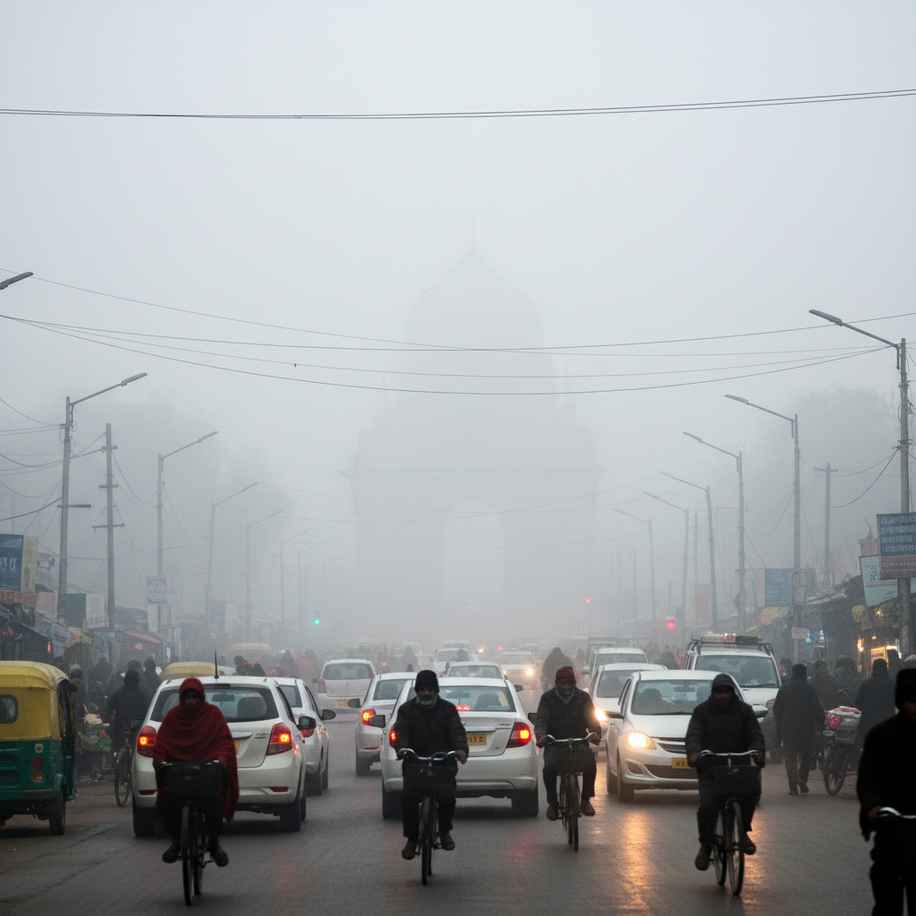
A severe and persistent wave of dense to very dense fog has once again descended upon North India, bringing with it widespread disruptions across several states, including Delhi, Punjab, Haryana, Uttar Pradesh, and Bihar. The meteorological department has issued warnings as visibility has dramatically plunged, causing significant challenges for daily life and critical infrastructure, most notably affecting air travel. This annual phenomenon, intensified by specific atmospheric conditions, has become a pressing concern for both authorities and citizens, prompting a series of advisories and operational adjustments.
The impact on transportation has been immediate and severe. Delhi’s Indira Gandhi International (IGI) Airport, one of the busiest in the country, has borne the brunt of these conditions, experiencing numerous flight cancellations and extensive delays. Passengers have been left stranded, and airlines are struggling to manage schedules as pilots face hazardous landing conditions. The poor visibility, at times dropping to near zero, makes both take-offs and landings extremely risky, forcing air traffic control to implement strict regulations and diversions. This cascading effect not only inconveniences travelers but also creates significant economic repercussions for airlines and the broader tourism sector, impacting cargo movement and international connectivity as well.
Beyond air travel, road transportation has also been heavily impacted. Highways connecting major cities in North India are shrouded in thick fog, leading to dangerous driving conditions. Accidents have been reported across various regions as drivers struggle with reduced visibility. Traffic movement has slowed considerably, causing long commutes and disruptions to supply chains. Public transport services, including buses and trains, are also facing delays, adding to the woes of daily commuters. School children, in particular, are affected, with many institutions in Delhi-NCR and neighboring states like Uttar Pradesh and Bihar announcing revised timings or temporary closures to ensure student safety amidst the thick fog and plummeting temperatures.
The phenomenon of dense fog during the winter months is not uncommon in North India, but its intensity and duration this season have raised concerns. Experts attribute the severe fog conditions to a combination of factors, including high humidity levels, low temperatures, and calm winds, which allow moisture to condense into tiny droplets and hang close to the ground. While natural, these conditions are often exacerbated by the prevailing air pollution, turning what would typically be a foggy morning into a dangerous cocktail of fog and smog that poses serious health risks in addition to visibility issues. The air quality index (AQI) in several Delhi localities has consistently remained in the ‘severe’ or ‘severe plus’ categories, leading to health advisories for vulnerable populations.
In response to these challenging conditions, authorities have implemented a range of measures. Immediate steps include temporary school closures for primary classes, staggered school timings, and increased deployment of traffic police to manage road safety. Longer-term solutions are also being explored, such as improving weather forecasting capabilities, enhancing public awareness campaigns on safe travel during fog, and investing in infrastructure that can better withstand such climatic events. The Delhi government, for instance, has also looked into installing air purifiers in government school classrooms as part of a broader strategy to mitigate the effects of poor air quality on students’ health.
As North India continues to grapple with this dense fog and associated challenges, the collective effort from government agencies, transportation authorities, educational institutions, and citizens is crucial. The focus remains on ensuring public safety, minimizing disruption to essential services, and adapting to the evolving environmental conditions. The ongoing situation serves as a stark reminder of the intricate relationship between climate patterns, urban development, and public health, necessitating a comprehensive and proactive approach to tackle such recurrent seasonal challenges.
Related Posts



Stay Informed With the Latest & Most Important News
Previous Post
Next Post


Advertisement








Advertisement
