
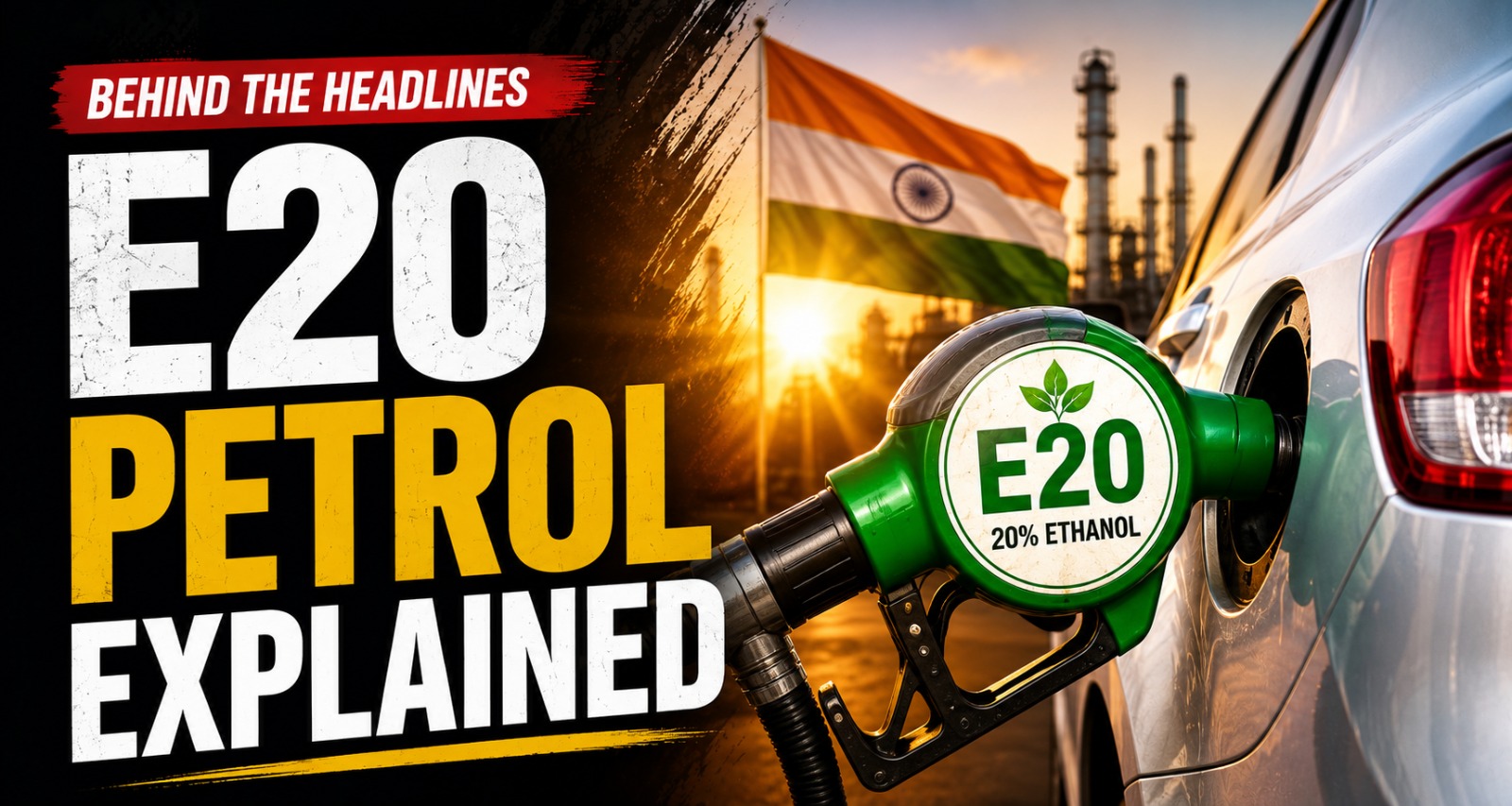
For most Indian motorists, the transition to E20 petrol happened quietly. Fuel stations began dispensing petrol blended with 20% ethanol, vehicle manufacturers started introducing E20-compatible models, and consumers noticed stickers at fuel pumps. But behind this change lies a policy that has been evolving for over two decades, involving energy security, agriculture, economics, and environmental goals.
At the same time, the programme has sparked debate over fuel efficiency, engine compatibility, consumer choice and allegations of political interests. Here's a fact-based look at how E20 came into existence and what it means today.
What Is E20 Petrol?
E20 refers to petrol blended with 20% ethanol and 80% conventional petrol. Ethanol is an alcohol-based biofuel produced primarily from sugarcane molasses, sugarcane juice, damaged food grains and maize in India.
The idea is not unique to India. Countries including Brazil and the United States have used ethanol-blended fuels for decades to reduce dependence on imported crude oil and support domestic agriculture.
How Did India Reach E20?
India's ethanol blending programme began in 2003, when the government introduced a pilot project with 5% ethanol blending.
The programme expanded gradually:
2003: Introduction of E5.
2013–2021: Expansion of E10.
2021: The government advanced the target of achieving 20% ethanol blending by 2025–26, one year ahead of the earlier schedule.
2025: E20 fuel became available across most retail fuel outlets.
The policy is overseen by the Ministry of Petroleum and Natural Gas, with implementation carried out by public sector oil marketing companies such as Indian Oil, Bharat Petroleum and Hindustan Petroleum.
Why Did the Government Introduce E20?
The government cites four primary reasons:
1. Reducing Oil Imports
India imports nearly 85% of its crude oil requirements. Every increase in domestic ethanol blending reduces the volume of imported petrol required, helping lower the country's import bill.
2. Supporting Farmers
Ethanol production creates an additional market for sugarcane and maize growers. By purchasing surplus agricultural produce for ethanol manufacturing, the government aims to provide farmers with an additional source of income.
3. Lower Carbon Emissions
Ethanol burns more cleanly than conventional petrol and is considered a renewable fuel because it is produced from agricultural feedstock. The government says higher ethanol blending contributes to India's climate commitments and emission reduction goals.
4. Energy Security
Diversifying fuel sources reduces dependence on international crude oil markets and improves long-term energy resilience.
Does E20 Make Petrol Cheaper?
One of the most common questions is whether E20 reduces petrol prices.
The answer is not directly.
Retail petrol prices continue to be influenced primarily by global crude oil prices, taxes, refining costs and distribution expenses.
However, the government argues that ethanol blending has helped moderate fuel costs by reducing the need for imported petrol. Officials have stated that ethanol blending has generated substantial foreign exchange savings and helped cushion the impact of volatile crude prices.
Consumers, however, generally pay the same retail price for E20 petrol as they would for regular petrol unless state taxes or pricing policies change.
Does E20 Affect Vehicle Performance?
This remains one of the biggest concerns among motorists.
Vehicle manufacturers have progressively introduced E20-compatible engines, and new petrol vehicles sold in India are increasingly designed to operate on E20 fuel.
For older vehicles, however, some experts note that higher ethanol content may lead to:
Slightly lower fuel economy because ethanol contains less energy than petrol.
Potential wear of rubber seals, fuel lines and certain engine components not originally designed for higher ethanol blends.
Increased maintenance in vehicles that are not E20 compatible.
The government maintains that approved vehicles meeting current standards are designed to use E20 safely. Manufacturers advise owners to follow the fuel recommendations specified for their particular model.
Why Has E20 Become Politically Controversial?
The rollout has also triggered political debate.
Some opposition leaders have questioned whether consumers should have the option to choose between E20 and conventional petrol. Others have raised concerns about mileage, engine compatibility and transparency regarding pricing.
Separately, social media posts have alleged that Union Road Transport and Highways Minister Nitin Gadkari or members of his family personally benefited from the ethanol programme. No publicly available evidence has substantiated these allegations.
Gadkari has repeatedly stated that the E20 policy is formulated and implemented by the Ministry of Petroleum and Natural Gas, not his ministry. He has also announced legal action against individuals and platforms over what he described as false and defamatory claims linking him or his family to personal financial interests in ethanol production.
Was India Pressured by the United States or Donald Trump?
Claims circulating online that India adopted E20 because of pressure from former U.S. President Donald Trump are not supported by publicly available evidence.
India's ethanol blending programme predates Trump's presidency by many years. The policy began in 2003 and has been expanded through successive governments based on domestic objectives such as reducing oil imports, supporting agriculture and improving energy security.
There is no official document or verified public record indicating that the E20 policy was introduced or accelerated because of pressure from the United States or any foreign government.
What Lies Ahead?
India is expected to continue expanding ethanol production while improving vehicle compatibility and fuel infrastructure. The government is also exploring other biofuels, including compressed biogas, sustainable aviation fuel and green hydrogen, as part of its broader energy transition strategy.
At the same time, questions about fuel efficiency, consumer choice, engine compatibility and agricultural sustainability are likely to remain part of the public debate as the programme evolves.
The Bottom Line
E20 is primarily an energy and agricultural policy designed to reduce India's dependence on imported crude oil while creating additional demand for domestically produced biofuels. Although the programme has delivered measurable gains in ethanol blending, it continues to generate discussion over its impact on consumers, vehicle performance and long-term economic benefits.
Many of the political claims surrounding E20—including allegations of personal financial interests or foreign pressure—remain unsubstantiated in the public domain. As with any major policy shift, distinguishing verified facts from unverified claims is essential to understanding the issue.