
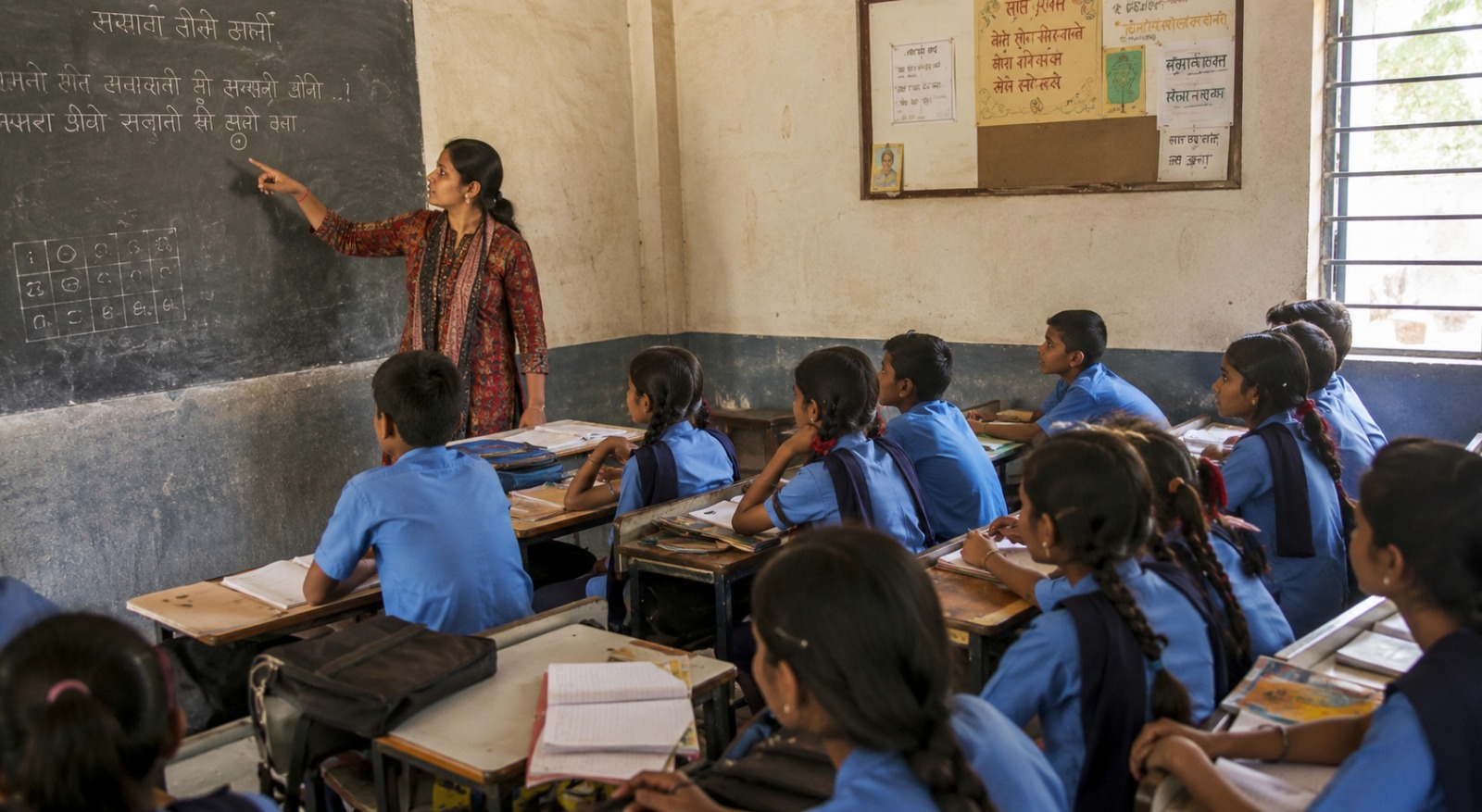
India's education system has undergone significant expansion over the past two decades, with government initiatives helping improve access to schools across the country. Enrolment at the elementary level has remained consistently high, reflecting the impact of measures such as the Right of Children to Free and Compulsory Education Act and sustained public investment in school infrastructure. Yet, official assessments and independent studies continue to show that improving learning outcomes remains one of the sector's biggest challenges.
The National Education Policy (NEP) 2020 outlines a broad roadmap to reshape education in India. Its key objectives include universal access to quality education, strengthening foundational literacy and numeracy, promoting multidisciplinary learning, expanding early childhood education, improving teacher training, and increasing flexibility in higher education. The policy also seeks to raise the Gross Enrolment Ratio in higher education and encourage greater investment in research and innovation.
While access to education has improved, learning levels continue to receive close attention. Findings from the Annual Status of Education Report (ASER) have repeatedly highlighted that a substantial number of children in elementary grades face difficulty in reading age-appropriate texts and solving basic arithmetic problems. These findings have reinforced the importance of foundational learning as a national priority.
School infrastructure has improved steadily over the years. More institutions now have access to electricity, separate sanitation facilities for girls and boys, drinking water, and digital resources than a decade ago. However, disparities remain across states and between rural and urban regions. Official UDISE+ data also indicates that many schools continue to operate with limited internet connectivity, inadequate digital devices, or shortages of teaching staff, particularly in remote locations.
Teacher availability remains another important area of focus. Although India has one of the world's largest teaching workforces, vacancies in government schools continue in several states. Experts and international organisations, including UNESCO, have consistently emphasised that recruitment, continuous professional development, and classroom support for teachers are essential to improving educational quality.
Equity continues to shape policy discussions. While enrolment among girls has improved considerably over the years, retaining students through secondary and higher secondary education remains a challenge in some regions. Economic constraints, migration, early marriage, and access to educational facilities continue to influence dropout patterns among adolescents.
Higher education is also witnessing significant policy-driven changes. Universities and colleges are gradually adopting multidisciplinary programmes, multiple entry and exit options, academic credit transfers, and greater institutional autonomy in line with NEP 2020. At the same time, improving research output, strengthening industry-academia collaboration, and enhancing graduate employability remain key objectives for policymakers.
Education financing continues to be an important aspect of reform. The NEP recommends increasing public expenditure on education to around 6% of GDP, although actual spending has varied across different levels of government. Effective implementation of reforms will depend not only on financial resources but also on coordination between the Union and State governments.
India's education sector today presents a picture of both progress and unfinished work. Greater access to schools, expanding higher education opportunities, and ambitious policy reforms mark significant achievements. At the same time, strengthening learning outcomes, addressing regional disparities, improving teacher capacity, and ensuring equitable access remain central to the country's long-term educational goals.
Behind The Headlines is a special editorial segment that examines the context behind major public policy issues through verified facts, official data, and publicly available information, helping readers understand developments beyond the headlines.