

Now Reading: 65 Lakh Names Deleted? Rahul’s Yatra Promises Proof—and Patna Awaits!
-
01
65 Lakh Names Deleted? Rahul’s Yatra Promises Proof—and Patna Awaits!

65 Lakh Names Deleted? Rahul’s Yatra Promises Proof—and Patna Awaits!

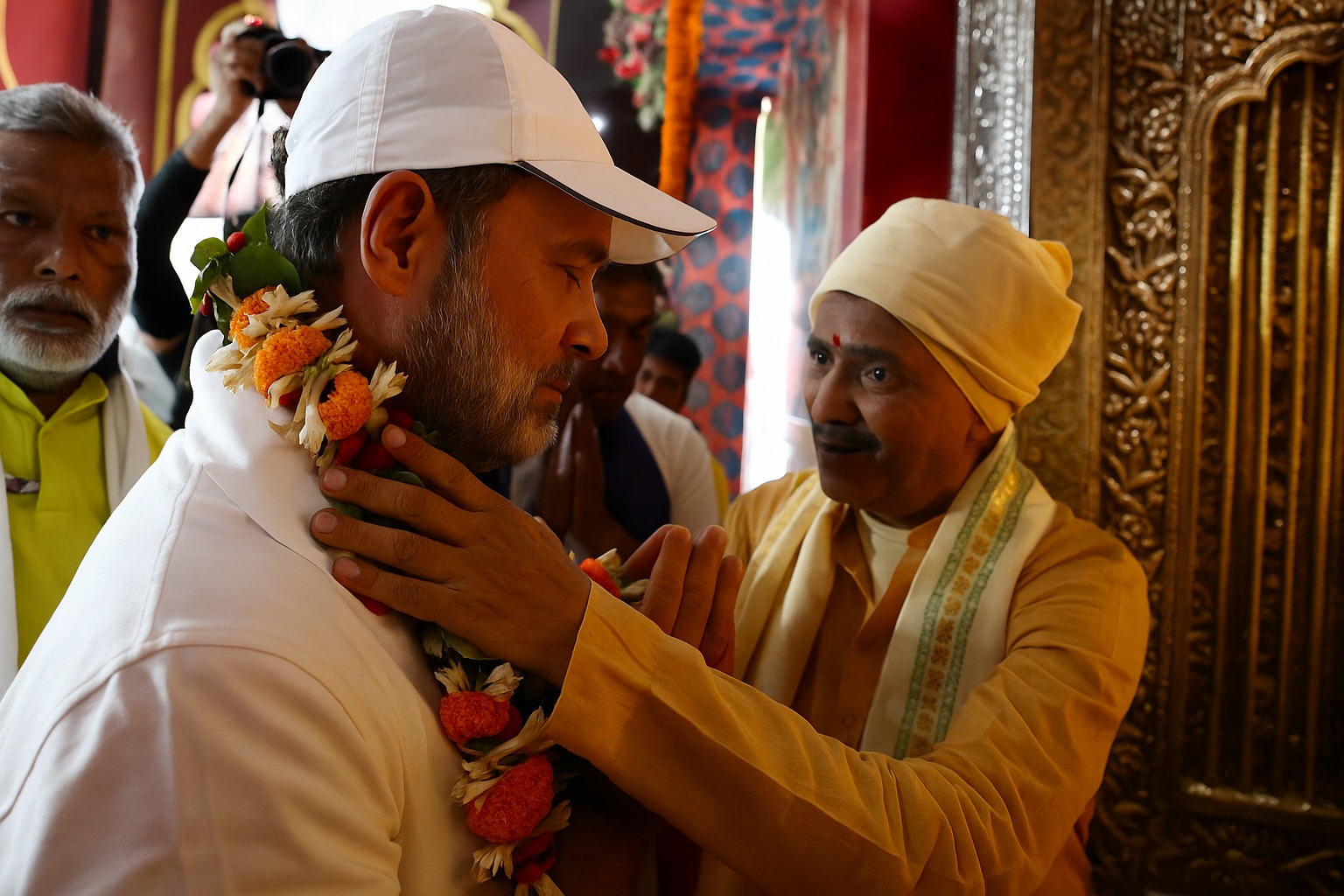
In the lead-up to Bihar’s legislative assembly elections, the “Voter Adhikar Yatra” led by Leader of Opposition in the Lok Sabha Rahul Gandhi has captured public attention across the state. Joined by Congress General Secretary Priyanka Gandhi and Bihar’s Leader of Opposition Tejashwi Yadav, the march represents a unified INDIA bloc initiative to challenge voter list irregularities, particularly the deletion of millions of names during the state’s Special Intensive Revision (SIR). The yatra is not a walk in the park—it has covered over 1,300 kilometers across more than 20 districts and promises to culminate in a high-profile rally in Patna on September 1.
From Rural Roads to Political Heat—How the Yatra Progressed
Launched mid-August in Sasaram, the campaign has taken the leaders through bustling towns and rustic villages alike. In Purnia, Rahul Gandhi and Tejashwi Yadav broke convention and roared through streets on motorcycles, symbolizing a return to youthful energy and hands-on politics. Priyanka joined them on the open roads, greeting crowds from atop a moving SUV—images that quickly went viral. As the yatra moved into places like Muzaffarpur from Darbhanga and Supaul, participation swelled, giving the campaign new momentum.
Core Theme 1: Fight Against Vote-Tampering
A big focus has been the alleged deletion of approximately 65 lakh voter names during voter list revisions. At multiple stops, Rahul Gandhi accused the Election Commission and the BJP of collaborating to disenfranchise the marginalized. He pledged to bring forward evidence of “vote-theft” and promised that the opposition wouldn’t allow democracy to erode unchallenged. Tejashwi Yadav echoed this, asserting that this would be Chief Minister Nitish Kumar’s last election, encouraging unity in voting out what he called a compromised ruling administration.
Core Theme 2: Opposition Solidarity and National Support
The yatra is not just a local effort. High-profile allies like Tamil Nadu CM M.K. Stalin and DMK MP Kanimozhi have flown in to participate in rallies, indicating pan-India support. The AICC has called for senior leadership, MPs, and Working Committee members to back the campaign full throttle. This unity positions the INDIA bloc as a serious challenger in Bihar politics.
Challenges and Controversies Along the Way
Politics rarely unfolds without friction. In Darbhanga, local administration denied permission for Rahul Gandhi to rest at a high school—sparking criticism over bureaucratic roadblocks hindering democratic expression. In another flashpoint, BJP accused Rahul Gandhi and Tejashwi Yadav of showing disrespect towards Dr. Ambedkar when a person holding his photograph was nudged during a rally—highlighting how swiftly sentiment can be weaponized in pre-election times.
Moreover, reports surfaced of an unexpected incident during a rally—where a supporter, possibly overwhelmed by emotion, kissed Rahul Gandhi, only to be detained by security. While not politically explosive, it added drama and reminded all of the emotional undercurrents at play in such mass gatherings.
Impact Beyond Rhetoric
Media and political analysts suggest this yatra is causing strategic alarm for the ruling BJP. District-level leadership has reportedly been mobilized to counter the narrative, emphasizing unity within the NDA and elevating public visibility of their governance claims. The yatra’s final act—a march, not a rally, into Patna—is designed to bring visual momentum right into the state capital.
Further, this campaign is pressing deeper emotional and ideological buttons: voter rights, migration, youth angst, and tribal and OBC aspirations all figure into the broader canvas. By triggering debate and stirring crowds, the INDIA bloc has ensured the opposition’s voice won’t be sidelined.
What Lies Ahead
As the yatra nears its conclusion, several questions loom:
- Can concrete evidence of voter list manipulation be produced in time to influence voters? Rahul Gandhi has promised further proof ahead of the Sept 1 rally.
- Will the campaign’s energy convert into voting-pool growth? Large crowds are visible, but translating that into actual turnout and support remains to be seen.
- Can the BJP effectively disrupt or neutralize the narrative before polling? With aggressive counter-scripting underway, India bloc unity and messaging coherence will be critical.
Related Posts


Stay Informed With the Latest & Most Important News
Previous Post
Next Post
Advertisement





Advertisement
