

Now Reading: What Triggered Gen Z Protests in Leh, Ladakh? 10-Point Breakdown
-
01
What Triggered Gen Z Protests in Leh, Ladakh? 10-Point Breakdown


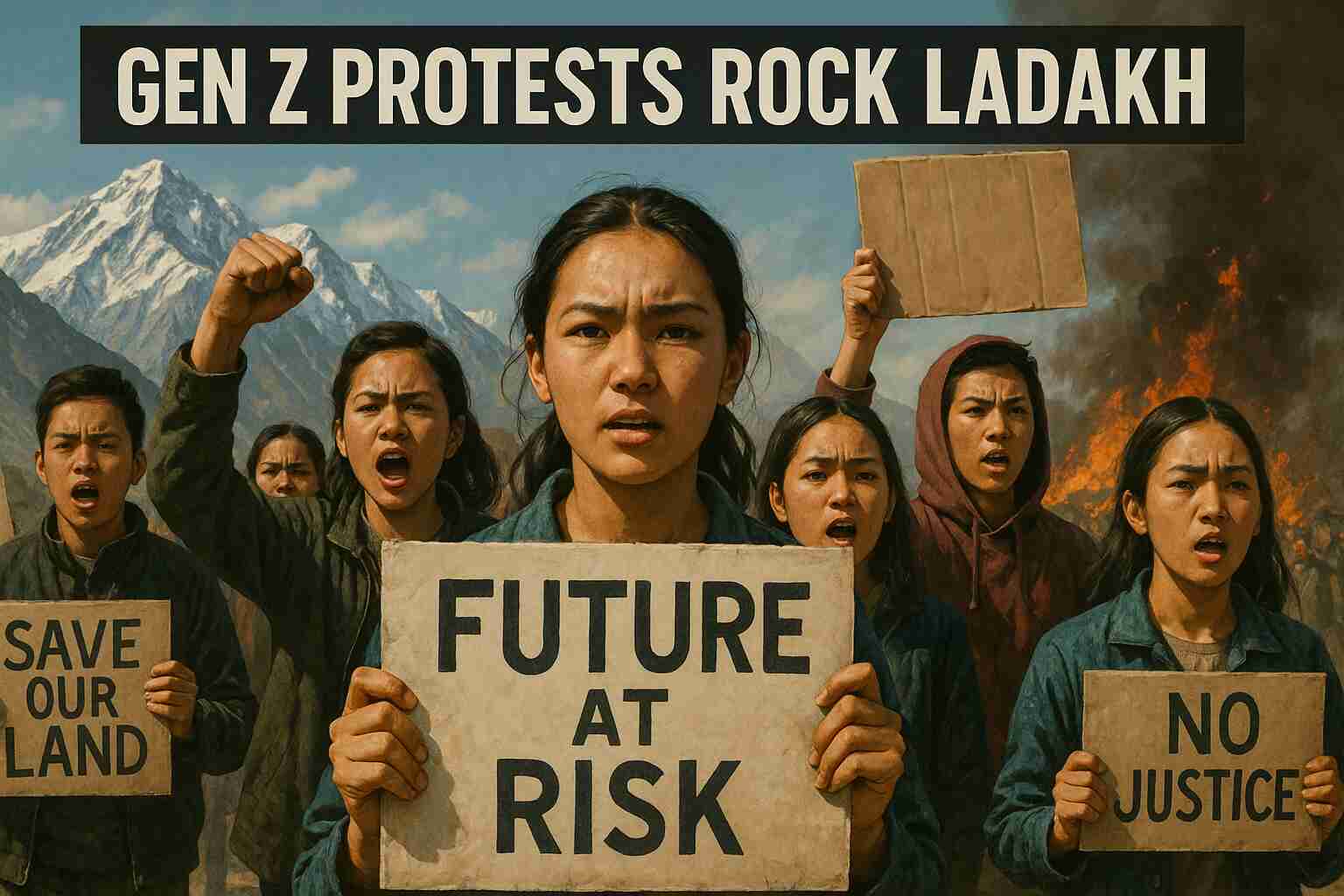
Leh, Ladakh has erupted with Gen Z–led protests, signaling a generational pushback against what many young locals see as government inaction and disregard for their future. Students, activists, and first-time voters filled the streets, demanding recognition of Ladakh’s unique identity and its place in India’s democracy.
While protests in Ladakh are not new, the scale and tone of this youth uprising marks a turning point. With voices amplified on social media, the protests have become both a local movement and a national debate. At the heart of the matter lie concerns about statehood, environment, jobs, and representation.
10 Points That Triggered Gen Z Protests in Leh
1. Demand for Statehood
Youth protesters are demanding full statehood for Ladakh, not just Union Territory status. They argue that decision-making powers must rest with the people of the region.
2. Sixth Schedule Safeguards
Students want constitutional protection under the Sixth Schedule to safeguard land, resources, and cultural identity. Without it, many fear Ladakh will lose its uniqueness.
3. Climate Change and Environment
Ladakh’s fragile ecosystem is under pressure from tourism, infrastructure projects, and climate change. Youth activists, inspired by global climate movements, are highlighting the environmental risks.
4. Unemployment and Economic Uncertainty
Job opportunities remain scarce, and with government jobs shrinking, many graduates feel left out of India’s growth story. This economic frustration fuels the protests.
5. Representation in Governance
With Ladakh run as a Union Territory, locals feel excluded from policy-making and political representation, leaving youth voiceless in decisions that affect their lives.
6. Cultural Identity Concerns
Young Ladakhis fear rapid urbanization and outside influence may erode their Tibetan-Buddhist and local traditions, sparking cultural anxiety among Gen Z.
7. Sonam Wangchuk’s Role
Climate activist Sonam Wangchuk’s appeal for safeguarding Ladakh inspired many young protesters. His stand against unchecked development has become a rallying point.
8. Clash with the Government
Barbs traded between the government and local activists, including Wangchuk, have widened the gap. Youth protesters see this as a dismissal of their genuine concerns.
9. Power of Social Media
Unlike past movements, this protest is powered by Instagram reels, X trends, and YouTube vlogs. Gen Z is mobilizing support beyond Ladakh, making it a nationwide issue.
10. A Larger Fight for the Future
For Gen Z, this is not just about today’s governance but about securing Ladakh’s future generations, environment, and democratic rights.
(Read our in-depth analysis of the recent violent statehood protests in Ladakh here.)
Political and Social Reactions
- Government stance: Officials maintain that development in Ladakh is on track and accuse activists of exaggerating.
- Local leaders: Support the youth’s demand for constitutional safeguards, warning that dismissing their voice will deepen mistrust.
- National attention: Political parties across India are beginning to take positions, given Ladakh’s symbolic importance post-2019.
The Bigger Picture
The Gen Z protests in Ladakh highlight a larger question—how does India balance development with democracy and environmental sustainability?
For Delhi, Ladakh is a geopolitical hotspot, bordering China and Pakistan. For its youth, it is their homeland at risk of neglect. The protests may well decide how India approaches its newest Union Territory in the coming years.
(Explore our feature on border states and their evolving political challenges.)
Conclusion
The Gen Z protests in Leh are more than a flashpoint—they are a warning. A generation that has grown up post-2010, with digital tools and global awareness, is making its voice heard. Their fight is for statehood, safeguards, and survival, and how India responds will define Ladakh’s future.
Related Posts


Stay Informed With the Latest & Most Important News
Previous Post
Next Post

Advertisement





Advertisement
