Now Reading: Tejashwi Yadav Finalizes RJD Seat Demand, Allies Weigh Options
-
01
Tejashwi Yadav Finalizes RJD Seat Demand, Allies Weigh Options

Tejashwi Yadav Finalizes RJD Seat Demand, Allies Weigh Options

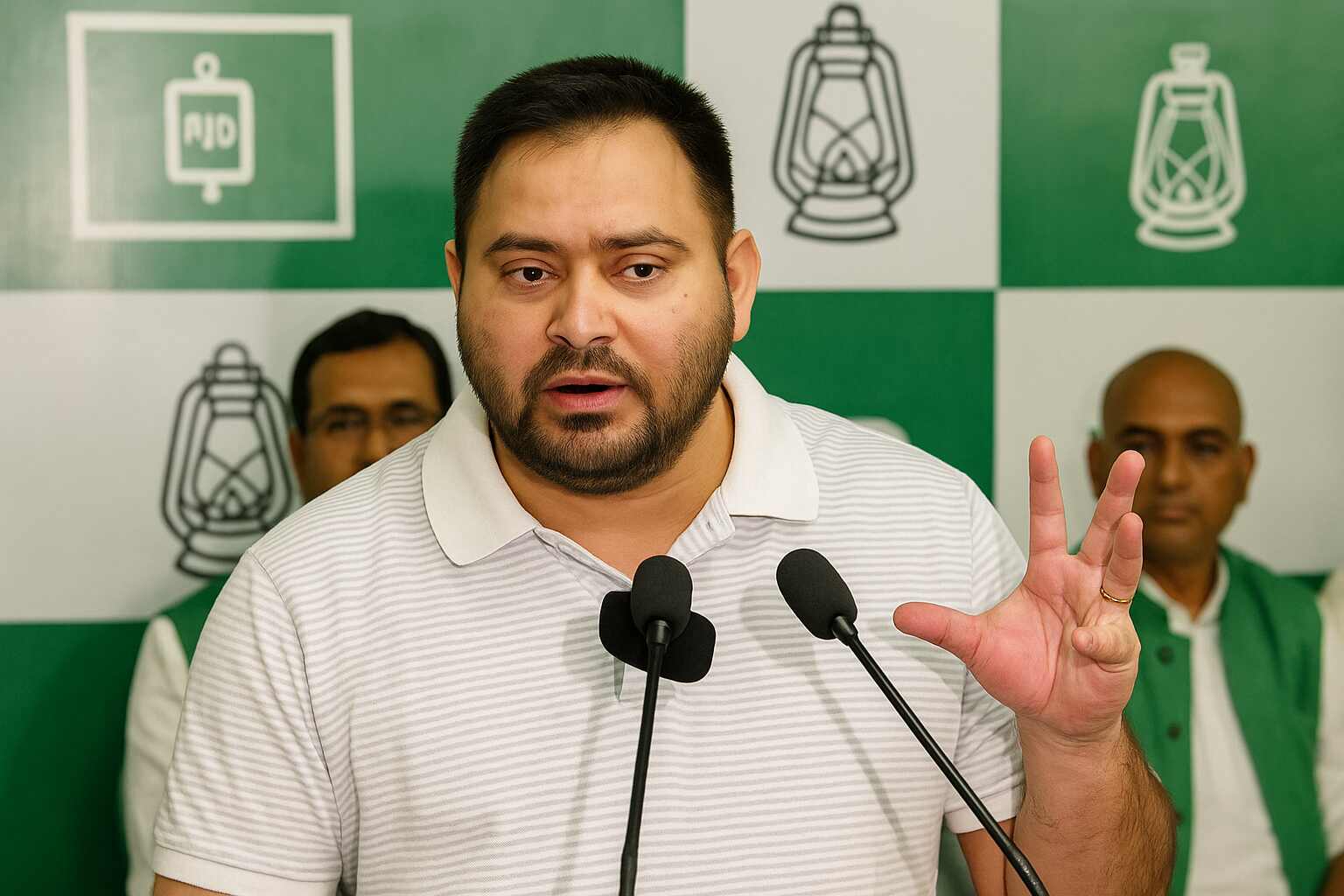
As Bihar heads toward the 2025 Assembly elections, seat-sharing talks within the INDIA bloc have entered a tense phase. Rashtriya Janata Dal (RJD) leader Tejashwi Yadav has reportedly made up his mind on how many seats his party should contest — and his number is higher than what many allies are ready to concede.
The internal negotiations are not just about numbers; they are about leadership, regional dominance, and the shifting balance of power within the opposition alliance. For the INDIA bloc, which is projecting unity against the NDA, these talks have become the first real test of cohesion before campaigning begins.
Tejashwi’s Confidence and RJD’s Seat Strategy
Tejashwi Yadav’s decision is backed by data from the 2020 Assembly results and the Lok Sabha trends. RJD had emerged as the single largest party in the last state election with 75 seats. That performance, along with his growing popularity among youth and rural voters, has strengthened his argument that the RJD deserves a larger share in 2025.
Sources within his team suggest the party may demand close to 120 seats out of 243 — a bold claim that could upset smaller allies such as the Congress and Left parties. The young leader believes RJD must lead the alliance from the front if it wants to counter the organized campaign machinery of the NDA.
In earlier coverage, Behind The Headlines noted in The Chirag Equation: How Bihar’s Young Leaders Are Rewriting the NDA Playbook that youth leadership is redefining campaign dynamics across the state. Tejashwi’s current posture reflects the same generational assertiveness now visible on both sides of Bihar’s political divide.
The Alliance Equations Under Strain
While Tejashwi’s confidence is high, the Congress and Left parties are pushing for a “balanced formula.” Congress leaders want to retain at least 60 to 65 seats, while CPI and CPM prefer a smaller but assured presence in their traditional strongholds.
This tug-of-war risks reopening old wounds from 2020, when alliance coordination suffered at the constituency level. Many senior Congress workers privately admit that “too much RJD dominance” could demotivate ground cadres.
However, RJD’s argument remains clear: it has the network, the narrative, and the numbers. The party’s strategists are highlighting data showing RJD’s vote share rise among EBC and Dalit youth, groups once considered neutral or pro-NDA.
NDA Watching Closely
The National Democratic Alliance (NDA) is closely following every twist in the opposition talks. BJP leaders believe a delayed seat-sharing agreement within the INDIA bloc will work to their advantage, allowing them to frame the narrative around “stability versus chaos.”
Chief Minister Nitish Kumar, who has been projecting his government as a model of “development with discipline,” has intensified district-level reviews and welfare announcements. Meanwhile, LJP (Ram Vilas) leader Chirag Paswan and his associate Shashank Balwant Mishra are quietly strengthening the NDA’s youth connect programs in semi-urban areas.
The Mood Within the Congress and Left
For Congress, the challenge is existential. After poor showings in recent elections, the party sees Bihar 2025 as a chance to rebuild its grassroots network. But internal leaders are worried that Tejashwi’s aggressive stance could reduce their bargaining power.
The Left parties, meanwhile, are focusing on issue-based campaigning — unemployment, price rise, and farmers’ rights — and prefer joint rallies over individual seat counts. Still, they know that visibility in the alliance list matters for survival.
Tejashwi’s team insists that “alliances work when led strongly,” pointing out that the NDA’s success lies in unified leadership rather than negotiated compromise.
Youth Voters and Social Media Game
One major difference between 2020 and 2025 is the role of social media and youth mobilization. Tejashwi’s online presence has grown dramatically; his campaign videos highlighting job creation and infrastructure have reached millions.
Yet, NDA strategists are equally active. Chirag Paswan’s digital campaigns and Nitish Kumar’s official communication focus on stability, women’s empowerment, and connectivity projects.
This digital battle could decide the urban and semi-urban votes that often tilt close contests. Bihar Election 2025 Opinion Poll: NDA Takes Early Lead recently suggested that NDA remains slightly ahead, partly due to its strong online and booth-level outreach.
Can Tejashwi Unite the Bloc?
The coming weeks will determine whether Tejashwi Yadav can strike a balance between ambition and accommodation. His challenge is to protect RJD’s core identity while keeping allies motivated.
He has often said, “The fight is not for seats, it is for Bihar’s future.” But behind that idealism lies real arithmetic. Every seat lost in negotiation is a battlefield given away before the war begins.
Analysts say the INDIA bloc must announce its final list before the NDA starts releasing its candidates; otherwise, voter perception of disunity could harden.
The Bigger Picture
Beyond the number game, these negotiations reflect a deeper shift in Bihar politics. A new generation of leaders — Tejashwi Yadav in RJD and Chirag Paswan in LJP — is redefining power through media, youth energy, and image management rather than pure caste math.
If the INDIA bloc finalizes its seat-sharing smoothly and launches a joint campaign focusing on jobs and education, it can narrow the gap with the NDA. But if talks drag on, the NDA will walk into the poll with momentum on its side.
Either way, Tejashwi’s assertive stance marks a clear message — the era of passive negotiations in Bihar politics is over. Every party now wants its pound of influence before the voters decide the final verdict.
Conclusion
As seat talks tighten and alliances strain, the Bihar Election 2025 story is shaping up as a contest of ego, ambition, and timing. Tejashwi Yadav’s seat demand has set the tone — now the question is who will compromise and who will walk away.
For voters, the coming weeks will offer a preview of how Bihar’s political alliances manage the balance between strategy and survival.
Editorial Disclaimer:
This article was prepared by The Editorial Team of Behind The Headlines after verifying facts from multiple public sources and official statements.
Related Posts



Stay Informed With the Latest & Most Important News
Previous Post
Next Post

Advertisement